Blue Christmas 2: light is in the horizon yet

This piece was originally written for the Godspace blog to be a part of their Advent theme Proclaiming Justice, Seeking Peace Through Advent. It was published on 21 December 2022 here. All images by Kate Kennington Steer.

… And if, as autumn deepens and darkens 

I feel the pain of falling leaves, and stems that break in storms
and trouble and dissolution and distress,
and then the softness of deep shadows folding, folding
around my soul and spirit, around my lips, 

so sweet, like a swoon, or more like the drowse of a low, sad song
singing darker than the nightingale, on, on to the solstice
and the silence of short days, the silence of the year, the shadow,
then I shall know that my life is moving still 

with the dark earth, and drenched
with the deep oblivion of earth’s lapse and renewal.  

from ‘Shadows’

DH Lawrence

I suspect that many of us have been feeling the ‘pain of falling leaves, and stems that break in storms’ this year.  The news seems to be full of people in pain, in so many countries, around our globe.  Some countries, like China, still have stringent ‘lockdown’ Covid-19 regimes, with all the increasing social isolation and mental health breakdowns such restrictions bring.  Others are being besieged by open warfare, either as an act of national aggression like Russia on Ukraine, or as a result of civil war, like Syria and South Sudan.  Some countries are rigidly imposing religious laws that restrict freedoms of speech and movement, like Iran and Afghanistan.  Elsewhere, natural disasters are on the increase, a direct result of our human consumption and unjust exploitation, which has induced climates to change and seas to rise.  There are droughts and famines and wildfires.  There are floods and landslides and earthquakes.  There are corrupt politicians, who, in their hunger for power, trample the poor, the sick and the elderly.  There are financial crises which put educational, welfare and health systems under strain.  There are energy crises… the list seems endless.  And behind every one of these global, international, or national level crises, there is are thousands of individuals living in want, in need, in grief and sorrow and strain.  There seems so much to fear, so much to mourn.  Where is the God of Peace, of Justice, in all this?

A persistent phrase has kept re-emerging in my mind over the last six months:

light is in the horizon yet

I first came across this phrase hearing Eddi Reader’s song ‘light is on the horizon yet’.   

This song title was inspired by ‘Do not say that life is waning’, a sixteenth century poem Sir Thomas Moore, the first stanza of which reads:

Do not say that life is waning, 

Or that hope’s sweet day is set; 

While I’ve thee and love remaining, 

Life is in the horizon yet. 

By changing ‘life’ to ‘light’, and ‘in’ to ‘on’, Reader expands the nature of the ‘hope’ beyond Moore’s confined use for two lifetimes in love.  Reader’s phrase provides us with a wider, less corporeal, more naturalistic, hope; hope which is both of the earth and of the sky.  Her image focuses my eyes away from individualistic emotion onto planetary ecology, onto heavenly spirituality.

Predictably, my mind conflated both Moore and Reader by misremembering the line.  None the less, over the intervening months I have repeated it to myself many times as a reassuring thread.  I find it a reminder to look up and out, but even more than that, a reminder to look for what is often unseen (perhaps particularly for those of us who do not live in a place where a wide vista is possible).
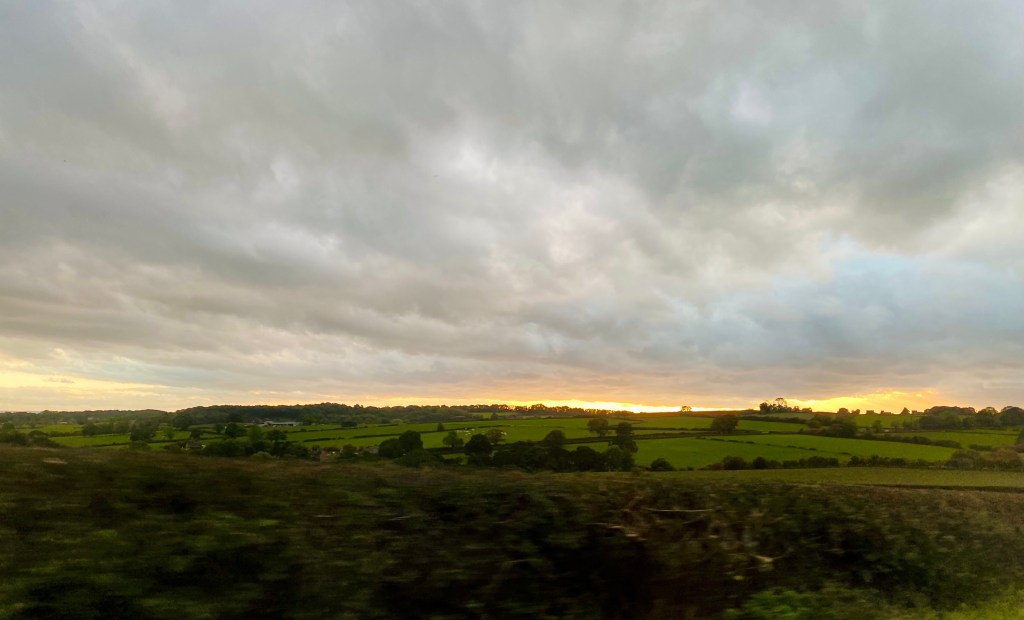
Grief, loss, pain often makes it impossible to remember to look for this unseen light, the elusive light, the dark light.  Suffering of any kind blurs, blinds and fogs both my mind and spirit so that I lose my belief in this thin line of light, of life, existing in my own circumstances.  At these times I do not even know how to pray this hope into the lives of those who suffer unimaginable conditions elsewhere. 

And yet, deep down, there is a knowing in me: there is light in the horizon yet.  God is present in the matter and substance of the rocks, earth, hills, plains, prairies, deserts, rivers and seas of that horizon.  God is equally present within my details, God is within my every cell.  God is a part of how I deal with the pains and problems chronic illness and depression bring.  God is a participant in every conversation I have, God is the Source of every prayer I utter.

I find, in these long dark nights around the winter solstice in the northern hemisphere, that looking for the unseen light on the horizon, is an excellent spiritual practice. It helps me better appreciate the riches of the palpable dark, and the rest provided by the very ‘fallowness’ of the season.  For within these unseen treasures is the life which does not wane, but renews.  That is the secret of these phrases ‘Life is in the horizon yet’/ ‘Light is on the horizon yet’: the power of that small word ‘yet’.
D.H. Lawrence’s poem (above) hints that it is in the places of silence and shadow, those places of ‘low, sad song’, where absence and darkness are at their most potentially fear-inducing, that I shall know that ‘my life is moving still /with the dark earth’.  ‘Yet’ may mean waiting through the time of being ‘drenched/ with the deep oblivion of earth’s lapse’, until ‘renewal’ comes, as in the natural turning of the seasons.  But ‘yet’ can also mean enduring. I may feel ‘drenched/ with the deep oblivion of earth’s lapse’, mired in the pit of depression with no hope to wait for, but that ‘yet’ points to a deeptime mystery: light and life endures, whether I can perceive it or not.  

That is the heart of the ‘hope’ which Blue Christmas enshrines.  And those of us who may this year be able to lift our heads, to look into the horizon, and see both life and light, we pray the blessings of that hope over all who cannot pray it for themselves at this time. 
whole: Christmas Day

Where is that place apart

you summon us? Noisily

we seek it and have no time

to stay.  Stars are distant; 

is it more distant still, 

out in the dark in the shadow

of thought itself?  No wonder

it recedes as we calculate

its proximity in light years.

Maybe we were mistaken

at the beginning or took later

a wrong turning.  In curved space

one can travel for ever and not recognise

one’s arrivals.  I feel rather

you are at our shoulder, whispering

of the still pool we could sit down

by; of the tree of quietness 

that is at hand; cautioning us

to prepare not for the breathless journeys

into confusion, but for the stepping

aside through the invisible

veil that is about us into a state

not place of innocence and delight.

‘Wrong?’ 

R.S.Thomas

Holy. Holy. Holy. Hale. Heal. Whole.

As I come again to celebrate how the Holy One is with me, with us, with the earth, with the cosmos, may my seeingdarkly be deepened so I can ‘step aside through the invisible’ today.  May I glimpse, recognise and encounter You, face to face, in whatever and whoever is ‘at hand’ before me today.  May I hear my heart’s desire to ‘seek … and stay’ and be wholed, healed, by You.

With all Christmas blessings on you, and in deep gratitude for your pilgrim company beside me on the journey of this Advent,

Kate

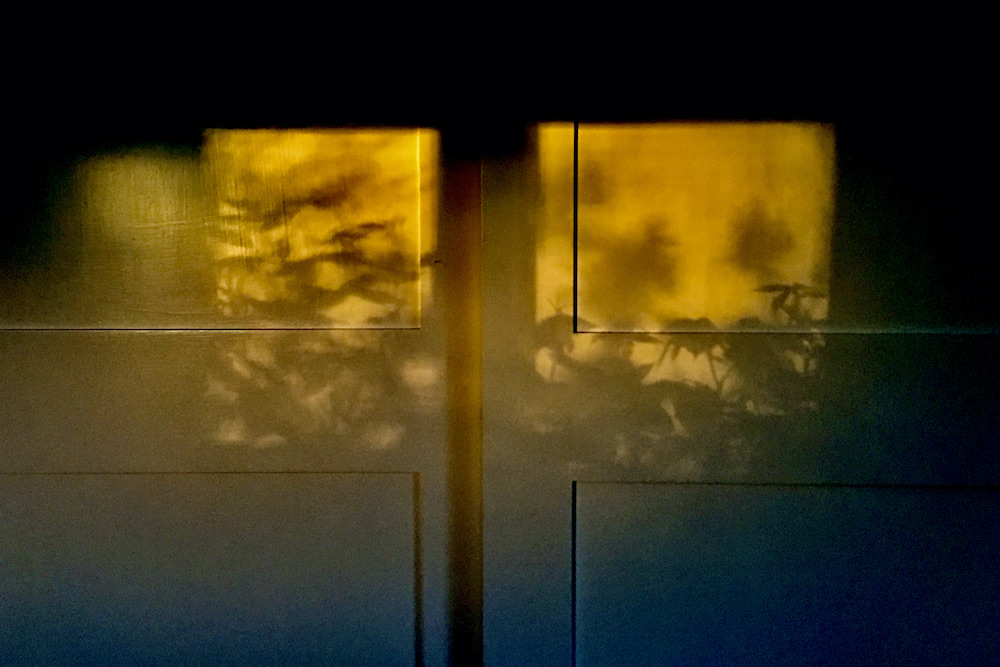
the tree of quietness. Canon 7D. f5.6. 1/13. ISO 100.

whole: Christmas Eve

BEAUTY CAN SAVE THE WORLD 

so says the magnet pinned to the front

of my fridge. But what does it know

clinging to its empty whitewashed tomb?

But then as I drive beyond the endless

fields of rabbit’s foot and wild rye, I pass

a hillside of white tulips—their cotton

petals flinging the sunlight back to the

heavens like blazing signs of forgiveness.

And the grace of these moments reminds me

of a painting I once saw of nine women

wading into the shallows of a rice paddy—

the tops of their bamboo hats bent low, so

that from a distance they looked like nuns

deep in the throes of their morning prayers.

‘Beauty can save the world’

Katelynn Moxon

As I wrote on the Third Sunday of Advent, I have been thinking anew about the St Luke’s gospel narrative of Elizabeth, Mary’s cousin, and on Christmas Eve I try to spend some time contemplating Mary’s story.  This year I noticed a connection between the two women I had not seen before.  Elizabeth breaks her contemplative seclusion to welcome in her cousin Mary, who is as equally bewildered as Elizabeth by the visit of an Angel and the unexpected conception of a baby.  I can imagine the two women comforting each other, despite their age difference.  I can also imagine them trying to work out their faith together, turning over all they have been taught, all they have believed until the Angel’s visit brought their old life to a dramatic halt.  Together they work out how what they thought they knew of God, fits into what they now know from the Angels’ revelations.  Although they still see and know darkly, they are beginning to understand that they are known – the whole of them – by God.  So when Elizabeth expresses her wonder and gratitude at feeling her child kick in her belly saying,

‘blessed is she who believed that there would be a fulfilment of what was spoken to her by the Lord’ 

(Luke 1.45 NRSV)

she was saying this to Mary.  And how does Mary respond?  In Luke’s narrative, Mary immediately responds with the words which have become known as the hymn called The Magnificat:

‘My spirit exults in God my Saviour

Who has done great things for me’  

(Luke 1.46-7 NRSV)

Like the child leaping in Elizabeth, Mary’s spirit ‘exults’, it leaps upward and outward.  Both women are aware that they are not only connected to each other in a new way, but they are being gifted a way to see God face to face. The irony is that they see God in their homes, in their seclusion and quiet, in their new everyday circumstances: they no longer need a priest like Zechariah, Elizabeth’s husband, to intercede on their behalf, in the Holy of Holies in the Temple.

Both women begin to know that God is intimately involved in their lives, and know that through that involvement God wishes to become intimately involved in the life of every living thing on the earth in a unique way.  They find a new bedrock of faith within themselves.  Through seeingdarkly and knowingdarkly each discovers they are bound up in the mysteries of God’s-being-with-us.

But Mary’s expression of faith, her ‘exulting’, is not just a song of jubilation at a personal, private, family interaction with the divine.  Earlier this year I was brought up short by Winnie Varghese’s reflections on Mary, which feel even more apt to ponder as yet another wave of civilians from another country become nomadic refugees, being forced to migrate from their land:

I wonder about the sacred power of the earth and the truths our bodies carry for us.  It is a learning and unlearning to recognise the baggage in our lives as other people’s limited imaginations and the true freedom of becoming ourselves.

Mary … for me speak[s] to the reality of women’s experiences through history.  Loss and vulnerability and the rage that we would manifest, if we could, when we can, at the indignities or losses that are simply too much to bear.  We don’t talk about Mary as raging, as far as I can tell, but it wouldn’t be a bad response to her life.  Her beautiful baby vulnerable.  Her little family threatened.  Her adult son murdered.  Her people conquered.  She singings a pretty raging song in the Magnificat… (31)

(from ’How do all the parts fit?’, Revd Winnie Varghese, The Book of Queer Prophets, curated by Ruth Hunt (29-31))

A vision of the whole of Mary must include her rage.  

A vision of the whole of God must include God’s vulnerability.

I don’t ever crave

extraordinary

moments anymore.

Just small, gentle

hums of beauty

streaming from below,

above, and beyond simply

from paying attention.

Sound. Light. Shadow.

Art. Warmth. The night.

The morning. Dreams that

are not faraway but

exist right here –

already in my days,

hands, and heart.

Victoria Erickson

intimately involved here. (iPhone image)

whole: day 27

He loved cherry sunsets growing heavy on the branches of the evening; He loved bud coloured dawns opening from the east’s earth.

He loved the sea, green in its happiness, seeking the shore;

He loved to see it languishing back stonily from its crest to its groove.

He loved the character of birds, the flock that trusted in His Father; He loved lambs, the most skilfully fashioned: the lambs,

the most innocent in their nature.

He loved the beasts of the borders: the ones that dwelt in the wild; He loved their sure dependence on that which the wilderness provided.

He loved wheat shivering as it became golden and heavy headed with nourishment; He loved the fortressed mountain country, the desolation where peace grew.

He loved the earth, loved it as a lover, because it is God’s earth;

He loved it, because it was created by His Father from nothingness to be Life’s temple.

‘Cread Crist’, Donald Evans, (trans. Cynthia and Saunders Davies)

The incarnate Christ dwells in me, so I am part of an interrelated community.  This makes me whole because I can see face to face, recognise the features of Christ in the person before me.

The incarnate Christ dwells in me, so I am part of an interconnected creation.  This makes me whole because I can see God in the book of nature, and realise I am not separate, nor alone.

The incarnate Christ at the heart of the natural world was a given in the daily lives of Celtic Christians, as this simple prayer attributed to St Colmcille (sixth century Irish monk, founder of the Abbey on Iona) attests:

Bless to me the sky that is above me. 

Bless to me the ground that is beneath me.

Bless to me the friends who are around me.

Bless to me the love of the three,

deep within me and encircling me.

Shinrin-Yoku

Being immersed in nature is a profound experience for me, and is akin to what the Japanese call Shinrin-Yoku, ‘forest bathing’.  I am excited by the relatively recent expanded scientific exploration of the mitochondrial web that not only connects trees into communities, and creates a chain of being for other creatures to flourish, but affects how humans might live, at vast distances from anything they might recognise as a forest.

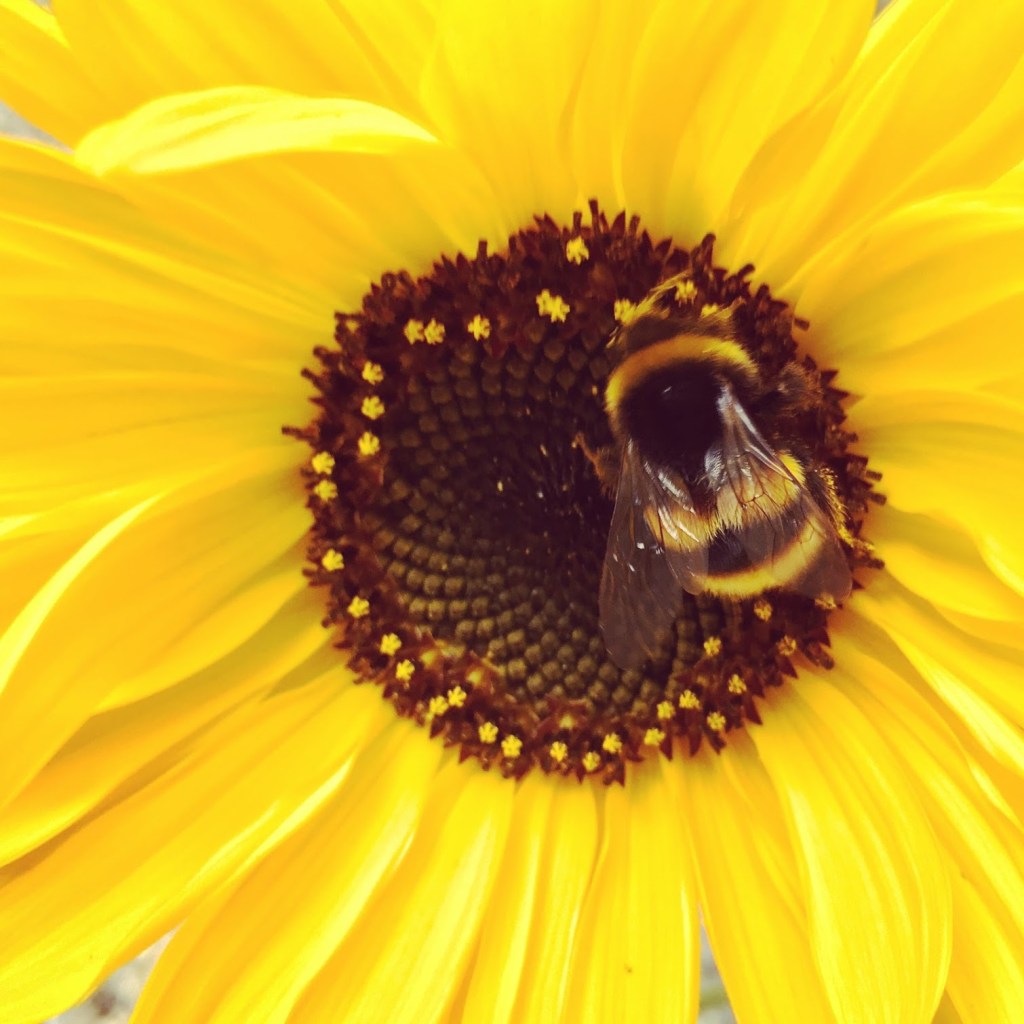
These are all part of the mysterious interconnections of God which make up so much of my knowing darkly.  To see a vision of the whole of God, I can watch a 360degree video of English woods, (places where my wheelchair could never take me) from Forestry England on YouTube.  Instead I saw a vision of the whole of God by looking at a bee exploring the heart of a sunflower.

imago Dei

As Dermot A. Lane notes:

The primary emphasis is that everything within the community of creation is theocentric in different ways and to varying degrees, that is, creation comes from God, is a gift from God, and returns to God in the fullness of time. This theocentric feature refers to the whole of creation, and not just human beings. All of creation is centred in God, through the indwelling of the spirit of God. This shifts the centre of gravity within creation from humans as the exclusive holders of the imago Dei. All of creation, and not just humans, is in the image of God.

(from Theology and Ecology in Dialogue: The Wisdom of Laudato Si, Dermot A. Lane (129))

In An Altar in the World Barbara Brown Taylor reminds me that too much cleanliness is not next to godliness.  Our modern preoccupation with anti-bacterial cleansing of our homes (dominant even in pre-COVID19 times) has created an imbalance in the the millions of microbes in our bodies.  What’s the antidote?  Get out there and play in the dirt!  Such creative play might help me reappreciate my interconnectedness with all living things.  Creative play might help me be be thankful for their dying and reintegrating, might help me recommit me to knowing more of my ‘kinship with the divine’.  

A child’s mud pies can be their prayer.

In fact, the trees are murmuring under your feet,
a buried empathy; you tread it.
                                                  High over your head,
the canopy sieves light; a conversation
you lip-read. The forest
                                       keeps different time;
slow hours as long as your life,
so you feel human.

So you feel more human; persuaded what you are
by wordless breath of wood, reason in resin.
You might name them-
                                     oak, ash, holly, beech, elm-
but the giants are silence alive, superior,
and now you are all instinct;
swinging the small lamp of your heart
as you venture their world:

the green, shadowy, garlic air
                                                 your ancestors breathed.
Ah, you thought love human
till you lost yourself in the forest,
but it is more strange.
                                    These grave and patient saints
who pray and pray
and suffer your little embrace.


‘Forest’

Carol Ann Duffy

https://www.forestryengland.uk/100/carol-ann-duffy

imago Dei. (iPhone image)

whole: day 26

We were spanked for each other’s sins.

Spanked in syllables and by the word of God.

Before dark meant home time.

My grandmother’s mattress

knew each of my

siblings,

cousins,

and the neighbour’s children’s

morning breath

By name.

A single mattress spread on the floor was enough for all of us.

Bread slices were buttered with iRama

and rolled into sausage shapes;

we had it with black rooibos, we did not ask for cheese.

We were filled.

My cousins and I would gather around one large bowl of umngqusho,

each with their own spoon.

Sugar water completed the meal.

We were home and whole.

But

isn’t funny?

That when they ask about black childhood,

all they are interested in is our pain,

as if the joy-parts were accidental.

I write love poems, too,

but

you only want to see my mouth torn open in protest,

as if my mouth were a wound

with pus and gangrene

for joy.

‘Black Joy’

Koleka Putuma

Opening myself to the presence of God made real in every moment means I might encounter a vision of the whole of me, but such a vision is only partial if, in my blinkered un-seeingdarkly, I see myself with God in splendid isolation.  On the second Sunday in Advent I mentioned the African concept of Ubuntu: a person is a person because of other persons.  I can never be whole if I insist on my separateness.  I can never find my belonging in God if I exclude others, who also belong to God.

Ubuntu

The urgent need to remember Ubuntu is brought home when I watch news footage of Afghans joining the stream of Syrian refugees fleeing from their homes, or see Ukranians searching for their homes amidst the rubble caused by Russian missiles, or hear of asylum applicants being forcibly removed to Rwanda by the British government.  Ubuntu is brought home to me when I read Koleka Putuma’s poem above, and After Whiteness by Willie James Jennings, or Ghost Ship by A.D.A. France-Williams and come face to face with my continuing part in institutional racism.  Ubuntu becomes real when I look at Timothy Schmalz’s Angels Unawares sculpture in St Peter’s Square. (This short film about the sculpture (under 3mins) is well worth a watch.)  As Pope Francis said in a message for the World Day of Migrants and Refugees 2019,

In a word, it is not only the cause of migrants that is at stake; it is not just about them, but about all of us, and about the present and the future of the human family.  Migrants, especially those who are most vulnerable, help us to read the ‘signs of the times’. (angelsunawares.org)

Mudita

In the Book of Joy the Dalai Lama and Archbishop Desmond Tutu talk of the Buddhist principle of Mudita, often translated as ‘sympathetic joy’.  This grows out of a sense for one another’s wellbeing; if I have genuine kindness and compassion for the person next to me, then I will rejoice in their good fortune, whatever state I may be in at that moment.  

Mudita sees joy as limitless … Mudita is based on the recognition of our interdependence or Ubuntu.  The Archbishop explains that in African villages, one would ask in greeting, “How are we?”  This understanding sees that someone else’s achievements or happiness is in a very real sense our own. (Book of Joy, 140-1).  

how are we?

Together Ubuntu and Mudita act as a counterbalance to either my desire to cut someone down to size, or to my instinct that I am small and weak compared to others, that my contribution will make no difference to the vast problems of our world.

God with me means God with us.  If I wish to be whole I need to pray for the wholeness of others.  

God in me means God in us.  Together we are wholed people, healed; together God is Whole.

This means that whenever I face another human being, I face a mystery.  There is a level of their life, their existence, where I cannot go and which I cannot control, because it exists in relation to God … The reverence I owe to every human person is connected with the reverence I owe to God, who brings them into being and keeps them in being.  I stand before holy ground when I encounter another person.

(Rowan Williams, cited in Ruth Valerio, Saying Yes to Life (153))

To know in whole, to see face to face, I need to embrace all the fullness of where God is, experiencing the wholeness of Presence in all that is even as I acknowledge all those people and places experiencing brokeness.  As a contributor to gratefulness.org wrote: 

Even as we strive to eradicate unnecessary suffering, love asks that we presence ourselves with all of what is here now, including the pain, the anger, and the grief. The presencing is the work; the presencing is the love that is the transformation. This, perhaps, is a version of the love that precedes the action of “love in action.” 

( gratefulness.org, original emphases)

presencing

Before you know what kindness really is
you must lose things,
feel the future dissolve in a moment
like salt in a weakened broth.
What you held in your hand,
what you counted and carefully saved,
all this must go so you know
how desolate the landscape can be
between the regions of kindness.
How you ride and ride
thinking the bus will never stop,
the passengers eating maize and chicken
will stare out the window forever.

Before you learn the tender gravity of kindness,

you must travel where the Indian in a white poncho
lies dead by the side of the road.
You must see how this could be you,
how he too was someone
who journeyed through the night with plans
and the simple breath that kept him alive.

Before you know kindness as the deepest thing inside,

you must know sorrow as the other deepest thing.
You must wake up with sorrow.
You must speak to it till your voice
catches the thread of all sorrows
and you see the size of the cloth.
Then it is only kindness that makes sense anymore,

only kindness that ties your shoes
and sends you out into the day to gaze at bread,

only kindness that raises its head

from the crowd of the world to say
it is I you have been looking for,
and then goes with you every where
like a shadow or a friend.

‘Kindness’

Naomi Shihab Nye

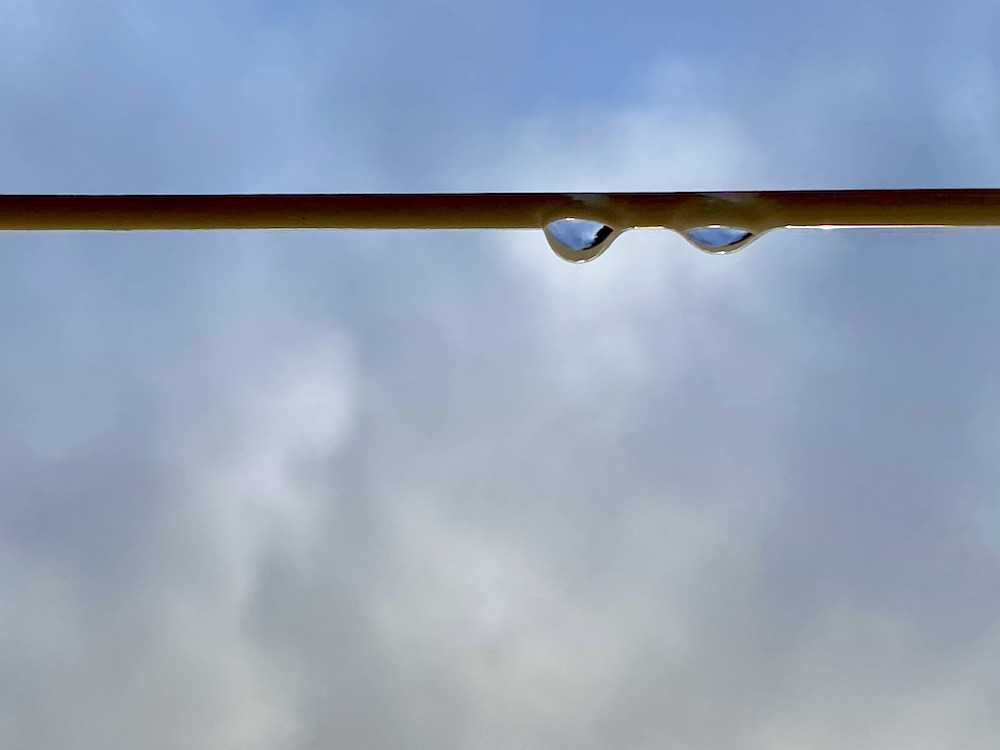
see how this could be you.  Canon 7D. f8. 1/400. ISO 100.

whole: Blue Christmas 2022

Pity me not because the light of day
At close of day no longer walks the sky;
Pity me not for beauties passed away
From field and thicket as the the year goes by;
Pity me not the waning of the moon,
Nor that the ebbing tide goes out to sea,
Nor that a man’s desire is hushed so soon,
And you no longer look with love on me.
This have I known always: Love is no more
Than the wide blossom which the wind assails,
Than the great tide that treads the shifting shore,
Strewing fresh wreckage gathered in the gales:
Pity me that the heart is slow to learn
What the swift mind beholds at ever turn. 

‘Pity Me Not’, Edna St. Vincent Millay

(Click here to hear her poem, Pity Me Not, recited by Tom O’Bedlam.)

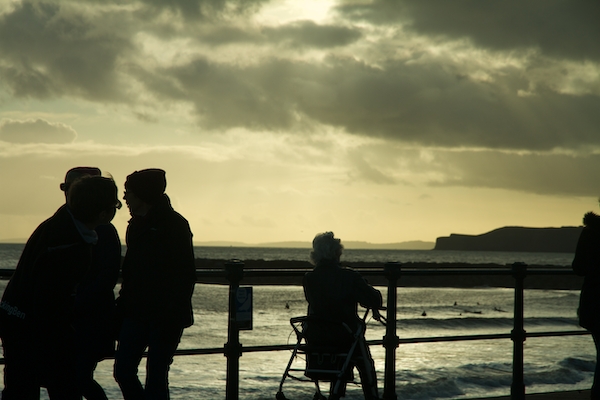
Twilight is possibly my favourite time of day.  It is a quieting time.  Sitting watching the sky’s shifts at twilight with a camera or sketchbook in hand gives me real joy.  Yet paradoxically, part of my deep joy is coming to realise the depth of my sadness within, becoming aware of it, and then listening to it, as if it is being writ large across the natural world.

What I hadn’t properly considered until now, is how different experiences of transitioning between day and night might also affect how emotional transitions are expressed.  

I never knew there was a science of Twilight which describes the process in three stages: civil twilight, nautical twilight and astronomical twilight. Each transitions to the next depending on the angle of the sun below the horizon.  Of course, the point at which these stages are reached also depend on one’s position on the curve of the earth.  At the North and South poles twilight can last for a fortnight at the beginning and end of the long winter blackout. 

I wonder if there is a relationship between the way we experience twilight, dictated by physical location, and the way we experience depression, loss, pain and grief?  Does the way my eye comprehends the bluegrey blending at twilight affect how I understand and approach darkness, whether that be physical, emotional or spiritual darkness?  What effect might the murklight have on my spirit, especially on this shortest of days at the Winter Equinox?

yūgen

The Japanese term Yūgen expresses something of this:

Yūgen as a concept refers to ‘mystery and depth’.  Yū means ‘dimness, shadow filled, and gen means ‘darkness’.  It comes from a Chinese term, you xuan, which means something too deep either to comprehend or even to see.  In Japan the concept became (in Browe’s words) ‘the ideal of an artistic effect both mysterious and ineffable, of a subtle, complex tone achieved by emphasising the unspoken connotation of words and the implications of a poetic situation … It is also the term for a style of poetry … it was also early linked with sabi by Fujiwara no Shunzei to describe beauty accompanied by sadness.  The interpretation was approved by Kamo-no-Chōmei (1155-1216) who wrote .. that for him yūgen was to be found ‘on an autumn evening when there is no color in the sky nor any sound, yet although we cannot give any definite reason for it, we are somehow moved to tears.’

(Donald Ritchie, cited in Peter Davidson, The Last of the Light (124))

The colours I see are affected by memory and expectation as much as perception via the changing cones in my eyes.  Cameras also ‘see’ very differently to the human eye, since photographic film cannot make the same adjustments to the changing dark as the human eye. Even digital cameras struggle with the constantly changing light levels at Twilight, so that compensating with filters and meters can only do so much.  For me, this just adds to the tantalising nature of the experience.  If I am looking at the sky to render it as an image, whether that be in ink, paint, film or pixel, finding the encapsulating moment of the experience is impossible: at best my picture of Presence can only be partial.  Yet the making of the image is also part of the kinetic, emotional, and spiritual experience of Presence; what emerges is as much a surprise as what the sky reveals as it transitions.

To borrow a phrase from Richard Rohr, what I know is that when I sit attending to the Twilight outside and inside of me, I ‘experience the Real’.  

experience the Real

This is the mystical hour,

day fading; night rising.

Sweet peace between day and night,

ask what you will

and it shall be done.

This is the hour of grace.

(‘The Twilight Hour’, Macrina Wiederkehr, Seven Sacred Pauses (149))

There is no need to fear the day ending or to mourn the light dying.  There is no need to be anxious about the darkness falling or indeed about losing the light.  If I can set aside the conditioning these metaphors instil in me, instead, I might consciously receive the colours of the day’s ending and the night’s beginning.  I might know all shades are precious for they are painted by the Great Artist.  Then I might really begin to see darkly.  And by seeingdarkly I might come to encounter the Artist who, in these shifting colours, at this time, offers me a vision of the whole of me: whole.

I’ll let you in on a secret

about how one should pray

the sunset prayer.

It’s a juicy bit of praying,

like strolling on grass,

nobody’s chasing you,

nobody hurries you.

You walk toward your Creator

with gifts in pure, empty hands.

The words are golden,

their meaning is transparent,

it’s as though you’re saying them for the first time.

If you don’t catch on 

that you should feel a little elevated,

then you’re not praying the sunset prayer.

The tune is sheer simplicity,

you’re just lending a helping hand

to the sinking day.

It’s a heavy responsibility.

You take a created day

and you slip it

into the archive of life,

where all our lived-out days

are lying together.

The day is departing with a quiet kiss.

It lies open at your feet

while you stand saying the blessings.

You can’t create anything yourself,

but you can lead the day to its end

and see clearly the smile 

of its going down.

See how whole it is,

not diminished for a second,

how you age with the days

that keep dawning,

how you bring your lived-out day

as a gift to eternity.

‘Praying the Sunset Prayer’

Jacob Glatsteit

transitions (Blue Christmas 2022). (iPhone image)

whole: day 23

Of all that God has shown me

I can speak just the smallest word,

Not more than a honey bee

Takes on his foot

From an overspilling jar.

Mechtild of Magdeburg

I wonder if I have to be dead before I can see the whole of God?  It isn’t unusual to hear people say of their dead loved ones ‘at least they’re with God now’ – but what do I think we really mean by that?

The JudaeoChristian tradition has taught that it is impossible to look God in the face – to see the whole of God – without being consumed in the process.  This is why no one still living can say what the whole of God looks like.  This is why some traditions teach that any visual attempt at representing the Divine Whole is blasphemous.  

Yet the writer of the letter to the Corinthians states that although seeingdarkly may be our way of perceiving the Divine at work in our here and now, there will be a time ‘when the complete comes’, (1 Corinthians 13.10).  In other words, traditional Bible teaching has always taught that when Jesus comes again to establish a new kingdom of heaven on earth, then is when we shall be able to come ‘face to face’ with the Whole of who God is.

I’m not at all sure I understand (or agree with!) this binary of now/then, but what I do know is that when I was growing up, rather than encouraging me to keep seeking me to see and know who God is (even if it is only partially or darkly), in the end these Bible verses gave me permission to not bother looking very hard for the presence of God.  They could be seen as a passport for spiritual laziness, and sloppy theology.

isness

I now believe these verses are saying the opposite: God is present in my here and my now.  The Whole is available to be known, not by my striving or insight, but because God is.  The isness of God is within me and within every living thing.  The isness of God, found in the totalising reality of the Cosmic Christ, who we come to meet for the first time, and to meet again, this Christmas, is here to meet me in this moment, in this breath, in this now.

In my stillness, I may see the whole of God in a sunflower seed if I look with the eyes of my heart.  The awe and wonder of this possibility is inexpressible.  It is that which I look for.

“How does a person seek union with God?”  the seeker asked.

“The harder you seek,” the teacher said, “the more distance you create between God and you.”

“So what does one do about the distance?”

“Understand that it isn’t there,” the teacher said.

“Does that mean God and I are one?” the seeker said.

“Not one. Not two.”

“How is that possible?” the seeker said.

“The sun and its light, the ocean and the wave, the singer and the song. Not one. Not two.”

(found in Joan Chittister, ‘The Rule of Benedict (81))

not one. not two. Canon 7D. 1/160. f/9. ISO 1250.

whole: day 22

Though I have never caught the word

Of God from any calling bird,

I hear all that the ancients heard.

Though I have seen no deity

Enter or leave a twilit tree,

I see all that the seers see.

A common stone can still reveal

Something not stone, not seen, yet real.

What may a common stone conceal?

Nothing is far that once was near.

Nothing is hid that once was clear.

Nothing was God that is not here.

Here is the bird, the tree, the stone.

Here in the sun I sit alone

Between the known and the unknown.

‘Nothing is Far’

Robert Francis

What are the practices I use to see God?  What do I think I am seeing when I ‘see God’?  Where can I go to see God?  

For Robert Francis (above), revelation comes through a stone.  On day 19 I talked about the two books of scripture in which the Celts believed God was revealed.  In yesterday’s post I quoted Samuel Taylor Coleridge’s reflections on ‘the sacred night’, which is where he saw God.  Coleridge speaks of how there is an intimate connection between his ‘outward beholding’ of what he sees in the night, and the ‘inward adoration’ engendered in his soul by what he has seen.  

Throughout this series, it is precisely this connection I am exploring.  Seeingdarkly is the way ‘to preserve the Soul steady and collected’, in Coleridge’s words. Yet I want to add that because the God-who-is-with-me-in-my-present is the same God-who-is-at-home-within-me, Coleridge’s ‘inward adoration’ also leads to ‘inward beholding’: yet another aspect of seeingdarkly.  And, as I have been struggling to communicate, such an intimate beholding must have a direct result on my actions in the world.  In other words, seeingdarkly must result in my ‘outward adoration’, which is praise and gratitude, compassion and care for others, or it is not true seeing.

This inward/outward symbiotic feeding link directly channels my photography, my poetry, my painting and printing.  In fact, this is a Mobius strip of creativity and spirituality, where what seems to be the outside face becomes the inside face of the loop and vice versa.  I wear a silver bangle shaped as a Mobius loop to remind me of the non-binary nature of these connections:

outward beholding

inward adoration

inward beholding

outward adoration

I think again of yesterday’s post and the revelations which ‘luminous darkness’ might bring.  When was the last time I deliberately switched all the lights off and contemplated the ‘dark’?  Do I consider night to be sacred?  When was the last time I lifted my eyes to see the depth of stars?  I love how the songwriter Kate Rusby sings of ‘befriending the stars’ in her song ’Underneath the Stars’ (lyrics below).

How to befriend something so vast, so mysterious, so beyond the limits of my imagination or concenception, so beyond time as I understand it, so beyond my definitions of light and dark, matter and substance?  How to befriend something I am powerless to affect or control?  This too, is knowingdarkly. Befriending begins with beholding: the act of seeingdarkly, where seeing is inward and outward at the same time.

Eventually, it may be possible to tell someone about what I see.  It might be possible to make visible the I AM whom I encounter in the dark.  It might be possible to tell the testament of the times I met with dark: my times of ‘being withness’, times where my puny ‘I’ is subsumed, and my ‘eye’ is liberated.

Sometimes such an encounter may result in a revelatory change of behaviour, and a subsequent change of artistic expression and voice.  The American photographer Edward Weston wrote:

“I am no longer trying to ‘express myself’, to impose my own personality on nature, but without prejudice, without falsification to become identified with nature, to see or ‘know’ things as they are, their very essence..”. [original emphases]

My own visual art work is ‘expressive’.  When I am being inattentive or tunnel-visioned and ‘navel-gazing’ the work can only be expressive of my ‘self’.  But on the rare occasions I know I am co-creating with Spirit, I know that something ‘Other’ is being expressed through me.  ‘I’ cannot make the whole of God visible, but seeingdarkly and knowingdarkly, are the practices where the concerns, obsessions, addictions of my ’I’ are forgotten, subsumed into the act of making God visible to others.  

If others join me, between us we make God whole; between us we make God wholly ‘visible’.  And each of us is ‘wholed’, healed, in the process.

Listen to how the many voices of Voce 8 transform Kate Rusby’s solo song, ‘Underneath the Stars‘. 

… we need communities whose primary role is to create environments in which gifts, talents, and vocations are evoked, welcomed, authenticated and supported to reshape our world.  We need communities that can make it easier for people to become who they were born to be.

***

We need this desperately, because it is only through each of us living out our vocations together that we make God visible.  And it is only through making God visible that we complete the world, even, some may say, we complete God.  For as Panikkar tells us, “The Absolute is only absolutely incarnated in the Relative.”  What greater incentive could there be to come together in supportive communal life?

from New Monasticism: An Interspiritual Manifesto for Contemplative Living, Rory McEntee, Adam Bucko (2015)

Underneath the stars I’ll meet you

Underneath the stars I’ll greet you

There beneath the stars I’ll leave you

Before you go of your own free will

Go gently

Underneath the stars you met me

Underneath the stars you left me

I wonder if the stars regret me

They come and go of their own free will

Go gently

Here beneath the stars I’m mending

I’m here beneath the stars not ending

Why on earth am I pretending?

I’m here again, the stars befriending

They come and go of their own free will

Go gently

Go gently

Underneath the stars you met me

And here beneath the stars you left me

I wonder if the stars regret me

I’m sure they’d like me if they only met me

They come and go of their own free will

Go gently

Go gently

Songwriters: Kate Rusby

Underneath the Stars lyrics © Sentric Music Publishing Ltd

identifiable seeing. essential knowing (triptych). (iPhone images).

whole: Sunday 4

Let us sit in this moment

of God’s creating.

Rest in its uniqueness;

savor its potential.

It is pregnant

with new possibilities

waiting to be born,

God’s secrets not yet heard,

God’s dreams not yet seen,

God’s visions not yet realised.

Let us sit and look and listen.

Breathe in the fragrance 

of its unfolding.

Stand in awe at its beauty.

Rejoice in its complex patterns.

Let us sit and imagine

new ideas waiting

for creative expression.

And join God in the creating.

(‘Rest in the Moment’, The Gift of Wonder, Christine-Aroney-Sine (123))

FOR NOW WE SHALL SEE THROUGH A GLASS, DARKLY; BUT THEN FACE TO FACE: NOW I KNOW IN PART; BUT THEN I SHALL KNOW EVEN AS ALSO I AM KNOWN 

(I CORINTHIANS 13.12 KJV)

In The Life of Moses Gregory of Nyssa wrote that darkness is ‘perceived to be contrary to religion’, yet the more a contemplative mind practices contemplation (what Gregory calls ‘apprehend[ing] reality’) the less one comes to know of God, because:

[one] sees more clearly that God cannot be contemplated. For leaving behind everything that is observed, not only what sense comprehends but also what the intelligence thinks it sees, it keeps on penetrating deeper until by the intelligence’s yearning for understanding it gains access to the invisible and the incomprehensible and there it sees God.  This is the true knowledge of what is sought; this is the seeing that consists in not seeing, because that which is sought transcends all knowledge, being separated on all sides by incomprehensibility as by a kind of darkness. 

Gregory concludes that when Moses ‘approached the dark cloud where God was’, he could declare that he had seen God in the darkness because ‘he had then come to know that what is divine is beyond all knowledge and comprehension’.  Gregory calls this the 

‘luminous darkness’.

In the luminous darkness I am known.  

In the luminous darkness I can know.

In the luminous darkness I am seen. 

In the luminous darkness I can see.

Religion passes out of the ken of Reason only where the eye of Reason has reached its own Horizon; and that Faith is then but its continuation: even as the Day softens away into the sweet Twilight, and Twilight, hushed and breathless, steals into Darkness.  It is Night, sacred Night!  The upraised Eye views only the starry Heaven which manifests itself alone: and the outward Beholding is fixed on the sparks twinkling in the aweful [sic] depth, though Suns of other Worlds, only to preserve the Soul steady and collected in its pure Act of inward Adoration to the great I AM. (from Biographica Literaria, Samuel Taylor Coleridge)

This is the grace of beholding the Holy: the luminous darkness brings me the opportunity of beholding the Holy in whatever ordinary moment I am in.  As Samuel Wells comments, 

This

this moment, this place, this person – is the site of encounter, the resting place, the angle of repose, the occasion for genuine worship.’ (A Nazareth Manifesto, (140)(original emphasis))

It is here, in all these occasions of luminous darkness, where I am called to give voice to astonishment (Annie Dillard, see Sunday 3). It is here, beholding the Holy –  face to face – in this luminous darkness – now- where I can know again that ‘here am I today/My task is to live’ (Liturgy of Wholeness, see Sunday 1).

“I saw that he saw” 

~ Jehuda Zwi

Your eyes, O my beloved

Were the eyes of a hind,

With pupils of long rainbows

As when storms of God are gone – 

Bee-like the centuries stored there

The honey of God’s nights,

Last sparks of Sinai’s fires – 

O you transparent doors

To the inner realms,

Over which so much desert sand lies,

So many miles of torment to reach Him – 

O you lifeless eyes

Whose power of prophecy has fallen

Into the golden astonishments of the Lord,

Of which we know only the dreams.

‘Your eyes, O my beloved’ 

Nelly Sachs (tr. by Ruth and Matthew Mead)

this luminous dark. (iPhone image)

whole: day 21

We must reverse our lenses.

Too often we have allowed them 

to lead us into a dark past.

Looking through the right

end, we see how that dawn

had the brightness of flowers.

It is the future is dark

because one by one

we are removing these paintings

from our exhibition.  We walk

between blank walls, scrawled

over with the graffiti

of a species that has turned its gaze

back in, not to discover 

its incipient wings, but the slime

rather and the quagmire from which

it believes itself to have emerged.

from’ A.D.’, R.S. Thomas

My family are pretty familiar with my moans and groans when I am working with my Canon 7D camera, as I try to work out how to overcome technical difficulties when faced with my own limitations of craft-knowledge and of health.  I often voice a version of Wittgenstein’s frustration when he exclaimed: “How hard I find it to see what is right in front of my eyes!” 

How hard I find it to see 

what is right in front of my eyes

Seeingdarkly and knowingdarkly are part toolkit, part process, part deliberate limiting factors for a contemplative photographer.  They are the tools by which I look for God in the middle of my everyday life.  They are also the reasons why I miss comprehending God’s presence in the middle of my everyday life.  The darkly Spirit of God-in-me calls me to co-create with God, in the great task of completing, wholing, God.  Being inadequately attuned to the darkly Spirit of God is what limits my creativity.

Incarnational seeing through the way of darkly might be understood as being related to the via negativa, or negative theology, which understands God by the ways in which God is absent rather than present.   Yet what my own experience of seeingdarkly and knowingdarkly suggests, is that God-with-me in my everyday world is more often glimpsed, by Grace, as ‘incipient wings’, to use R.S.Thomas’s image from ‘A.D.’ (above).  Whether or not I manage to ‘succesfully’ make an image, the GodSpark wholes me through the actions of co-creating: my eyes are wholed – healed – the more I look through the Spirit’s darkly lenses.

What has become clearer to me now is that photography was probably always being driven by a search for belonging. What I was so desperately trying to see through photography, was my oneness with Life. 

… For a long time I had assumed, naturally enough, that photography was about the making of images. However I now see how my concern with the end product, (the pleasure and excitement involved in producing a good print), had the capacity to obscure my appreciation of the fact that, for me at least, a deeper pleasure was to be found in the looking; in the way in which the camera drew me into contemplation. 

… The camera acted as a conduit, opening a way of being which is regardless of time. It’s almost as if, through the lens, “I” merge with a fourth dimension, which is, actually, nothing other than self-forgetfulness … It is, as the photographer Annie Leibovitz has observed: “The camera makes you forget you’re there. It’s not like you are hiding but you forget, you are just looking so much.”

 … Absorbed at source, being and doing are one. Whatever role photography has played in my life in the past, it is now being dissolved in the radiant source-being which we all are. This I know; more than this I am content not to know. 

Zoe White (2019)

https://www.thousandwingpress.com

not hiding but forgetting. (iPhone image)