advent apertures 2019: day 19

Sorrow everywhere. Slaughter everywhere. If babies

are not starving someplace, they are starving

somewhere else. With flies in their nostrils.

But we enjoy our lives because that’s what God wants.

Otherwise the mornings before summer dawn would not

be made so fine. The Bengal tiger would not

be fashioned so miraculously well. The poor women

at the fountain are laughing together between

the suffering they have known and the awfulness

in their future, smiling and laughing while somebody

in the village is very sick. There is laughter

every day in the terrible streets of Calcutta,

and the women laugh in the cages of Bombay.

If we deny our happiness, resist our satisfaction,

we lessen the importance of their deprivation.

We must risk delight. We can do without pleasure,

but not delight. Not enjoyment. We must have

the stubbornness to accept our gladness in the ruthless

furnace of this world. To make injustice the only

measure of our attention is to praise the Devil.

If the locomotive of the Lord runs us down,

we should give thanks that the end had magnitude.

We must admit there will be music despite everything.

We stand at the prow again of a small ship

anchored late at night in the tiny port

looking over to the sleeping island: the waterfront

is three shuttered cafés and one naked light burning.

To hear the faint sound of oars in the silence as a rowboat

comes slowly out and then goes back is truly worth

all the years of sorrow that are to come.


‘A Brief For The Defense’

Jack Gilbert


Honing my seeing means bringing all of me present before what it is I wish to look at.  I want to bring all of me to this point of encounter, so that God’s revealing might reach inside and generate the ‘stubborn … gladness’ that Jack Gilbert talks about which I need to be compassionate to others, and to myself.  This stubborn gladness is the spur I need to make acts of kingdom building.  This is the  stubborn gladness which requires me to ‘risk delight’ in the face of all the world’s sorrow (and my own not least).

There is a wonderful story that Hoopa Indian children are taught, retold by Sister Maria José Hobday:

When you get up in the morning … it is important for you to wait until you get your shadow home.  When you go to sleep at night, part of you – your shadow – takes off.  The part that you’ve held down all day, the part you wouldn’t let live.  When you go to bed,  your shadow says, “Now is my chance.  I will go out and explore the world that you wouldn’t let me touch all day.”   And off it goes.  The shadow has the freedom to go as far away as it wants to, but it has one tie: You have a hum that only your shadow knows.  And it can never disobey you … So when you get up, before you go out, give your own little hum, and your shadow will say, “Oh! I have to go home,” and it will come home.  And you are never ready for the day unless you have taken time to sing the song of your own shadow … There is a land of wisdom in remembering to get yourself all here every day … “Hum your song, so your heart and spirit come together.”

Incorporating my shadow until all of me is at home with myself – until all of me is fully present with that is before me – is a daily task that takes a lifetime; but it is a task God longs for me to complete.  Until that day of wholeness comes, I pay attention to the revelations of the Holy which may arise out of even my most shadowy places, delighting myself and others even in the midst of pain.


And the Great Mother said:

Come my child and give me all that you are.

I am not afraid of your strength and darkness, of your fear and pain.

Give me your tears.

They will be my rushing rivers and roaring oceans.

Give me your rage.

It will erupt into my molten volcanoes and rolling thunder.

Give me your tired spirit.

I will lay it to rest in my soft meadows.

Give me your hopes and dreams.

I will plant a field of sunflowers and arch rainbows in the sky.

You are not too much for me.

My arms and heart welcome your true fullness.

There is room in my world for all of you, all that you are.

I will cradle you in the boughs of my ancient redwoods

and the valleys of my gentle rolling hills.

My soft winds will sing you lullabies and soothe your burdened heart.

Release your deep pain.

You are not alone and you have never been alone.


‘Homecoming’

Linda Reuther
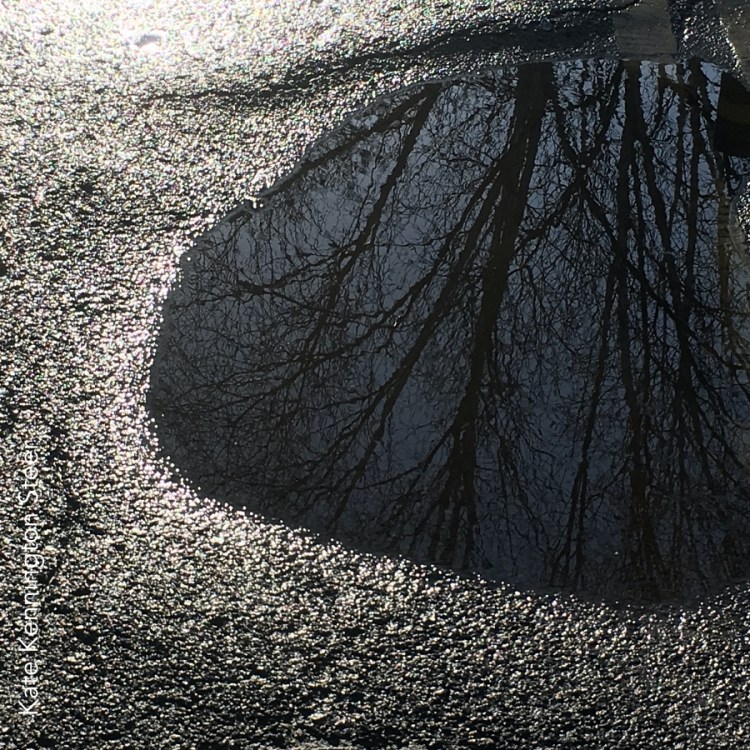
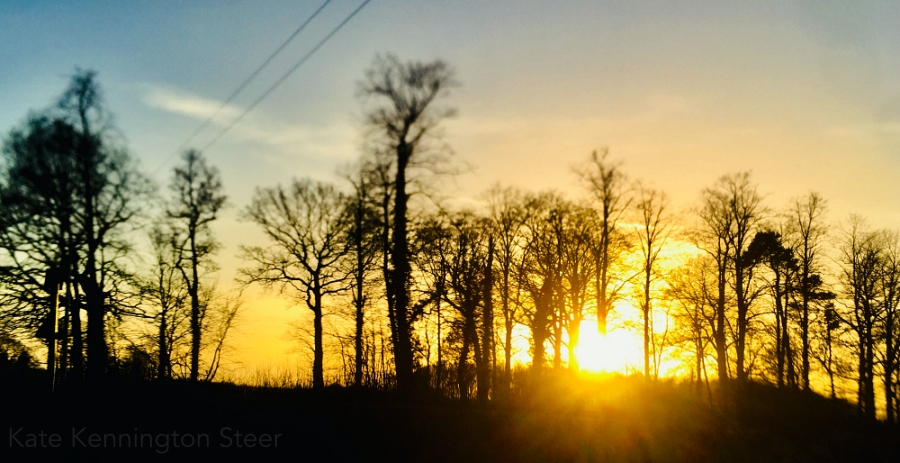
stubborn gladness (bl)stubborn gladness. iPhone image.

advent apertures 2019: day 18

If we could truly open the windows of perception, our lives would be infinitely richer, finer, truer to the possibilities of the soul. We would become considerably wiser, in understanding and in action. We could occupy the moment more fully, and employ more of our latent capacities. We might begin to genuinely respond to life and to others, not just react. And our lives would not fleetingly descend in a slumbering stupor of hazy half-awareness from birth to the moment of death. The senses would become instruments of delight and discovery, the feelings would become a refined way of knowing: weighing, evaluating, tasting the nature and substance of what stands before us. And the mind would be immeasurably enriched through the questions raised and the material gleaned through direct perception. The energies of life could pass through us, transformed by a resonant awareness into effortless action and generous kindness.

from Deep Perception

David Ulrich


“Excuse me, can I ask what you’re looking at?” has become a familiar question from strangers when I am out and about with my camera.  The person observing me is looking and looking and not seeing what on earth there might be that is noteworthy to take a picture of. 

“What is it I am seeing?”  “What am I looking at?”  “What is it?” are questions that many people ask when they look at my images, and these are questions to which, often annoyingly, I refuse to give answers, preferring that viewers work out for themselves what an image says to them.  This is a component part of contemplative photography, images may take time to reveal their ‘meaning’; I hope my images provide the viewer with a ‘pause’ where thoughts might fade and seeing might take over, if only for a fleeting moment.  In that pause, there is an opportunity for Spirit to speak to soul. 

This is particularly true of those images that I have explored during my Facebook iPhone project Acts of Daily Seeing over the last couple of years.  During that time I have also been fortunate enough to have worked with Canadian contemplative photographer Kim Manley Ort on a couple of her online courses.  Last November I explored her #30daysofperception course at a time when I was very ill with severe depression.  Focussing on photography (using my iPhone as, sadly, I felt I couldn’t see with my ‘proper’ camera, so dense was my brain fog) was more than a useful distraction whilst I passively waited for the depression to ease.  Instead, it kept my seeing active, helping me exercise a muscle I miss keenly when it gets flabby.  It also reminded me how much, as David Ulrich observes, what I see with my eyes can influence what I perceive with my mind; outer vision can rejuvenate my inner landscape.

As I wait for God to be revealed, I prompt myself to keep moving into seeing the world around me differently.  Advent waiting is active: encouraging me to keep honing my viewpoint, so I don’t miss any flash of God that might appear – even in the unlikeliest of places.

Religion passes out of the ken of Reason only where the eye of Reason has reached its own Horizon; and that Faith is then but its continuation: even as the Day softens away into the sweet Twilight, and Twilight, hushed and breathless, steals into the Darkness.  It is Night, sacred Night!  The upraised Eye views only the starry Heaven which manifests itself alone; and the outward Beholding is fixed on the sparks twinkling in the aweful depth, though Suns of other Worlds, only to preserve the Soul steady and collected in its pure Act of inward Adoration to the great I AM, and to the filial WORD that re-affirmeth it from Eternity to Eternity, whose choral Echo is the Universe.


from Biographia Literaria (ch13)

Samuel Taylor Coleridge

inner landscape (bl)inner landscape. iPhone image.

advent apertures 2019: day 17

Last night as I was sleeping,

I dreamt—marvellous error!—

that a spring was breaking

out in my heart.

I said: Along which secret aqueduct,

Oh water, are you coming to me,

water of a new life

that I have never drunk?


Last night as I was sleeping,

I dreamt—marvellous error!—

that I had a beehive

here inside my heart.

And the golden bees

were making white combs

and sweet honey

from my old failures.


Last night as I was sleeping,

I dreamt—marvellous error!—

that a fiery sun was giving

light inside my heart.

It was fiery because I felt

warmth as from a hearth,

and sun because it gave light

and brought tears to my eyes.


Last night as I slept,

I dreamt—marvellous error!—

that it was God I had

here inside my heart.


‘Last night as I was sleeping’

Antonio Machado (Translated by Robert Bly)


If I still myself long enough to pay attention, I can hear the whispers of the imprints that dreams might leave on the inside of my head; I wonder what they might be wanting to tell me?

If I still myself long enough to pay attention, I can hear the whispers of the incessant commentary that my brain keeps up all the hours I am awake; what if I ceased trying to chase threads of its sense, what if told this voice it could take some time off?

If I still myself long enough to pay attention, I might hear the relief of nothing; what if I spent time listening solely for the simple wonder of my blood’s thrum echoing in the space where my Creator dwells within?


And at dawn I leave my house and go into the field. Stars fade like memory.  Bless the boat of morning that carries us into light.  Bless the oars that stir the water causing ripples of consciousness.  Bless the northern and southern edges of sky.  Bless the eastern and western banks of the river.  Bless the oars men in the boat, god’s people, his faith, his creation.  Bless the face of god above us and the reflection of god on earth below.  Bless the veil of clouds that guard his secrets.  Bless life stirring below the surface of skin, the discomfort of human weakness and mortality, loss and suffering, the misunderstandings that prick consciousness and prod men toward truth.  Bless the goddesses, the wives, the daughters, the mothers, the priestesses.  Bless the house of Osiris.*  Bless this body where the world is gathered.  Bless the light in his forehead, in his heart and hands.  Bless the sun that shines on every limb.

A creature of light am I.


*Osiris is the god of fertility, agriculture, the afterlife, the dead, resurrection, life, and vegetation in ancient Egyptian religion.

from Awakening Osiris (c.1600 B.C.E.)

translated from the Egyptian by Normand Ellis

simplifying light (bl)simplifying light. iPhone image

advent apertures 2019: day 16

It has frequently been remarked, about my own writings, that I emphasize the notion of attention. This began simply enough: to see that the way the flicker flies is greatly different from the way the swallow plays in the golden air of summer. It was my pleasure to notice such things, it was a good first step. But later, watching M. when she was taking photographs, and watching her in the darkroom, and no less watching the intensity and openness with which she dealt with friends, and strangers too, taught me what real attention is about. Attention without feeling, I began to learn, is only a report. An openness — an empathy — was necessary if the attention was to matter… M. instilled in me this deeper level of looking and working, of seeing through the heavenly visibles to the heavenly invisibles.

Mary Oliver


Practising contemplative photography has taught me many things, but probably the most important of these is developing an attitude of attention: stopping long enough for my brain to cease its commentary of what’s before me, and actually see what caught the corner of my eye.  Shedding unnecessary distractions is a lifelong art to learn (as any mindfulness practitioner will tell you).  Yet even if my ‘seeing’ is only fleeting, it is enough to remind me, (in the same way that a toddler needs to be shown over and over again how to balance) that, Wonder awaits for me round this next corner, whether I can see it or not.


We poor myopic humans, with neither the raptor’s gift of long-distance acuity, nor the talents of a housefly for panoramic vision. However, with our big brains, we are at least aware of the limits of our vision. With a degree of humility rare in our species, we acknowledge there is much we can’t see, and so contrive remarkable ways to observe the world. Infrared satellite imagery, optical telescopes, and the Hubble space telescope bring vastness within our visual sphere. Electron microscopes let us wander the remote universe of our own cells. But at the middle scale, that of the unaided eye, our senses seem to be strangely dulled. With sophisticated technology, we strive to see what is beyond us, but are often blind to the myriad sparkling facets that lie so close at hand. We think we’re seeing when we’ve only scratched the surface. Our acuity at this middle scale seems diminished, not by any failing of the eyes, but by the willingness of the mind. Has the power of our devices led us to distrust our unaided eyes? Or have we become dismissive of what takes no technology but only time and patience to perceive? Attentiveness alone can rival the most powerful magnifying lens.

[…]

A Cheyenne elder of my acquaintance once told me that the best way to find something is not to go looking for it. This is a hard concept for a scientist. But he said to watch out of the corner of your eye, open to possibility, and what you seek will be revealed. The revelation of suddenly seeing what I was blind to only moments before is a sublime experience for me. I can revisit those moments and still feel the surge of expansion. The boundaries between my world and the world of another being get pushed back with sudden clarity an experience both humbling and joyful.

[…]

Mosses and other small beings issue an invitation to dwell for a time right at the limits of ordinary perception. All it requires of us is attentiveness. Look in a certain way and a whole new world can be revealed.

Robin Wall Kimmerer Gathering Moss: A Natural and Cultural History of Mosses

heavenly invisibles (bl)heavenly invisibles. iPhone image.

advent apertures 2019: Sunday 3

IMG_3066I walk early down a muddied fire road on the flank of the mountain.  Facing east as I turn toward home in the predawn dark, only the softest light has begun to pearl the horizon.
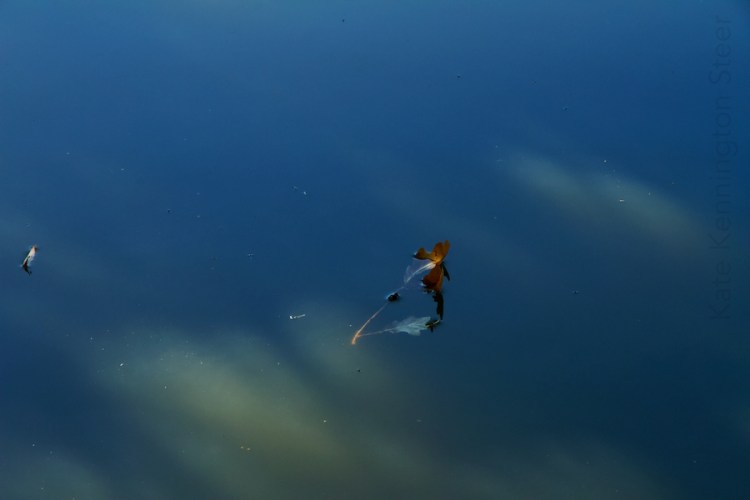
I am perplexed by the tiny flickers of light going off, like matches being lit and blown out, that I see near the ground.  After a moment I realize that these are the glimmer of birds’ wings as they flit from bush to bush, hop up and down from the ground.  Dawn is still so full of night that I cannot detect the birds until they spread their wings.  Then the palest light catches the edge backlit and shows me the briefest flash illumined, not the bird, but the outspread wing.

China Galland


‘How can this be?’


Gabriel greeted her:

Good morning!

You’re beautiful with God’s beauty,

Beautiful inside and out!

God be with you.

She was thoroughly shaken, wondering what was behind a greeting like that. But the angel assured her, “Mary, you have nothing to fear. God has a surprise for you … “

(Luke 1. 28-33 The Message)

I was extremely fortunate to have a Dad who, from when I was very young, encouraged me to “question everything” in order to develop a strong faith that was my own, not just a set of beliefs inherited from my parents by tradition or social convention.  In her book The Gift of Wonder, Christine Aroney-Sine discusses the art of spiritual questioning as a form of exploration rather than as an expression of doubt, or a challenge to orthodoxy.  She repeats John Stott’s comment that, “the answers we get depend on the questions we ask”, and goes on:

Passive questions that expect God to do something without my active engagement are destructive, not constructive.  When I blame God, I don’t need to respond.  “Why does God allow suffering?” sidesteps my responsibility and sometimes culpability in the situation I am struggling with.  Now I replace it with “What does God ask me to do when I am confronted with suffering?” Or “Where is God in the midst of this suffering?” (p81)

Yet it is true that my mind can race if I ask too many questions, often as a reaction to my fears.  Depending on the pace at which I ask the question “How can this be?” I may not allow enough time and space for it to sink in.  I might miss the amazement, the heartbeat that allows the Spirit to rush in and alight my mind with the faintest glimmers of Possibility’s wings.

What would I do if I were not afraid?

What pace might I choose to follow Light?

What if I believe God has a surprise in store for me today?


Dear God,

We pray for another way of being:

another way of knowing.


Across the difficult terrain of our existence

we have attempted to build a highway

and in so doing have lost our footpath.

God lead us to our footpath:


Lead us there where in simplicity

we may move at the speed of natural creatures

and feel the earth’s love beneath our feet.

Lead us there where step-by-step we may feel

the movement of creation in our hearts.

And lead us there where side-by-side

we may feel the embrace of the common soul.


Nothing can be loved at speed.


God lead us to the slow path; to the joyous insights

of the pilgrim; another way of knowing: another way of being.

Amen.


‘step by step prayer’

Michael Leunig

a slow revealing (bl)a slow revealing.  Canon 7D. f13. 1/125. ISO 1000.

advent apertures 2019: day 14

weep not for me, mother,

although the world’s weight

rests on my shoulders

along with your parting embrace,

the dark shadow of the cross

behind us now

and the box below waiting

to transport me to the tomb.

Weep not, for what is finished

is but the conception

of the great beginning,

a birth you never knew

you had laboured for,

and this pain tearing

your motherhood in two

will rend the curtains of eternity

and from the darkness

deliver captives drawn out

by the forceps, by the forcefield

of sacrificial love.

This Caesarian section

is the wonder-wound

that separates for ever

evil from good.

Weep not, for the grief is nearly over.

It is almost time to celebrate

the new life born eternal

over which death

shall never more exercise dominion.


‘Crossword’

Joanne Tulloch


Alongside my mind’s terrors of what might be the results of an encounter which brings revelation, it suddenly occurs to me to be frightened that much may also be demanded of me physically.  Living with chronic illness, often in bed for days, can mean I often live in my head; but what if this time, God is making specific demands on my body?  I cringe, because I already feel at the bottom of the tank – what else is there left to give?  Aren’t I already answering those demands physically by merely continuing to endure? 

And yet, all around me, in both the natural and human world, I see that ‘birthing the Kingdom’ is not a theoretical exercise.  There is a process that must be undergone; and one which inevitably includes dying to something too, if ‘only’ to my idea of myself.  If to effect an eternal kind of change?  I gulp.  I suspect that means there will be an impact even on the laws of physics themselves.

At the very least, I needs must be stripped bare, ready to relinquish all my leaves of accomplishment, all my loveliness of image; my true shape cannot be revealed unless I allow the God-Light to shine through my most bare and barren outlines.


The wood brings together

time past and time to come,

the hour-glass pivot-point

of shifting sand;

this moment where I stand

eyes closed, letting time fuse.


A meeting place of roots and feet

where Autumn roars its fury,

drowning out all sound

save for itself and the hoarse

kaahr kaahr of rooks;

black rags that swirl and dive

and make the wind their own.


I am caught in this apex,

crossed-road of time and space

where all things meet and meld

where all befores and afters disappear,

become this now, this moment,

this herein of being.


‘Being’

Jane Harland

wounded by wonder (bl)wounded by wonder. iPhone image.

advent apertures 2019: day 13

What little I know, I hold closer,

more dear, especially now

that I take the daily

reinvention of loss as my teacher.

I will never graduate from this college,

whose M.A. translates

“Master of Absence,”

with a subtext in the imperative:

Misplace Anything.

If there’s anything I want, it’s that more

people I love join the search party.

You were once renowned

among friends for your luck

in retrieving from the wayside

the perfect bowl for the kitchen,

or a hand carved deer, a pencil drawn

portrait of a young girl

whose brimming innocence

still makes me ache. Now

the daily litany of common losses

goes like this: Do you have

your wallet, keys, glasses, gloves,

giraffe? Oh dear, I forgot

my giraffe—that’s the preferred

response, but no: it’s usually

the glasses, the gloves, the wallet.

The keys I’ve hidden.

I’ve signed you up for “safe return”

with a medallion (like a diploma)

on a chain about your neck.


Okay, today, this writing,

I’m amused by the art of losing. 

I bow to Elizabeth Bishop, I try

“losing faster”—but when I get

frantic, when I’ve lost

my composure, my nerve, my patience,

my compassion, I have only

what little I know

to save me. Here’s what I know:

it’s not absence I fear, but anonymity.

I remember taking a deep breath,

stopped in my tracks. I’d been

looking for an important document

I had myself misplaced;

high and low, no luck yet. 

I was “beside myself,”

so there may have indeed been

my double running the search party.

“Stop,” you said gently. “I’ll go

get Margaret. She’ll know where it is.”

“But I’m Margaret,” I wailed.

“No, no.” You held out before me

a copy of one of my books,

pointing to the author’s photograph,

someone serious and composed.

“You know her. Margaret

Gibson, the poet.” We looked

into each others’ eyes a long time.

The earth tilted on its axis,

and what we were looking for,

each other and ourselves,

took the tilt, and we slid into each others’ arms,

holding on for dear life, holding on.


‘Losing It’

Margaret Gibson


An encounter that might hold a revelation: my reaction veers from welcome to running away.  Now, I find I am babbling incoherently with rage.  Out of all my fears, I erupt in a torrent of words about all the times God didn’t do something – in my life, in the lives of those I love, in the lives of those souls I don’t even know – and now an angel dares interrupt me and demand I do this? 

“Why should I join in with Your plans, when You clearly have no intention of joining in with mine?  Your priorities cannot possibly be worth following.  I defy You!”

I slam my shutters down in Your face.  I shake with the adrenalin of my terror and hug myself tight as the isolation comes crashing in, paralysing my every attempt to react differently in this moment. 

In my panic, I can see nothing – nothing of You, nothing of how I am in You, nothing of who You made me to be.

In my blindness, how can it be true that my darkness is not dark to God?


When words become unclear, I shall focus with photographs. When images become inadequate, I shall be content with silence.

Ansel Adams

shut in (bl)shut in. iPhone image.

advent apertures 2019: day 12

Not the profound dark

night of the soul


and not the austere desert

to scorch the heart at noon,

grip the mind

in teeth of ice at evening


but gray,

a place

without clear outlines,


the air

heavy and thick


the soft ground, clogging

my feet if I walk,

sucking them downwards

if I stand.


Have you been here?

Is it


a part of human-ness


to enter

no man’s land?


I can remember

(is it asking you

that

makes me remember?)

even here


the blesséd light that caressed the world

before I stumbled into

this place of mere

non-darkness.


‘Oblique Prayer’

Denise Levertov

Sometimes deliberately seeking the shadows is what brings relief, shelter from the hot sun, relaxation for taut eye muscles straining to see detail in the face of bright glare. I can gaze from the shadows out into the sunlit places, and the contrast helps define what I am looking for.  Colour and shape reappear, and as my wonder at the difference between ‘over’/‘out’ there and ‘in’ here increases, so does my capacity for wondering why I don’t allow myself to do this more often. 

Am I too often a noontide and midnight person? It is just possible that sometimes intentionally seeking the dark places, the Holy Darkness, might reveal what the Light holds before me.

To lose yourself: a voluptuous surrender, lost in your arms, lost to the world, utterly immersed in what is present so that its surroundings fade away… That thing the nature of which is totally unknown to you is usually what you need to find, and finding it is a matter of getting lost… The word “lost” comes from the Old Norse los, meaning the disbanding of an army, and this origin suggests soldiers falling out of formation to go home, a truce with the wide world. I worry now that many people never disband their armies, never go beyond what they know. Advertising, alarmist news, technology, incessant busyness, and the design of public and private space conspire to make it so… There’s another art of being at home in the unknown, so that being in its midst isn’t cause for panic or suffering, of being at home with being lost… Lost [is] mostly a state of mind, and this applies as much to all the metaphysical and metaphorical states of being lost as to blundering around in the backcountry.

The question then is how to get lost. Never to get lost is not to live, not to know how to get lost brings you to destruction, and somewhere in the terra incognita in between lies a life of discovery.

from review of Rebecca Solnit’s A field guide to getting lost

Maria Popova, Brainpickings

on the surface (bl)on the surface. Canon 7D. f13. 1/100. ISO 640.

advent apertures 2019: day 11

If the doors of perception were cleansed every thing would appear to man as it is, Infinite. For man has closed himself up, till he sees all things thro’ narrow chinks of his cavern.


from The Marriage of Heaven and Hell

William Blake


Just one of the effects of living with chronic clinical depression is that I have become intimately acquainted with rhythms of retreating, with hiding, with waiting.  I can go for days where all I seem to see are shadows projected on the walls of the cave of my mind. My consciousness becomes limited to black and white seeing; my options seem to become starkly either/or (with both choices seeming to be potentially destructive, and therefore not choices at all). 

In these seasons all I can do is hang on, exhausted; my waiting for something to shift renders me passive, weak and mostly unbelieving.

And yet … I wait because I know somewhere in me, somehow, my God is a both/and kind of God.

I wait because I know somewhere in me, somehow, that my darkness is not dark to God.


We are not great connoisseur of the two twilights.  We miss the dawning, excusably enough, by sleeping through it, and are as much strangers to the shadowless welling-up of day as to the hesitant return of consciousness in our slowly waking selves.  But our obliviousness to evening twilight is less understandable.  Why do we almost daily ignore a spectacle (and I do not mean sunset but rather the hour, more or less, afterward) that has a thousand tonalities, that alters and extends reality, that offers, more beautifully than anything man-made, a visual metaphor of peace?  To say that it catches us at busy or tired moments won’t do; for in temperate latitudes varies by hours from solstice to solstice.  Instead I suspect we shun evening twilight because it offers two things which, as insecurely rational beings, we would rather not appreciate; the vision of irrevocable cosmic change (indeed change into darkness), and a sense of deep ambiguity – of objects seeming to be more, less or other than we think them to be.  We are noontime and midnight people, and such devoted camp-followers of certainty that we cannot endure seeing it mocked and undermined by nature.  There is a brief period of twilight of which I am especially fond, little more than a moment, when I see what seems to be colour without light, followed by another brief period of light without colour.  The earlier period, like a dawn of night, calls up such sights as at all other times are hidden, wistful half-formless presences neither of the day nor night, that draw up with them similar presences in the mind.

Robert Grudin

hidden (bl)hidden. iPhone image.

advent apertures 2019: day 10

A part of us clings to our aloneness and does not allow God to touch us where we are most in pain. Often we hide…precisely those places in ourselves where we feel guilty, ashamed, confused, and lost. Thus we do not give [God] a chance to be with us where we feel most alone.

Christmas is the renewed invitation not to be afraid and to let [the one] whose love is greater than our own hearts and minds can comprehend be our companion.


from Gracias

Henri Nouwen


There have been numerous occasions in my life when it was possible for me to have an encounter with the Holy One and I have been so shaken up, I froze: overawed to the point of muteness. 

Then suddenly, as if some inbuilt automatic fast-action rewind instinct kicked in, all my blinkered prejudices and fearful thoughts start building themselves into contorted constructions.  I am filled with the urgency to block out as much of the terrifying, revealing Light as possible. 

Then I run away in the opposite direction in the desperate desire to hide my shame-filled past, my guilt-filled present, and my catastrophe-filled future.  I know what God must think of me, and I certainly do not want to hear that judgement spoken outloud by an Archangel; such knife-honed, clear-cut indisputable rejection would be more than I could bear.

What my system all too often seems unable to do is to just stop.

Look.

Wonder. 

Receive a passing angel’s blessing. 

My inability to sit and wait in my unknowing, in the midst of my unholy mess, in the place of no words, continually causes me pain; my ability to sit and wait until the holes which fear has drilled into me resolve into wholes, is pitifully inadequate. 

And yet … and yet … and yet

I still, somehow, have not yet lost sight of the faint glimmer of the thinnest of threads of trust entirely: even all my cluttered mess, all my bleak emptiness, is not beyond being graced into gift by the Giver.


What He sees

is Christ

in each of us …


What He sees

is …


our oh so imperfect attempts

at sacred art, whose attempt

is sacred.


He reads it as sacred: holy writ.


What He sees is Christ the work

of art, the masterpiece …

What He sees


is what any parent sees

in the refrigerator art of the beloved child,

perfection.


We are perfected in His eyes.

It only takes His eyes.


from ‘What He Sees’, Light Takes

Mia Anderson

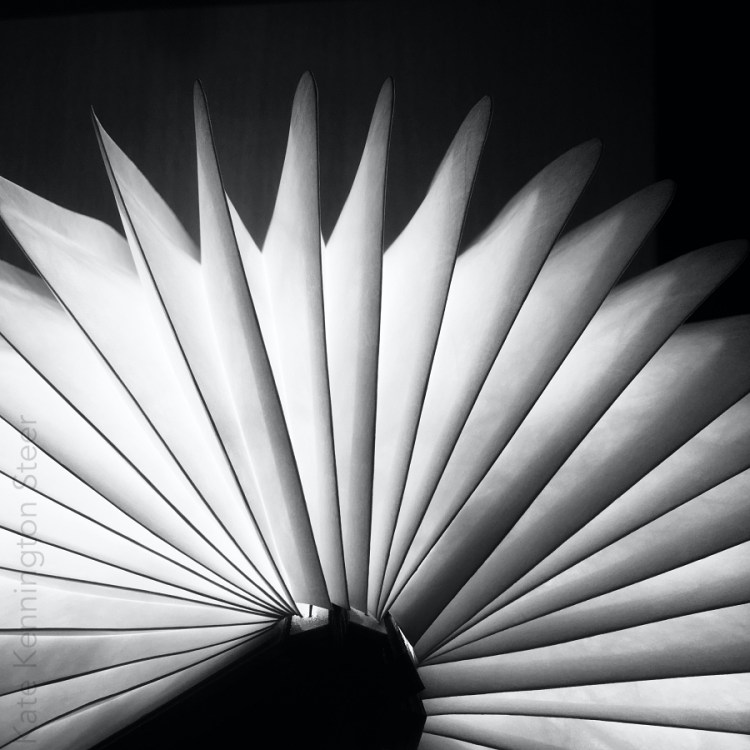
Book of Light (bl)Book of Light. iPhone image.  (with thanks to Rachel).