Something has reached out and taken in the beams of my eyes.
There is a longing, it is for his body, for every hair of that dark body.
All I was doing was being, and the Dancing Energy came by my house.
His face looks curiously like the moon, I saw it from the side, smiling.
My family says: “Don’t ever see him again!” And implies things in a low voice.
But my eyes have their own life; they laugh at rules, and know whose they are.
I believe I can bear on my shoulders whatever you want to say of me.
Mira says: Without the energy that lifts mountains, how am I to live?
‘All I was Doing Was Breathing’
Mirabai (16th. century Hindu mystic poet), translated by Robert Bly
It is one thing to try to convince my mind to change the scripts it keeps repeating to me; it is quite another to wade into the unknown depths of my heart, when I don’t know whether it can speak, let alone what it might say. For ‘heart-knowing’ is very difficult for me, as I have a highly calibrated sense of not being able to trust myself. That is, not just feeling I cannot trust what my mind tells me, as it twists and turns the messages of pain and depression and religion around into bizarre distortions which can make me act in strange ways. It is that as a whole person I do not trust myself to do ‘the right thing’. I do not trust myself not self-sabotage my healing journey. Some days, I do not trust that I can ever be whole.
heart knowing
Knowingdarkly is about developing this ‘heart knowing’: creating a space within for not knowing, for not even asking any questions, but for listening, for just being. Knowingdarkly is about being prepared to quiet my mind so I might descend to the ‘eye of my heart’, where I might glimpse the Dancing Energy in the dark, where all I need do is be and breathe.
If I am able to loose my controlling hold, I might be able to hear my heart-instinct quiet the head-voice that tells me I am untrustworthy. Then it just might be possible to hear how to maintain that small connection with the Hope enshrined in knowingdarkly, which I described in yesterday’s reflection. Once again,
you are a story. You are not merely the possessor and teller of a number of stories; you are a well-written intentional story that is authored by the greatest Writer of all time, and even before time and after time. The weight of those words, if you believe them even for brief snippets of time, can change the trajectory of your life.
Dan Allender
You cannot heal a heart
with one that has not been pierced.
You cannot see the Truth
with eyes that have not wept.
You cannot touch a soul
with one that has not known the darkness of night.
You cannot mop a brow
with a cloth that has not bandaged a wound.
You cannot hold a hand
with one not shaped by love.
You cannot carry a burden
with a back not already broken with a load.
You cannot rise
unless you fall;
You cannot see
unless you are blind;
You cannot live
unless you die;
You cannot hold
unless you let go.
James Percival
beginning to know my dark glistening heart. (iPhone image)
IT IS ONLY BY PUTTING IT INTO WORDS THAT I MAKE IT WHOLE.
Virginia Woolf
If seeingdarkly is my shorthand for ‘for now we shall see through a glass, darkly’, then my shorthand for ‘now I know in part’ (I Corinthians 13.12 KJV) is knowingdarkly.
There are so many days when I do not know what to think of myself or of God. There are days, due to depression, when it is difficult to think at all. Clinical Depression often warps the way I see myself, distorting what I know I believe, somewhere deep-down in my core:
I am a child of God.
God loves me.
I am loveable.
I am loved.
This is what I call ‘learning to live loved’. It is the basic building block of knowingdarkly, and I try to hold onto it. As I do so, it is vital to remind myself, as Douglas Coupland did in Generation X, that ‘you are not your ego’. My ego can twist the way I see myself in relation to God and others: all those futile ‘oughts, buts, shoulds, musts’ that arise out of my need to control what happens to me; my need to prevent further pain; or to hide my past pain from others. An ego twisted by years of misinterpreting scripture and the christian faith I was taught as a child. An ego which internalised spiritualised perfectionism and the consequential necessary self-sabotage that follows. As Kurtz and Ketcham remark:
… to be human is, after all, to be other than “God”. And so it is only in the embracing of our torn self, only in the acceptance that there is nothing “wrong” with feeling torn, that one can hope for whatever healing is available and can thus become as “whole” as possible. Only those who know darkness can truly appreciate light; only those who acknowledge darkness can even see the light.
(E.Kurtz & K. Ketcham, The Spirituality of Imperfection (61))
embracing our torn self
Changing my thinking; believing a new narrative; rewriting my script, my story. All these begin with acceptance and surrender. Even on my best days, what I know to be true about myself and my God is but a tiny part of knowingdarkly.
I recently re-found a scrap of a newspaper. On it, I had circled words Sky Hopinka said to a reporter from The Guardian newspaper. Sky Hopinka is an indigenous filmmaker from the Ho-Chunk Nation of Wisconsin. Whilst he was making Jáji Approx. in 2015 about the Standing Rock Dakota Access Pipeline protests, Hopinka said that ‘the difference between learning and knowing is little more than asking questions without the entitlement of an answer’.
I suspect this is knowingdarkly: an action where the ego is is not in charge of directing the mind, so the Spirit has space to be in my becoming. It is an action where I am content to allow myself not to know, not to be in charge of what and how I know or believe – about either myself or my God. If I can yield control of my life so that I can ‘live the questions’, as the poet Rilke put it, then I will also be yielding to ‘asking questions without the entitlement of an answer’. My ego is what demands it is ‘entitled’ to know. Knowingdarkly is an ongoing commitment to releasing that ‘right’ to know all.
It is also about realising the difference between controlling and connecting. The more I loose my ego’s controlling hold, the more my True Self can maintain the vital connection (however small, however weak a connection that feels) with the timeless hope which is enshrined at the heart of in knowingdarkly:
You are a story. You are not merely the possessor and teller of a number of stories; you are a well-written intentional story that is authored by the greatest Writer of all time, and even before time and after time. The weight of those words, if you believe them even for brief snippets of time, can change the trajectory of your life.
But for God to reach us, we have to allow suffering to wound us. Now is no time for an academic solidarity with the world. Real solidarity needs to be felt and suffered. That’s the real meaning of the word “suffer” – to allow someone else’s pain to influence us in a real way. We need to move beyond our own personal feelings and take in the whole.
FOR NOW WE SHALL SEE THROUGH A GLASS, DARKLY; BUT THEN FACE TO FACE: NOW I KNOW IN PART; BUT THEN I SHALL KNOW EVEN AS ALSO I AM KNOWN
(I CORINTHIANS 13.12 KJV)
With what – or whom – do I allow myself to come face to face? I know it is all too easy for me to hide away, making managing my health, and the needs of family and friends the focus of my world. It is also all too easy for me to become isolated and insulated from the world outside the walls of my bedroom. What do I really know of the broken communities of the world?
Yet seeingdarkly, even at my lowest moments, means that somewhere within me remains an unseen thread of connection to the eternal. And if I admit the presence of that thread in any way, then being connected to the eternal means I can become consciously welded to all those who breathe in, as I do, at this very moment – wherever, however, they are.
I learned to be a human being
from other human beings
I am who I am in this moment because of who other people are. This is the wonderful African principle of Ubuntu which Archbishop Desmond Tutu and the Dalai Lama introduced to me in their Book of Joy:
a person is a person through other persons (60).
The connections between us are not fixed. So one of the ways the Holy makes me is through binding me to other people. If I am open to coming face-to-face with strangers, then there will be different people to whom I am bound, in the different days and seasons of my life. The more I hide from interacting with others, the less I am made into the whole woman God wants me to be. We cannot be human without each other, ‘we’re meant for a very profound complementarity … I learned to be a human being from other human beings’, says Desmond Tutu (60):
This God is community … Being created by this God, we are created in order to flourish. And we flourish in community. (62)
Ubuntu
As Rohr notes above, I need to be connected to others by allowing their suffering to meet my own wounds. In that meeting we may all be healed. Similarly, in The Book of Joy Douglas Abrams summarises:
What does our happiness have to do with addressing the suffering of the world? In short, the more we heal our own pain, the more we can turn to the pain of others. But in a surprising way, what the Archbishop and the Dalai Lama were saying is that the way we heal our own pain is actually by turning to the pain of others. It is a virtuous circle. The more we turn toward others, the more joy we experience, and the more joy we experience, the more we can bring joy to others. The goal is not just to create joy for ourselves, but as the Archbishop poetically phrased it, “to be a reservoir of joy, an oasis of peace, a pool of serenity that can ripple out to all those around you.” … joy is contagious. As is love, compassion and generosity.“ (63)
I am a long way from being the serenity of the Archbishop’s poetry, but these reminders of the ways in which seeingdarkly can connect me with others, is a rich vein of gold I need to mine. I need to pay attention to the ways in which my ‘becoming’ – where the Maker is at work – is dependent on my encouraging the flourishing of others. Ubuntu has become a kind of shorthand of this for me in the last year.
the way we heal our own pain is actually
by turning to the pain of others
The visual elements of my pondering about Ubuntu have been influenced by the work of painter/sculptor El Anatsui. He is a Ghanaian artist best known for making textile-like hangings by joining bottle tops and milk cap foils with copper wire.* He uses recycled materials to create huge flags, sheets and drapes, which shimmer with a richness that belies the humble origins of his materials. His works are literally made out of African ‘base’ ‘gold’, and point up the fact that there are some places in the world where people have to re-use materials out of necessity, rather than as choice. Some of the materials have been made in Africa, shipped to Europe where they are consumed, and shipped back to Africa to be processed and recycled. Thus they also ‘connect’, by physical joinings, ideas of global consumerism and its historical origins, including the part played by slavery and the oppression of poverty. El Anatsui says:
I saw the bottle caps as relating to the history of Africa in the sense that when the earliest group of Europeans came to trade, they brought along rum originally from the West Indies that then went to Europe and finally to Africa as three legs of the triangular trip…The drink caps that I use are not made in Europe; they are all made in Nigeria, but they symbolize bringing together the histories of these two continents.
(The New Razzle Dazzle, Art News)
Astonishingly, the materials El Anatsui uses link together in such a way that the final whole is not a fixed, stiff item but is:
always in motion. Anytime you touch something, there is bound to be a change. The idea of a sheet that you can shape and reshape. It can be on the floor, it can be up on the ceiling, it can be up on the wall, all that fluidity is behind the concept.
(The Nomadic Aesthetic*)
I am who I am becoming because of the ways I touch others, the ways I connect with them, how I deal with their pain, how I sit next to them in their suffering.
Flexibly, through them, God makes me; flexibly, through me, God makes them.
I am moved by the Japanese art of Kintsugi, both for its own sake, and as a profound spiritual metaphor. Kintsugi is the art of repairing broken teaware, by reassembling the ceramic pieces in such a way that the broken/repaired/remade piece is perceived as being more beautiful, and as having even more value, than the original. As the artist Makoto Fujimura explains, technically, the pieces are reassembled using the ‘Urushi Japan lacquer technique’, then gold gilding is added to the filled cracks. Symbolically, spiritually, this technique is performed as an act of compassion towards the pot. Mending it reminds the mender, everything is gift; whilst the mended object re-presents beauty through brokenness. The Japanese kin stands for ‘gold’ and tsugi means ‘to reconnect’, but ‘tsugi also has, significantly, connotations of “connecting to the next generation.”’ (Fujimura, Art and Faith: A Theology of Making (43-4))
Whether of not I believe I am ‘broken’ because a religious creed tells me I am ‘sinful’, what I do believe is that the Christ in whom Christians believe came not to ‘fix’ me, nor even to ‘restore’ me; that Christ came to ‘make’ me into the whole Kate. What is staggering then, is either why God would bother; or why the making of me involves using the most costly materials of the Godself: the gold of Grace.
re/connect
Yet I do not treat myself as a valuable object. I do not look for how God has seamed the Godself into me; nor do I look for the beauty of the Kintsugi Christ in others.
Now I write that sentence, I cannot for the life of me imagine why not.
But I do wonder whether my lack of appreciation for where God has been at work reseaming what humanity has broken apart In the wider world, reflects my blindness towards the places where God has polished the beauty of holiness out the dirt of my own wounds.
I lack a sense of awe for all the signs of the Kintsugi Christ at work, making in the world around me, which I miss recognising for what they are.
overwhelmed, transfixed,
boundaries melt away,
absorb, accommodate,
self-transcendent
Perhaps my experience just reflects what psychologists are beginning to recognise as ‘awe-deprivation’ affecting large parts of human society.* In her book Positivity Barbara Frederickson defines awe like this:
[A]we happens when you come across goodness on a grand scale. You literally feel overwhelmed by greatness. By comparison, you feel small and humble. Awe makes you stop in your tracks. You are momentarily transfixed. Boundaries melt away and you feel part of something larger than yourself. Mentally, you’re challenged to absorb and accommodate the sheer scale of what you’ve encountered… Although a form of positivity, awe at times sits so close to the edge of safety that we get a whiff of negativity as well. Awe mixes with fear… Awe, like gratitude and inspiration, is a self-transcendent emotion.
If I risk beginning to look outside myself for the signs of God’s making in my world, I will become aware I am part of the larger story of God. If I risk beginning to look inside myself for signs of the acts of making the Kintsugi Christ loves to perform, then the sense of my own brokenness may begin to fall away and be replaced with awe and gratitude and praise.
Queer people of faith are ripped apart in all directions. But it is in the delicate art of re-seaming these wounds that transcendence abounds.
Amrou, ‘The Queer Prophet’, from The Book of Queer Prophets (11)
‘the only thing worse than being blind is having sight but no vision’.
Helen Keller
If I’m not careful, what I see with my eyes, and how I see it with my mind, often lead me into either/or binary: I like this/don’t like that; that’s alive/that’s dead; that’s beautiful/that’s ugly; that’s God/that’s not God.
Yet the practice of contemplative photography helps me see with all my senses, with mind, body and spirit, with heart and head. It helps me receive experience more non-judgementally and helps me discard the either/or filters and blinkers that narrow or blind my vision.
Although I act like a perfectionist in so many areas of my life, I have a few quirks which show that there are a few cracks in that totalising blindfold. For example, I have long been attracted to rust. (I distinctly remember looking through a viewfinder at rust on a railway bridge railings for a textile project when I was fourteen). It is the combination of strength and fragility, wear and tear, colour and texture that attracts me all at once. I find the infinite variety of rust stunningly beautiful.
One of the most helpful ideas I have been introduced to in the last decade is that of wabi-sabi, which helps me understand my attraction to broken, decaying, rusting things. In The Artist’s Rule Christine Valters-Paintner cites Crispin Sartwell’s definition of wabi-sabi:
Wabi as beauty is humility, asymmetry, and imperfection, a beauty of disintegration, of soil, of autumn leaves, grass in drought, crow feathers. For such reasons, an appreciation of wabi is an appreciation of the world and a certain sort of refusal of its transformation for delectation. Wabi as an aesthetic is a connection to the world in its imperfection, a way of seeing imperfection as itself embodying beauty … Sabi is a quality of stillness and solitude, a melancholy that is one of the basic human responses to and sources of beauty … Thus wabi-sabi is an aesthetic of poverty and loneliness, imperfection and austerity, affirmation and melancholy. Wabi-sabi is the beauty of the withered, weathered, tarnished, scarred, intimate, coarse, earthly, evanescent, tentative, ephemeral.
(Crispin Sartwell, Six Names of Beauty, cited in Christine Valters-Paintner The Artist’s Rule (98))
the beauty of the withered,
weathered,
tarnished, scarred
My imperfect vision is drawn to what is imperfect in the world. It is one thing to be tolerant of a thing or person who is somehow ‘broken’, when I compare it/them to some imagined ideal standard, it is another to hold up such imperfections as being ‘of God’. For paying attention to ‘imperfection’ in the wabi-sabi sense, names that yearning in me to see what is below the surface, the essential underneath the obvious. In my experience, that is where the holy is most often to be found. That is the sense of what I understand in this Bible passage:
So we do not lose heart. Even though our outer nature is wasting away, our inner nature is being renewed day by day. For this slight momentary affliction is preparing us for an eternal weight of glory beyond all measure, because we look not at what can be seen but at what cannot be seen; for what can be seen is temporary, but what cannot be seen is eternal. (2 Corinthians 4.16-18 (NRSV))
let there be room for not knowing
There are days when I imagine my vision to be ‘broken’ either through illness, lack of imagination or of contemplative intent. There are days when others rubbish my photography for being of uninteresting subjects (often they mean uncommercial) or full of imperfect technical precision. Yet if I keep letting go of what I expect to see and be present to what is actually before me, however initially unbeautiful or imperfect it may seem, it is not long before I see how the eternal is at work in this, in me. I catch a glimpse of how the Whole is renewing me daily.
Letting there be room for not knowing is the most important thing of all. When there’s a big disappointment, we don’t know if that’s the end of the story. It may just be the beginning of a great adventure. Life is like that. We don’t know anything. We call something bad; we call it good. But really we just don’t know.
Pema Chodron
the essential underneath the obvious. (iPhone image)
Little Kay was quite blue with cold – nearly black, in fact – but he did not notice it, for she [the Snow Queen] had kissed his shivering away, and his heart was nothing but a lump of ice. He spent his time dragging sharp, flat pieces of ice about, arranging them in all sorts of ways, trying to make something out of them – it was rather like the kind of thing we sometimes do with small flat pieces of wood when we try to make patterns from them – a Chinese puzzle they call it. Kay made patterns in the same way, most elaborate ones, a sort of intellectual ice-puzzle. In his own eyes the patterns were quite remarkable and of the utmost importance, that was what the grain of glass that was stuck in his eye did for him! He would lay out his patterns to form written words, but could never hit upon the way to lay out the word he wanted, the word ‘eternity’. The Snow Queen had said ‘If you can work out that pattern for me, you shall be your own master, and I will present you with the whole world – and a new pair of skates.’ But he could not do it.
‘The Snow Queen’, Hans Christian Anderson’s Fairy Tales (trans L.W.Kingsland)
When was the last time I heard eternity whispering to me? So often what I hear whispered in my ear are ‘the oughts, buts, musts and shoulds’ of life, which arise out of the lethal inner triumverate of my Critic, my Judge and my Commentator. Listening to those inner voices convinces me that I am ‘broken’, because I do not conform to the inherited values, or social norms, which tell what is the standard of ‘perfect’ that God wishes me to be. Listening to these ideas of what is ‘perfect’ leads me to attempt to fix my brokenness my willpower alone. A strategy that is bound to fail – as it has done, time and again without number – and yet I still keep trying to do it.
The only way to counter that perfectionism which leads me into such self-destructive, self-sabotaging patterns, is to listen to the word ‘eternal’ and to live in the middle of the eternal contradiction. Eternal life, including the ‘then’ of life after death, is all about being present to my now, so that I may encounter my God here.
Unlike seeing, where one can look away, one cannot ‘hear away’ but must listen … Hearing implies already belonging together in such a manner that one is claimed by what is being said. Hearing involves intimacies too frequently forgotten.
(Hans Georg Gadamer, cited in Spirituality of Imperfection, Ernest Kurtz and Katherine Ketcham (69-70))
I can ‘live this day’ only if I understand
it as part of my whole story
Being present in my now, as it is, not as I think it ought to be, is the very opposite of what the perfectionist wants, which is to live in everything all at once. The perfectionist has no patience with small steps, with only seeing part of the pattern at a time. Yet, if I am to be present to encounter God in my now, I must bring all of me, including all the bits I don’t want God to see, the parts about which I don’t want to hear God’s opinion. As Kurtz and Ketcham note, spirituality is a reality that must touch all of one’s life or it touches none of one’s life. The wholeness of ‘”this day” has meaning only insofar as it unites my past with my future. I can “live this day” only if I understand it as part of my whole story – the part that I can live this day, “now”.’ (Spirituality of Imperfection (153))
Part of seeingdarkly is hearing ‘darkly: a full-sensory receiving of what is given in this now.
Another part of seeingdarkly is knowing ‘darkly’, which involves accepting ‘darkly’: accepting that where the whole of God is, is in this now, is in me. God is in this moment, with me, in this here, in this now: Whole.
The Whole.
The Holy.
The Whole holies me until I am hale.
This intimate indwelling is the miracle of the Incarnation we celebrate at Christmas.
“How does a person seek union with God?” the seeker asked.
“The harder you seek,” the teacher said, “the more distance you create between God and you.”
“So what does one do about the distance?”
“Understand that it isn’t there,” the teacher said.
“Does that mean God and I are one?” the seeker said.
“Not one. Not two.”
“How is that possible?” the seeker said.
“The sun and its light, the ocean and the wave, the singer and the song. Not one. Not two.”
(cited in The Rule of Benedict, Joan Chittister (81))
eternity whispering. Canon 7D. f5.6. 1/160. ISO 500.
We are afraid of emptiness. Spinoza speaks about our “horror vacui”, our horrendous fear of vacancy … It is very hard to allow emptiness to exist in our lives. Emptiness requires a willingness not to be in control, a willingness to let something new and unexpected happen. It requires trust, surrender, and openness to guidance. God wants to dwell in our emptiness.
(Bread for the Journey, Henri Nouwen (70))
It is hard not to see my body as broken, dysfunctional. In hospital three years ago I was awarded the dubious honour of having a ‘Functional Neurological Disorder’ (FND). It is hard not to take this label ‘disordered’ to heart, and to let it become an identity.
But I am not my illness. Nor am I just my body in isolation. The wellness of my body does not mean that I will be whole, nor does the opposite. I can only see myself ‘darkly’, patchily.
So I was struck by the parallels between this skewed seeing of myself and my common visual misperception of shadows as flat:
The actual shadow does not reside primarily on the ground; it is a voluminous being of thickness and depth, a mostly unseen presence that dwells in the air between my body and that ground. The dusky shape on the asphalt touches me only at my feet, but that is merely the outermost edge of a thick volume of shade, extending from the pavement and touching every point of my person.
(Becoming Animal: An Earthly Cosmology, David Abram)
My eyes cannot experience the whole of what a shadow is. And yet, the potential for whole seeing of the whole shadow-body remains. The sculptor Anthony Gormley has explored the ideas around ‘what makes a body’ for his whole career, using his own body as a recurring reference point. He asks:
How do we treat the body not as a given, not as appearance but as the place that each find ourselves in? … I want to use sculpture to throw us back into the world, to provide this place where the magic, the subtlety, the extraordinary nature of our firsthand experience is celebrated, enhanced, made more present.
(RA (Autumn 2019))
Recently Gormley has explored this idea of presence by showing, in a wide variety of materials and on varying scales, the ‘empty space’ his body might occupy. Once again, the theme returns: if I want to know how I am whole, I need to look at what and where I am not; I need to face the shadow, the vacuum, the emptiness.
Conversely, acknowledging my emptiness, then surrendering it to God, brings me into a place where I might reglimpse the ‘magic’ and celebrate what it is to be human: a child of God.
The ethos of L’Arche communities reflects exactly this. Designed in the 1960’s as a community where those with and without learning disabilities might live together, L’Arche is now a worldwide movement and there is a network of one hundred and fifty-three communities, in thirty-eight countries, across five continents:
Allegedly “disabled” people would teach us that we most encounter wholeness when we recognise our poverty not our capacity … The handicapped, the elderly, the marginalised, and the weak have little sense of competition. These people call the healthy and the robust to a life of sharing, where individuals are valued for themselves in their uniqueness. There is, we learn from them, no need to conform – we are already one in our fragility and in our being toward death.
(from A Blessed Weakness: The Spirit of Jean Vanier and l’Arche, Michael Downey; cited by Belden C. Lane, The Solace of Fierce Landscapes (34))
“we are already one in our fragility”
Abrams, L’Arche, Gormley and seeingdarkly: all are reflecting on the fragility of my mind, body and spirit in different ways. All these point towards what many humans sense: there is such a thing as ‘a whole’; that wholeness is possible: even if it is currently beyond my sight or my understanding or my experience.
Genuine wholeness in the spiritual life … requires unflinchingly facing one’s hollowness. The harshness of the desert exacts a stripping away of every chimera and self-delusion for the sake of what is real. “Delight in the truth,” exhorts Donald Nicholl. “Truth tastes better with each illusion that evaporates.”
The Solace of Fierce Landscapes, Belden C. Lane (197/8)
The traditions of ‘Desert Spirituality’ teach me that the route to wholeness in heart, body, mind and spirit can only lie through risk and loss. There are times when I feel all the losses that thirty years of chronic illness have brought are very close to my surface. I don’t have to look very hard. There are times as well when I look at the wider world and all I see is loss – loss through war, famine, violence, poverty.
Feeling such loss, and feeling so lost, does not make me inclined to risk anything. Too often I just want to hide instead. Yet spiritual teachers down the centuries all agree that ‘before we awaken to who we are we have to awaken to who we are not’ (Spiritual Intelligence, Brian Draper (63)).
I am not the woman I thought I would be. I lost sight of the Kate I wanted to be more than twenty years ago. I still miss her. Her dreams, like my dreams, seem to lie in tatters. My task now though, is to live wholeheartedly as who I am – now. I need to learn to rejoice in all the abundance of who I am; rather than living in the past – never facing what, and who, is real before me today.
No one is as whole as [the one] who has a broken heart
said Rabbi Moshe Leib of Sasov. I cannot be wholly who I am, as God made me, without being prepared to admit I am not God. And if I am not God, and I cannot control this world, then what becomes vital is to be who I am. This means living out the paradox that before I can be whole, I have to admit my heart is broken.
All shall be well and all shall be well
and all manner of things shall be well
and not the least thing shall be missed
Every dawn is a holy event and every day is holy
The earth is sacred and every step taken upon her is as a prayer
All things are yours, and all things are yours
and God is reconciling all things
Resonate with the prayer of all our relations
Let all that is restless and guarded in me know its own sadness
Let sadness rise up as incense to the God who sees
See the desolations God brings upon earth:
God breaks the weapons of war
abolishes all law
and liberates the heart
Be still and know
Today I break my vigils to the past
I end my vigil to the empty spaces left by my losses
They are gone and shall not return
But here am I today
My task is to live
I end my vigil of vengeance and anger over the injustices and abuses I have known
It happened and cannot be undone
only forgiven and let be
And here am I today
My task is to live
I end the vigil of silent fear of the powers that have dominated me
They ruled over me for a time
and they rule over me no more
Here I am today
My task is to live
I end the vigil I have kept to the dutiful martyr of sorrows
Weeping is for a night, but there is joy in the morning
Here am I today
My task is to live and to live joyously
I arise from the sorrows of the past
I blow out the candles and turn
I face the sun and feel the wind of the present
I put my feet down upon the rich earth of today
and she welcomes me
There is a river that flows form the being of God
and on its banks are trees of healing
It flows to the dead places
to the stuck places
to the places of rage
to the places of hurt
to the waters where nothing lives
The river of God cancels all debts and makes alive in gladness
All shall be well and all shall be well
and all manner of things shall be well
and not the least thing shall be missed
‘A liturgy of wholeness’, David Blower. Nomad Devotionals & Contemplations E92. Nomadpodcast.co.uk (David has collected a number of texts into this liturgy. They are from Julian of Norwich, The Apostle Paul, Psalm 46 and some other ‘bits and pieces’. )
today I break my vigils to the past (iPhone image)
(8-11thc. Indian female practitioner of Tantric Buddhism)
What is it that I think I know of myself? I may not want to look at the places where I my mind tells me I am ‘broken’, but as the fifth century monk John Cassian remarks:
Hidden things hinder wholeheartedness
My mind is capable of huge feats of self-deception. There are many places within myself I dare not look, for fear of meeting the Kates I do not want to acknowledge exist. Yet hiding from the whole of me is not going to facilitate my healing in body, mind or spirit.
So, with great reluctance, I have to turn and face the ‘darkness’* of me. I need to be willing to look at the places where I am broken before the Spirit can truly mend them. There are other places which I know I will deliberately have to break open, break into, to let out what is poisoning me, to enter into the dark, ambiguous, unknown places where God is in me. All that I think I know may need to be let go of; I may need to ‘break’ in order to un-know.
Feeling broken, I then need to be courageous to look at the pieces that are left. I need to make time to sit in the mess, with all the edges of me that don’t fit, with all the questions I want to ask God, to see that feeling I am a ‘fragment’,
is a reality of being creatures who can only apprehend with out senses – in bites, in touches, in smells, in sounds, and in focussed but shifting sight. We live in the reality of these pieces where the world is always too much for us to hold all at once … God works with these fragments, moving in the spaces between them to form communion with us. The fragments facilitate communion.
After Whiteness, Willie James Jennings (35)
What do I know?: that through ‘seeing darkly’, my wounds are the way to God: one broken fragment at a time.
The time will come when the sight of this wretchedness, which horrifies you now, will fill you with joy and keep you in a delightful peace. It is only when we have reached the bottom of the abyss of our nothingness and are firmly established there that we can “walk before God in justice and truth” … The fruit of grace must, for the moment, remain hidden, buried as it were in the abyss of your wretchedness underneath the most lively awareness of your weakness.
Lettres Spirituelles, Jean-Pierre de Caussade
Please note I do not automatically equate ‘darkness’ and ‘brokenness’; nor do I automatically equate ‘darkness’ with ‘evil’. I never equate ‘darkness’ with ‘blackness’, with all the damaging cultural, colonial, social and spiritual histories that word has brought to people of colour and their ancestors. Since I am a visual person, ‘darkness’ often conveys to me the sense of being blindn to the unknown. It is also a word I often use as shorthand for the places where depression sits so profoundly within me, it feels as though those parts of me have become fossilised. To ‘turn and face the darkness’ then, is about the need to confront what I wish to flee; to bring every iota of my creativity to bear on what is ‘dark’ within, in order to express the pain of negative thoughts, fixed thinking, self-harming and self-sabotaging behaviours, actions and emotions which has left such deep wounds within. ‘Seeingdarkly’ in this context, is to treat darkness (within and without, physically, spiritually, materially, emotionally) as a mystery in which I might encounter the Godhead, where I might behold new revelations of Grace. It is these associations of ‘darkness’ which I will be exploring during this Advent.
For the last few years I have been trying to change the way I think and talk about living with chronic illness and depression. I am less interested in wellness – which may or may not come – but I am interested in wholeness. For I realise I do not feel whole. And yet I believe in God’s eyes I am already whole, I just can’t feel it or know it or access it in my daily lived experience.
And so I have been reflecting again this year on the poetry of these lines which I have long loved:
FOR NOW WE SHALL SEE THROUGH A GLASS, DARKLY; BUT THEN FACE TO FACE: NOW I KNOW IN PART; BUT THEN I SHALL KNOW EVEN AS ALSO I AM KNOWN
(I CORINTHIANS 13.12 KJV)
Like all Advent journeys, this one must start in that ‘darkly’ place. I am writing this series in the grip of a deep depression, hoping to create my way out of it and taking some inspiration from the painter Mark Rothko who, when creating a chapel said, “I want to make something you don’t want to look at.” At times during this series it may feel like I don’t want to look: at who I am, at who God is.
Yet, as the spirituality of Alcoholics Anonymous reminds me: God comes through the wound.
I want to make something you don’t want to look at
The places in me from which I shy away from looking, whether because of fear or shame, are the very places I need to be looking, if I want to see the God who is both Here, and Then. This series will be about looking at the ways God is present in my here and my now. Most particularly, I will be looking in the places where I think or feel God is absent. I want to know how God might be encountered in the very directions I forget to look.
In her poem ‘cartographies of silence’ Adrienne Rich cautions me, ‘Do not confuse silence with any kind of absence’. Too often I do. For I confuse what I do and don’t know. Further, at Advent I change the metaphors: what was light becomes dark, what was dark becomes light. Yet these are not easy metaphors to relate to my spirituality: ‘knowing’ might be ‘dark’, ‘unknowing’ may be ‘light’.
In the seed, the genes whisper: stretch out for the light
and see the dark
And the tree seeks the light, it stretches out for the dark
And the more darkness it finds, the more light it discovers.
(from Horologium, Reide Eknar)
Once again, I come to the Advent season knowing I have to face the darkness within me and without me. I need to look in the shadowy places I do not want to look, if I am to glimpse a vision of the whole of who I was created to be; if I am to have an encounter with the One who is Whole.
Union is a watery way.
In an eye, the point of light.
In the chest, the soul.
The place where ecstatic lovers go
is called the tavern, where everyone gambles,
and whoever loses has to live there.
So, my love, even if you are the pattern
of time’s orderly passage, do not go,
or if you do, wear a disguise.
But do not cover your chest.
Stay open there.
Someone asks me, What is love?
Do not look for an explanation.
Dissolve into me, and you will know
when it calls. Respond.
Walk out as a lion, as a rose.
Inhale autumn, long for spring.
You that change the dull field,
who give conversation to damaged ears,
make dying alive, award guardianship
to the wandering mind,
you who erase the five senses at night,
who give eyes allure and a blood clot wisdom,
who give the lover heroic strength,
you who hear what Sanai said,
Lose your life, if you seek eternity.
The master who teaches us
is absolute light, not this visibility
Rumi: Bridge To The Soul, Coleman Barks.
the more darkness it finds, the more light it discovers (iPhone image)
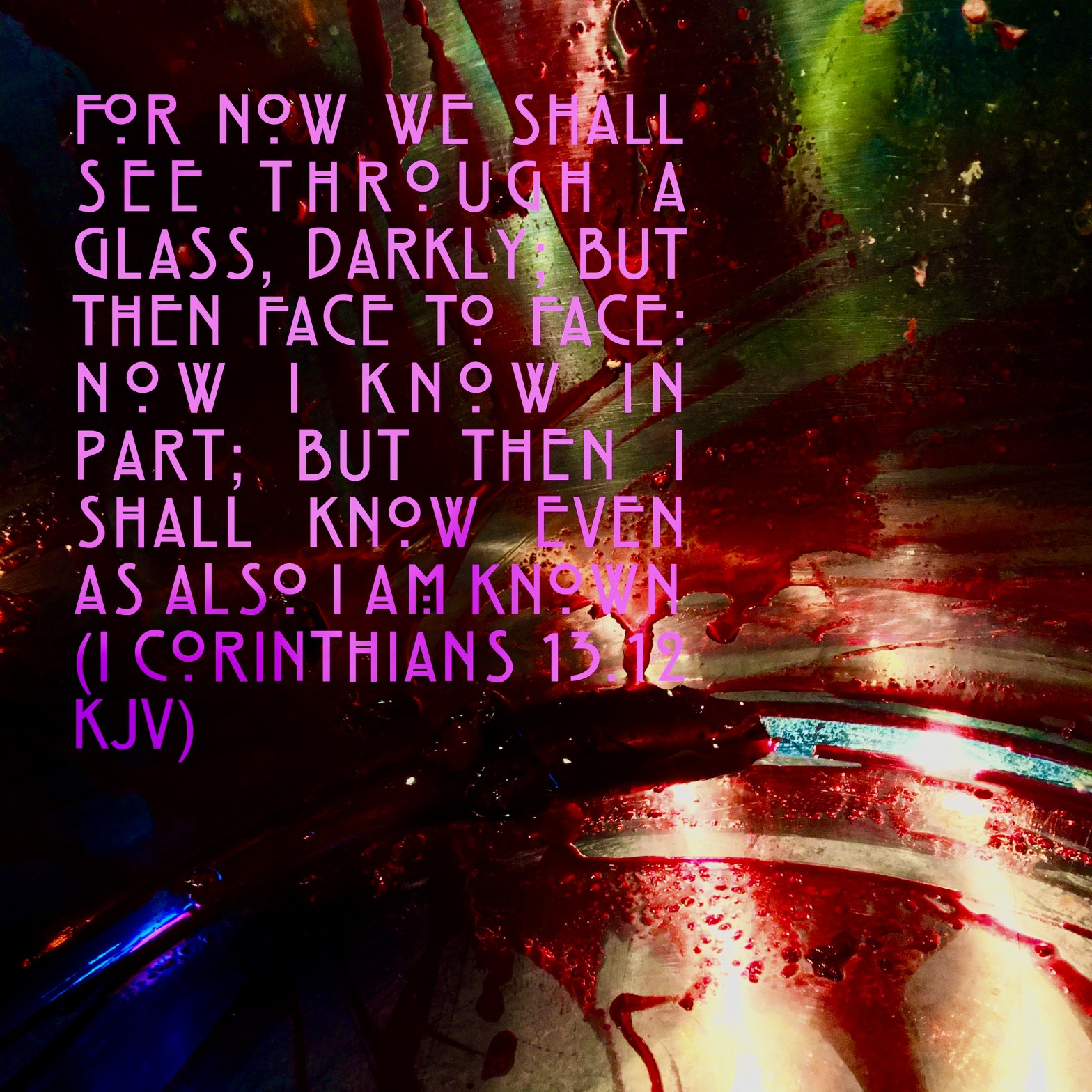
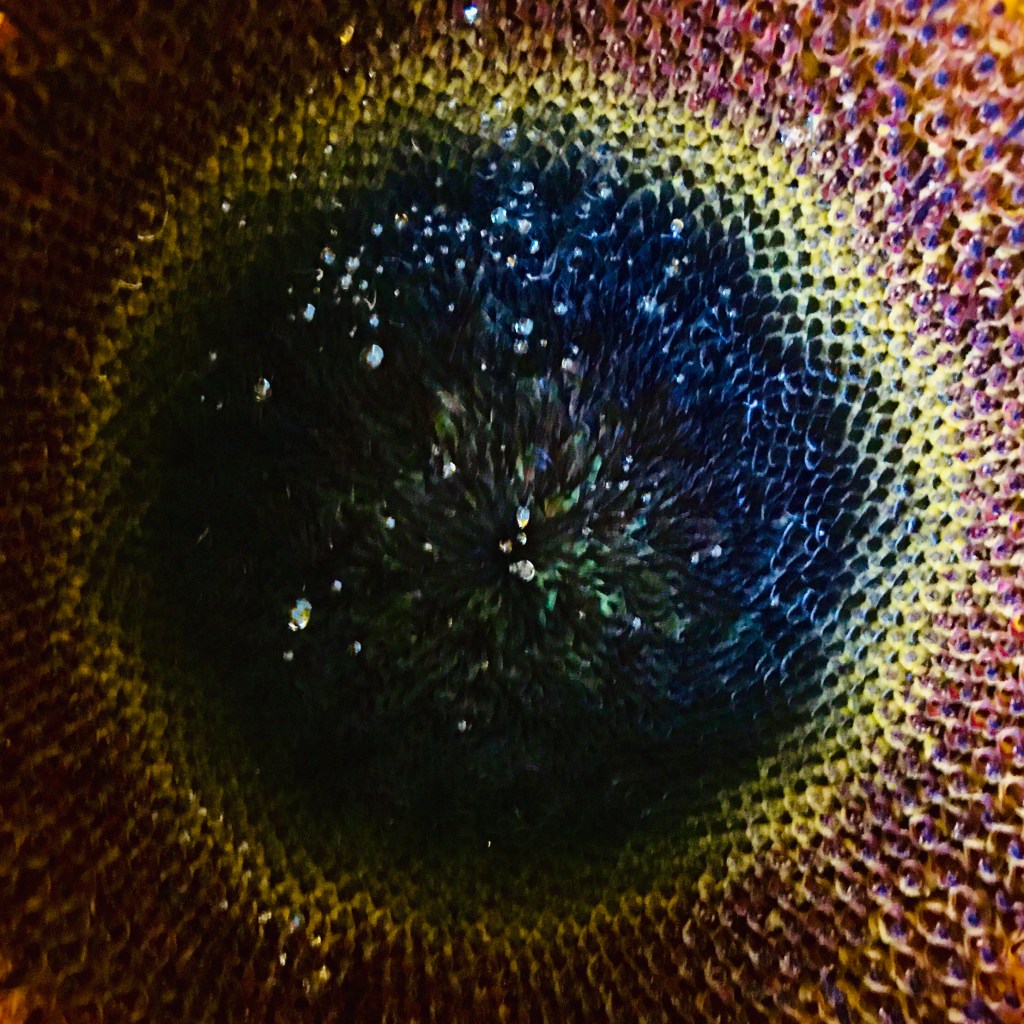
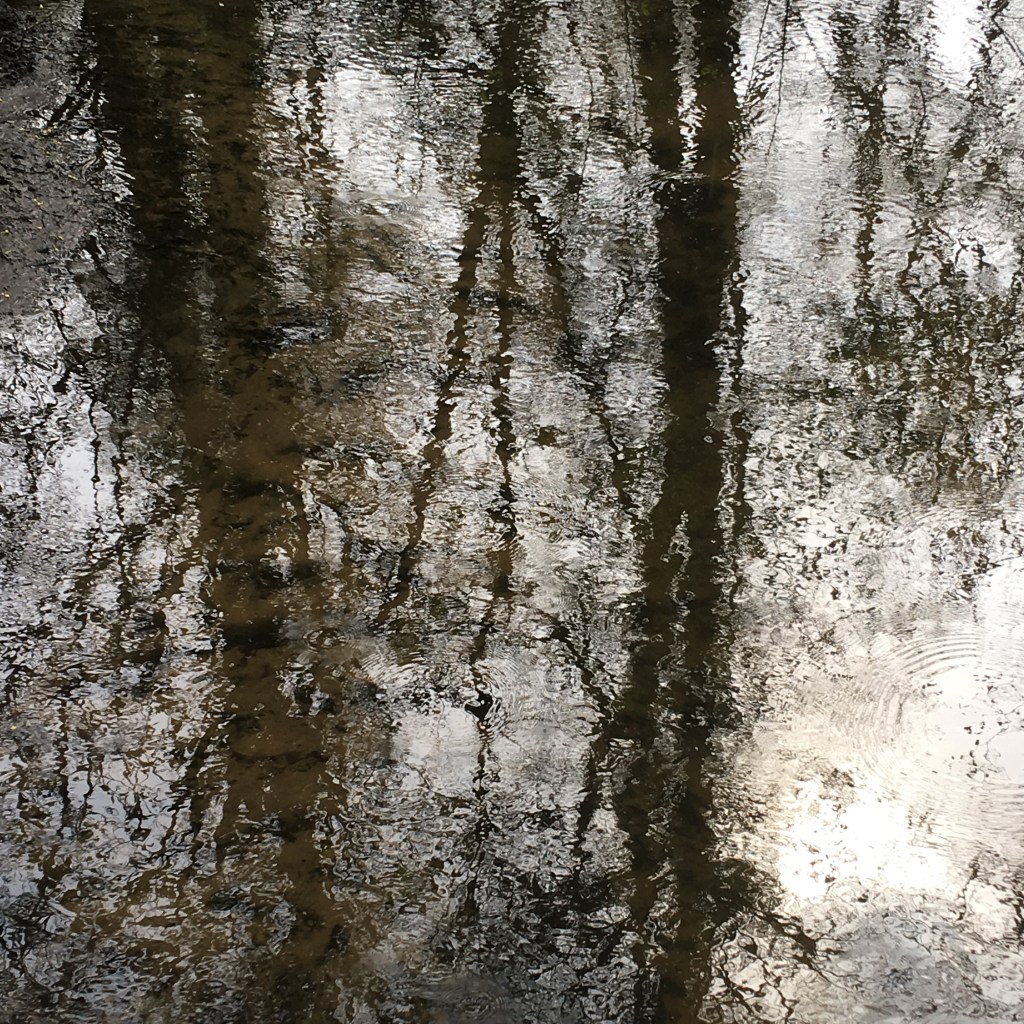


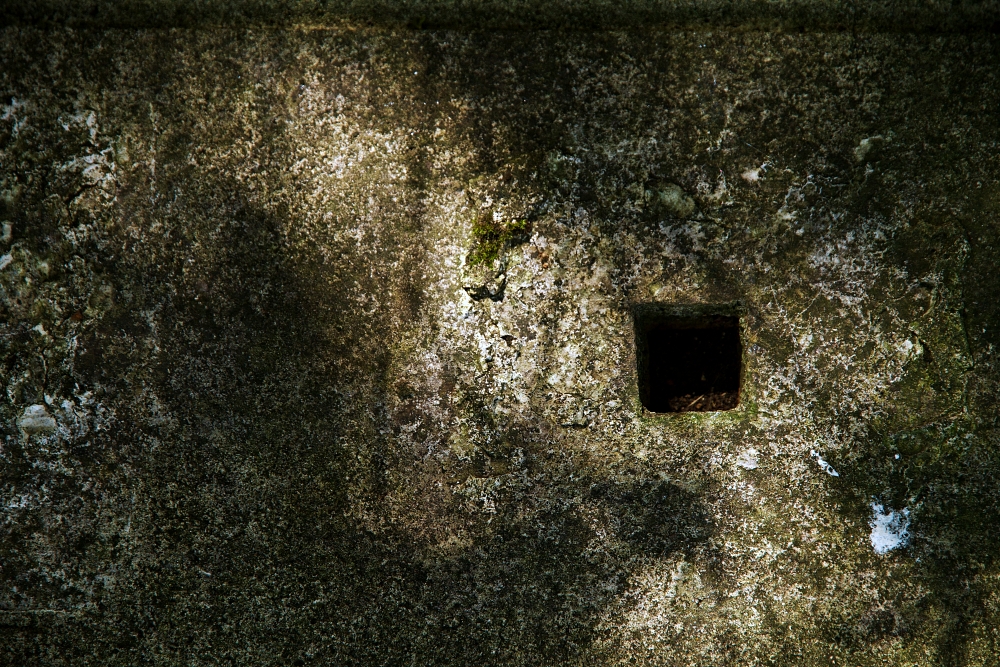


 image into ikon