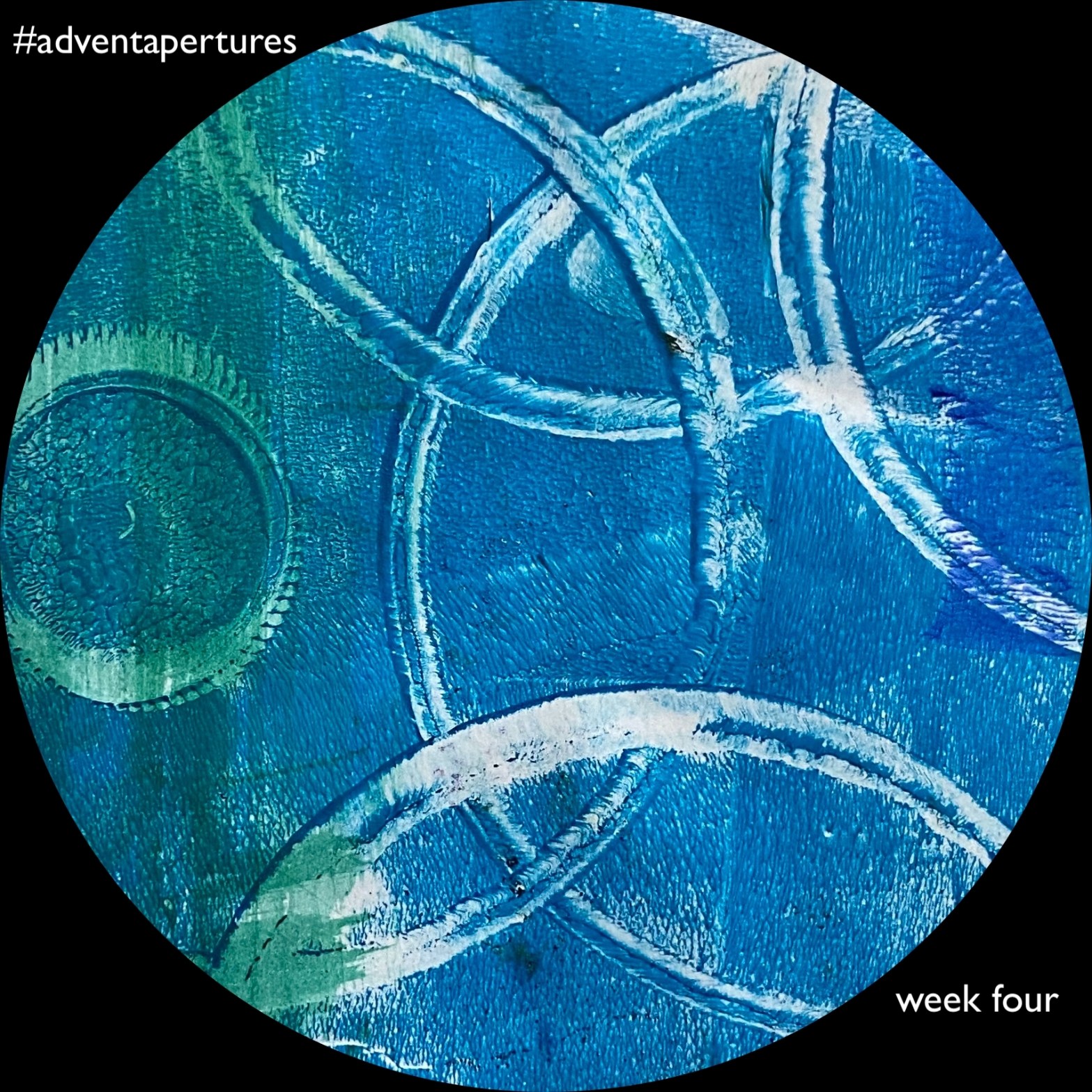
Remembering that it happened once,
We cannot turn away the thought,
As we go out, cold, to our barns
Toward the long night’s end, that we
Ourselves are living in the world
It happened in when it first happened,
That we ourselves, opening a stall
(A latch thrown open countless times
Before), might find them breathing there,
Foreknown: the Child bedded in straw,
The mother kneeling over Him,
The husband standing in belief
He scarcely can believe, in light
That lights them from no source we see,
An April morning’s light, the air
Around them joyful as a choir.
We stand with one hand on the door,
Looking into another world
That is this world, the pale daylight
Coming just as before, our chores
To do, the cattle all awake,
Our own white frozen breath hanging
In front of us; and we are here
As we have never been before,
Sighted as not before, our place
Holy, although we knew it not.
‘Remembering that it happened once’
Wendell Berry
For me, Christmas Eve is always Mary’s day. It is a day for me to remember the Magnificat, Mary’s song, an outburst of worship at being told she was to become the womb of God. Theologian Elizabeth Johnson, in her book Truly Our Sister, writes:
Mary’s mothering has the potential to promote the ‘ripeness of maturity’ that enhances the dignity of all women who nurture and serve the life of others, whether biologically or in other ways. . . we are all meant to be mothers of God, for God is always needing to be born.
God is always needing to be born. Yes. And every year, the need seems to become more desperate. I am often urging God to demonstrate the GodSelf embodied, to show us how the GodSelf is (not just was) an earth-shaking intrusion into matter, so that nothing can be the same, so that it is a fact that no one could possibly ignore. So nations will bow the knee to the ChristChild.
I need to reimagine the wonder of this every day. As Wendell Berry writes (above), I need to realise the incarnation in the very midst of my now means ‘we are here/as we have never been before/sighted as not before/our place/Holy, although we knew it not.’ The incarnation means God is Emmanuel – with us, with me, in all the mess and pain and grief; in all the occasions for wonder and joy. I am seen differently by the God who chooses to be with. I am made holy, a child of God who is given the vocation to mother God in whatever corners of the world she surprises God, in all the places where God is most needed (and if I don’t go, who will?).
The poet Robert Macfarlane writes about the need for ‘rewonderment’. The words we need to describe landscapes which are vitally important to us are slipping away through disuse, leaving the land itself open to future abuse and neglect because we no longer speak about it in known terms. In his book Landmarks Macfarlane comments that specialised, nuanced vocabularies, which celebrate the differences between places beyond the city limits, have been replaced with a ‘blandscape’, with most of us only able to speak about where we live ‘in large generic units (‘field’, ‘hill’, ‘valley’, ‘wood’).’ We have become ‘indifferent to the distinction between things … Language deficit leads to attention deficit. As we further deplete our ability to name, describe and figure particular aspects of our places, our competence for understanding and imagining possible relationships with non-human nature is correspondingly depleted.’ Such depletion is what takes away our capacity for wonder, (wonder as defined: ’in which state we are comfortable with not-knowing’). (25) MacFarlane goes on to say:
Language is fundamental to the possibility of re-wonderment, for language does not just register experience, it produces it. The contours and colours of words are inseparable from the feelings we create in relation to situations, to others and to places. Language carries a formative as well as an informative impulse – the power known to theorists as ‘illocutionary’ or ‘illative’. Certain kinds of language can restore a measure of wonder to our relations with nature. … As Barry Lopez urges: ‘One must wait for the moment when the thing – the hill, the tarn, the lunette, the kiss tank, the caliche flat, the bajada – ceases to be a thing and becomes something that knows we are there.’ (25-6)
The Wise-Ones came to Mary and brought to her a capacity for rewonderment. They brought her assurance that the ancient prophets are to be believed; that the angels, the ancestors, are to be listened to. Their learning brought her new information, a different perspective. This Godchild, as signified by the ChristStar that they have followed, is Messiah to the nations, to foreigners as well as to the Jewish peoples. The Wise-Ones demonstrate to her that her vocabulary needs to be expanded: the language of Kingship, of Messianic enormity, of cosmic shattering, of journey and quest, can be summed up by their embodied experience of the ‘withness’ of God the Most High.
The star, who ceases to be a thing, has become a flesh and blood body who knows ‘we are [t]here’, and speaks the wonderful language of Grace.
Le coinnle na n-aingeal tá an spéir amuigh breactha,
Tá fiacail an tseaca sa ghaoth ón gcnoc;
Adaigh an tine is téigh chun na leapa:
Luífidh Mac Dé ins an teach seo anocht.
With the angels’ candles the sky is now dappled,
The frost on the wind from the hill has a bite,
Kindle the fire and go to bed,
The Son of God will lie in this house tonight.
Fág an doras ar leathadh ina coinne,
An Mhaighdean a thiocfaidh is a Naí ar a hucht;
Deonaigh do shuaimhneas a ligean, a Mhuire,
Luífidh Mac Dé ins an teach seo anocht.
Leave the door open for her,
The Virgin who’ll come with the Child on her breast,
Grant that you’ll rest here tonight, Holy Mary,
The Son of God will lie in this house tonight.
In the darkness of night ,theres a shimmering light
That beckons to beauty, A wonderful sight .
Awake from your slumber , Prepare ye the way
For the Christ Light will rest in your heart there to stay . . .
The door will be opened
A Welcome in place
To mother and baby , a gentle embrace.
Tenderness smiling through a cold winters night
Let your heart be the cradle that welcomes His Light …
Let your heart be the cradle that welcomes His Light
‘Coinnle na nAingeal – The Candles of Angels’
Maire Mac an tSaoi / Deirdre Ni Chinneide
Hear the Gaelic part of this poem sung by Angela Ó Floinn
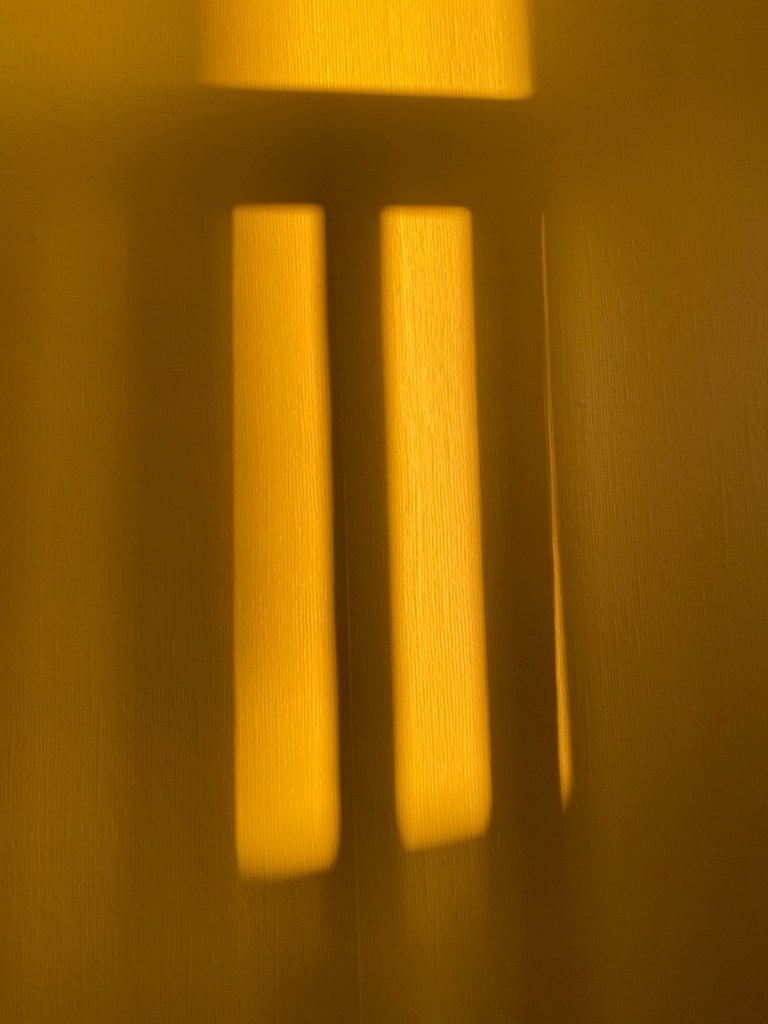
once. (iPhone image)
 image into ikon
This is superb, Katie. Not only a brilliant selection of quotes, bubt such lovely words from you. Thank you.
L
D
LikeLike