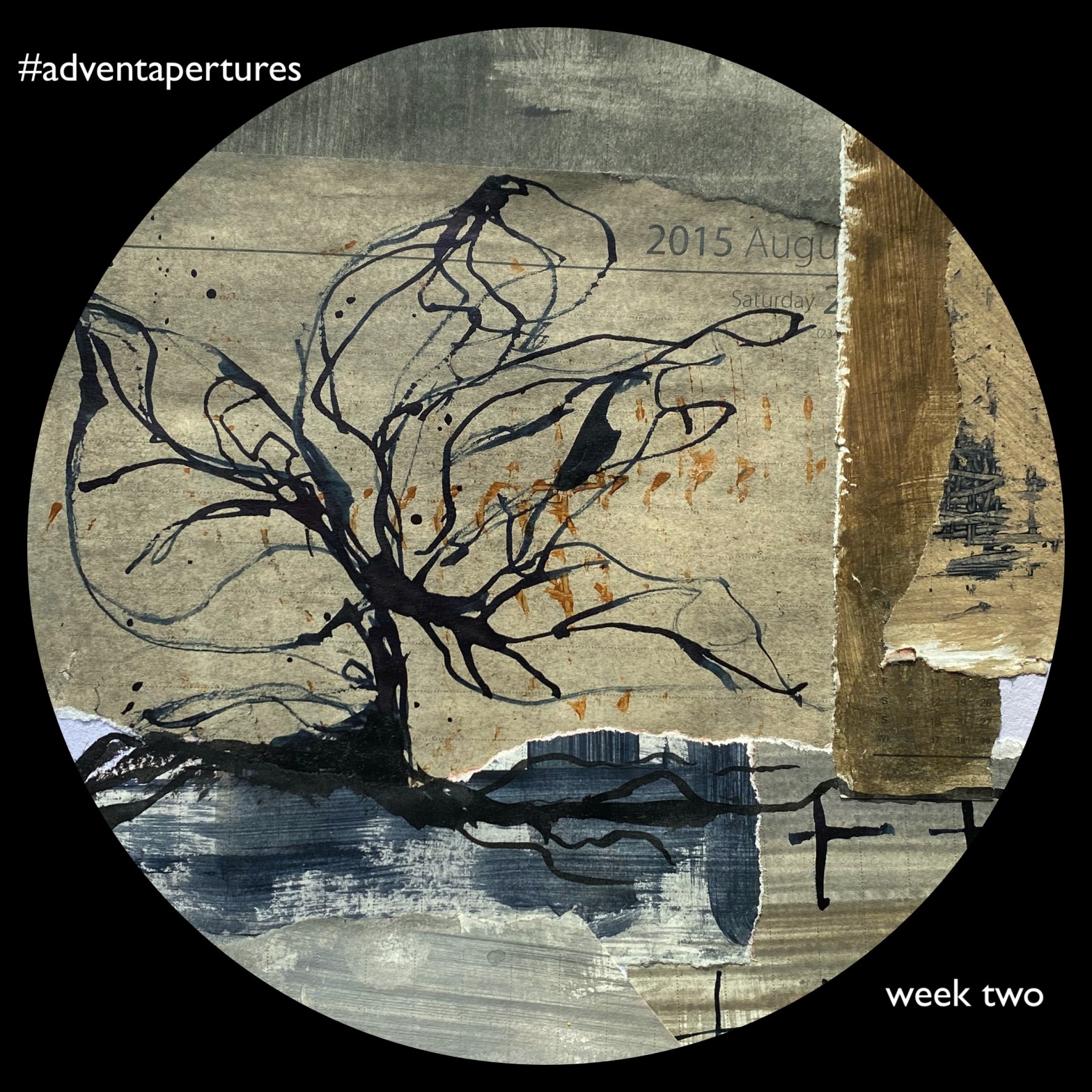
…darkness reaches out to offer whatever helping hand it can, calling us to trust it, saying, “Sometimes only the darkness will do.” We owe it to the darkness to reach out and grab that hand, to respect what it has to offer, to join it to the hand of light.
Catherine Bird, The Divine Heart of Darkness (119)
How did the Wise-Ones’ needs change as they journeyed through the year? What different ways of seeing, perspectives, would the seasonal changes make? For they were not travelling through an English landscape where each season is distinct in its effects and impact, and each part of the wheel of the year holds its invitations and its challenges.
Coming from the East of Palestine would have meant travelling through the Persian Empire (modern day Turkmenistan, Afghanistan, Iran, Iraq, Jordan, Turkey, Syria, Lebanon) where two main seasons would have dominated. A hot dry ‘summer’, and a short wet season, with snow over high ground. Temperatures might have varied from in excess of 45 degrees celsius in peak ‘summer’ to minus 4 degrees celsius on a ‘winter’ night. When they were at home, no doubt the Wise-Ones had the means of making minute observations of the weather as it affected the night sky, but whilst travelling? I am just adding up the challenges, and continue to be awed at the capacity for anyone to set out on a journey under such conditions, when the end result was by no means assured, and neither faith or knowledge could be guaranteed to be satisfied.
Perhaps one way the Wise-Ones understood their quest was through the eyes of Kairos time, rather than Chronos time. Rather than counting out the days and hours chronologically in sequence, perhaps they understood the biblical sense of Kairos time as being God’s divinely appointed moment. Kairos is about registering the opportune moment for action, which I might only realise if I pay acute attention, and there is no fixed length of that moment. It might indeed be a critical season. Jenny Odell, in her book Saving Time puts it like this:
As I observe at the outset of this book, chronos is homogenous while kairos is more heterogeneous, suggesting a critical moment for action. In Astra Taylor’s “Out of Time: Listening to the Climate Clock,” an essay that fundamentally influenced my entire line of questioning in this book, she notes that kairos in modern Greek now means “weather” and goes on to describe its usefulness in ecological terms: “Perhaps the opportune time to intervene is fleeting, like a passing thunderstorm or the peak of spring, and we risk a mismatch by striking too late.” It occurs to me, reading this, that the phrase isn’t “seize time.” It’s “seize the time.”
Compared to chronos, kairos sounds like the domain of those wayfarers who knew that time is inseparable from space and that every place-moment demands close attention, lest you miss your opportunity. It’s not that you can’t plan, but that the time in the plan doesn’t appear flat, dead, inert. Instead, in the “meantime,” you wait with your ear to the ground for patterns of vibration that will never repeat themselves. Faced with flatness, you look for an opening. When it comes, you take it, and you don’t look back. (272)
The Wise-Ones had no fixed plan as they travelled, for their moment was ever-changing and simultaneously fixed by the movement of the ChristStar. They knew how to pay attention to the signs of the seasons of Kairos. In the dark and in the frozen silences they knew how to notice.
Snow, deep snow, and bitter cold. Under the sickly, flint-coloured sky everything lies still, snow-still. Millions of unique hexagons are lost in a single blanket of white. No wind, no sound, no movement; just the squeak of fresh snow underfoot. The frozen silence is as hard and sharp as obsidian. It almost hurts. A couple of sunspots drift on the horizon. A magpie adorns a field gate like a high-contrast ornament; life imitating the art of Monet’s painting. Woodpigeons act as snowploughs, pushing their beaks into the powdery mass flipping it to either side with alternate flicks of the head, enabling them to feed on the cold grass below. A lament of lapwings billows from a field, rippling through the air like a sheet of silk caught in a breeze. The north-east wind has brought a blizzard of winter thrushes and finches to the fields – redwings with gaudy russet flanks and stylish white supercilia; fieldfares with colour-coordinated heads and tails, and bramblings sporting orange breasts and ermine rumps – chic fashion from Scandinavian sophisticates. A male bullfinch kindles from the top of a hawthorn, flaring crimson as it rises in the wan light, and undulates away, white rump blinking; a rare bird out here on the end of the peninsula. A redshank’s call rings in the air, the only liquid in this frozen landscape.
…
Evening is in mid-afternoon. A barn owl unfurls across the darkening fields bathed in its own aura, that inimitable inner glow. From deep within its heart-shaped face, it views the snowy scenery with ebony eyes that absorb the last of the day’s light but impart nothing in return. The finery of its plumage resembles a priest’s Easter vestments: white and gold with lilac-grey spangles. It strokes the air with muffled wings as if respecting the sanctity of the surrounding silence, and drifts gently, disappearing into the soft folds of dusk’s shadows, leaving a diffuse luminescent trail through the mind. As the sun passes below the hanging cloud it catches a passing flock of starlings, polishing them deep burnished red like a fistful of garnets flung in the sky. Ever lower, it ignites the crests of the mud in flaring orange separated by the black of the furrows that converge with perspective towards the distant sea like a grill of lava fissures, then dips below more cloud, hugging the horizon and the shadows return like the crust forming on the surface of cooling magma. Tonight it will be bitterly cold; many creatures will not greet the morning.
Phillip Edward, At The Very End of The Road (71-2)
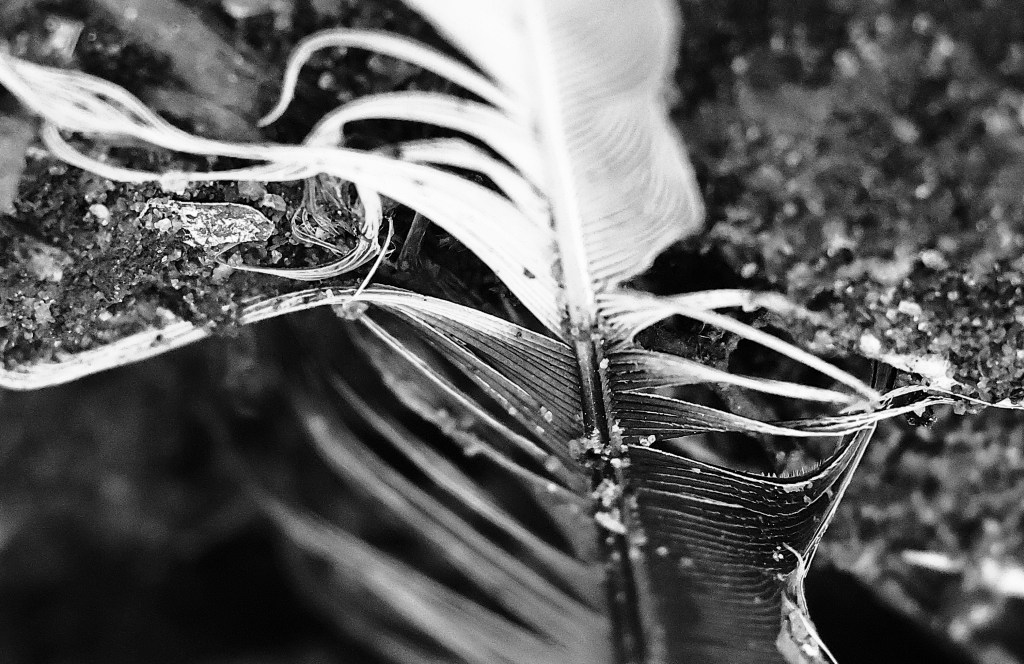
creature out of time. (Canon R10. f11. 1/800. ISO 6400)
 image into ikon