I feel the real medium for me is silence, so I could be writing in any language. To inflect the inner silence, to give it body, that’s all we’re doing. You use the voice to make the silence present. The real subject in poetry isn’t the voice. The real subject is silence.
Li Young Lee, The Subject is Silence
Best of any song is bird song in the quiet, but first you must have the quiet
‘1997, I’ Sabbath Poems, Wendell Berry
The trees, the flowers, the plants grow in silence.
The stars, the sun, the moon move in silence.
Silence gives us a new perspective. Mother Teresa
Making room for silence in a world full of human-centred, human-manufactured noise – talking, sirens, phone calls, television, cars, machinery – isn’t easy. Even when I deliberately strip away the noise that I bring into my home through the radio or computer, I am still able to hear the noise that others make penetrating my walls – the baby crying next door, the dog barking over the fence, the reversing sounds of the supermarket delivery van. I try to remember to use the sounds as bouncing of points for momentary prayers. ‘Lord be with all those involved in this emergency’ is perhaps the most basic and oft repeated, given how main sirens seem to penetrate my quiet, but it is an attempt to bless both the emergency-responders as well as the emergencee and their friends, family or carers, as well as the Police or health workers who might be involved further down the line. When I can sometimes feel overwhelmed by the needs of the world, such ‘noise’ prayers are a good way of re-grounding myself in specifics. It’s like praying along with the radio news bulletin, which is another thing I try to remember to do.
Focussing on the gaps in between the noise of my life helps me make room to realise how noisy my head is, how vocal my internal commentators, how my ‘monkey mind’ as Richard Rohr calls it, is full of frippery jumping from subject to subject. Making room to quiet my thoughts is how I try to begin each day. Having practised Thomas Keating’s Centering Prayer for the last ten years, there are some days when I am able to fall through my noisy thoughts to reach the vastness of real silence for a few seconds.
Here is where the Holy abides within.
Here is where the Holy waits for me to stop long enough so I might have an encounter with the infinite Now.
Here is where I can put myself and my agenda aside and get curious about what the God-With-Us might want of me this day.
The Center for Courage and Renewal, the organization that Parker Palmer co-founded, has what they call a “touchstone,” which basically means a guideline or agreement for a group: “No fixing, saving, advising, or correcting each other.” The first time I read it, it sort of took my breath away. So much of our time is spent listening to other people in a doggedly goal-oriented way. Underneath our listening, we’re asking ourselves: What can I pluck from what this person is saying that I identify with? What confirms my worldview? What gives me an opportunity to offer advice or a response that will showcase my own intelligence or a chance to share an experience about my life?
I don’t mean to make that kind of listening sound shallow or manipulative. Ultimately, it’s with great intention that we listen like that. We crave to connect. We crave to be seen. We crave to comfort. It’s a very useful kind of listening. It helps us create new nodes, get things done, coalesce within communities.
But there is another kind of listening, a listening that we neglect at our own peril, that is not about getting some particular place, but simply about witnessing another human being. This kind of listening is long and open-ended. It’s patient. It’s curious. It’s not calculating. This kind of listening operates on only one level — the words coming out, the way they hit the ear, the shaping of a story, a sadness, a yearning, a wish.
… It’s an overlooked kind of love, a way we stay sane. It happens in the cracks, under the radar, just between two people. And it doesn’t happen enough.
Things – including concepts and bodies – are inexhaustible; they show up only partially. If you can see everything, then you’ve already missed a spot.
Bayo Akomolafe, These Wilds beyond our Fences (155)
To seek context is already to acknowledge you don’t have the whole story … an ecological understanding takes time. Context is what appears when you hold your attention open for long enough: the longer you hold it, the more context appears.
Jenny Odell, How to Do Nothing (155)
When I begin a journey, do I ask how, or where, does this road end? Don’t I normally have a destination in mind and a reason for travelling? If I am are rolling in the footsteps of the holy family during this Advent, then the first destination is Nazareth. Not a place where many pilgrims will be going this year, I imagine. But I wonder: in my journey into the heart of the God-Who-Is-Already-Coming in the other direction towards me, the God-Who-Has-Already-Come, and the God-Who-Will-Keep-Coming in the future, do I really know my destination?
I cannot ‘know’ God in their entirety. I don’t have the whole story. I will have missed more than one spot. So I need to make room for searching, for seeing what happens along the way, for being curious about when, and how, the God-Of-Us might show up to the Us-Of-God, that is to all peoples, on all the earth.
This autumn, a friend lent me Raynor Wynn’s The Salt Path, one couple’s Odyssey along the South West Coastal Path of England. The reason for their journey is made clear at the outset: they have just been made homeless and Moth, Raynor’s husband, has received a terminal illness diagnosis (in his early 50’s), so walking from Minehead to Land’s End made as much sense as anything else, (for they had been made rudderless as well as bankrupt by a five-year-long court case which took everything from them, including their physical health). They do not know ‘what next?’ because it feels like ‘next’ is impossible. All there is, is to put one foot in front of the other, so that what is a literal act might perhaps become a metaphorical, emotional and spiritual act in its turn.
One night along the path, they stumble on a group of surfers. On hearing their story, one young man tells them they are like ‘a wave’. Not understanding surfer-speak, Raynor and Moth ask for an explanation. This is what they are told:
‘Yeah, how good a wave is depends on what nature’s doing. It starts to pick up when the wind blows on the water, way out at sea, then it’s all down to how strong that wind is, how long it blows for and how far it travels across the water – we call that the fetch. A big wind, a long fetch, a good stretch of coastline, and you’ve got it, you’re barrelling. But you, you’re blown up by a f•••ing gale, man, and your fetch is still running, you’re heading for the biggest, cleanest barrelling wave, man? Don’t you get it? You’re gonna swash in style!’
It feels like my ‘fetch’ is still running, too. My journey with chronic ill health began with a ‘gale’ of a diagnosis of M.E. in 1990 (although in reality, it had been coming for years before that). I don’t know how I’m going to ‘swash’, but I know I am being blown by Spirit, and I have no idea in which direction. All I can do is to get curious about what is going on in this fetch: I need to keep searching for God in the what is of the journey, then let go of the rest. I am launched into the middle of God’s running ‘barrel’ of a wave. I pray, hope and trust that God’s heart is where my wave will make landfall.
Come, Holy Spirit,
bending or not bending the grasses,
appearing or not above our heads in a tongue of flame,
at hay harvest or when they plough in the orchards or when snow
covers crippled firs in the Sierra Nevada.
I am only a man: I need visible signs.
I tire easily, building the stairway of abstraction.
Many a time I asked, you know it well, that the statue in church
lift its hand, only once, just once, for me.
But I understand that signs must be human,
therefore call one man, anywhere on earth,
not me – after all I have some decency –
and allow me, when I look at him, to marvel at you
Crack off their heavy limbs in the freak snow storm
Of October, she rejoices; the massy hail
That drives craters into her groomed lawn
Stirs her sluggish heart to a riot of beating.
A cluster of cottonwood trees in the swale
Of the prairie, oasis now in a desert of wheat fields,
Is all that is left of the home place. No one
Is left to remember the days there with her:
The playhouse sheltered behind the cowshed,
The whirlwinds that made a column of corn shucks,
Winters when snow brushed out all the fences,
Springs when the white of the snow turned to daisies,
Wind-bent as were the urchins who picked them.
To her in her tall house in the tame town, the wind
That escapes the windbreaks of man’s constructing
Blows from a distance beyond the young’s conceiving,
Is rife with excitements of the world’s beginning
And its end.
‘The old one and the wind’
Clarice Short
One reason for making room for discomfort when I am undertaking a journey, is that it will inevitably come and make its presence felt sooner or later. True, discomfort and physical, mental or emotional pain can make me squirm and be inattentive. I can miss things, what someone says in an aside, for example, that might be the most important thing they have said in a week. I miss raising my head to see the needs of others or to look at at the reality of my surroundings. Instead, I curl in on myself further and eventually become entirely self-absorbed.
Being reminded to make room, to shake loose of my navel-gazing to feel the truth of what I feel in body, heart, mind and soul in that moment, is what this whole series is about. For in that moment of truth with myself I create enough of a gap between the what is and the wanting it to be different, that there might just be a pause into which Spirit can plunge and do Her transforming work (as She so longs to do).
In A writer’s Daybook, Ronald Blythe brought Bruce Cummings to my attention, a ‘brilliant young naturalist’ who died when he was in his late twenties in 1919, from disseminated sclerosis. Cummings wrote about his illness with such clarity. It made him want to ‘swallow landscapes and swill down sunsets, or grapple the whole earth to me with ropes of steel’. In his Journal of a Disappointed Man, when talking of London, he said, ‘I live in a bigger, dirtier city – ill-health’. It was because of this that he constantly plunged himself into a cleansing countryside:
It is fine to walk over the elastic earth with the wind bellowing into each ear and swirling all around in a mighty sea of air until I was as clean-blown and resonant as a sea-shell, and almost transparent. I moved along as easily as a disembodied spirit and felt free, almost transparent. The old earth seemed to have soaked me up into itself, I became dissolved into it, my separate body was melted away from, and Nature received me into her deepest communion – until, UNTIL, I got back to the lee side of the hedge where the calm brought me back to my gaol of clay. (7)
Cummings was able to experience the exhilaration of Unity precisely because he was able to fully admit the depth of discomfort of his ill body, imprisoned in his ‘gaol of clay’. What he felt in his body affected his psyche, his soul.
Illumination comes when I admit the darkness. Comfort comes when I admit the fear. Change comes when I admit the state of my stagnation. God-with-Us comes when I wait and walk, and wait and walk, toward the One-Who-Is-Coming: when I feel all my pain and discomfort, my uneasiness and my aches, and yet, still I decide to journey into the heart of God.
In our secret yearnings we wait for your coming, and in our grinding despair we doubt that you will. And in this privileged place we are surrounded by witnesses who yearn more than do we and by those who despair more deeply than do we. Look upon your church and its pastors in this season of hope which runs so quickly to fatigue and this season of yearning which becomes so easily quarrelsome. Give us the grace and the impatience to wait for your coming to the bottom of our toes, to the edge of our finger tips. We do not want our several worlds to end. Come in your power and come in your weakness in any case come and make all things new. Amen.
Walter Brueggemann, Awed to Heaven, Rooted to Earth
a note about the image: I saw this couple down by the southern shore of England last year. Their body language was what drew my attention, wrapped against the pelting raining wind on a decidedly unseasonal, inhospitable day. Now though, the discomfort implicit in the image is surrounded by (drowned out by?) the noisy discussions surrounding Jewish identity given Israel’s prolonged and violent response to the events of October 7th 2023, and the suffering of Palestinian, Israeli and Lebanese peoples alike. This image cannot but help be affected by (distorted by?) those discussions about Judaism, but I hope -trust- that a yarmulke will not be the only thing you see here.
Making room for fear is not the same as the mantra ‘feel the fear, and do it anyway’, though perhaps that is part of the courage needed for any spiritual journey. It is about clearing space so that I can experience the full gamut of all there is to experience, so i can live and live all of it, meeting Emmanuel at the heart of every moment.
That may seem like a strange thing to want to do, since I have spent so much of my life being fearful. I can see now that I let a fear of ‘getting it wrong’ dominate nearly all areas of my life. Inevitably, the fear took over and I did indeed get ‘it’ wrong, over and over again. I lost total confidence in myself, I hurt others, and more, I lost confidence in even the idea of there being a God who would forgive me, let alone love me..
Now, I test out whether I am going to live a fear-filled life or a creativity-filled one every time I turn up at the blank page or canvas, every time I put my art (and therefore my self) ‘out there’. This year I have been really struggling with my faith in my ability to create work that will mean anything to anyone, work that expresses the visions I have in my head. But all I can do is keep turning up and not letting the discouragement stop me, since it is such a potent force that wants me just to give up trying – trying anything at all. It is hard to communicate how paralysing such a fear can be, how vitally painful and panic-inducing. There is one pernicious thought that will nag at me, if I let it: f I lost the ability to create, wouldn’t I be worthless?
Gideon Heigh’s poem ‘Prophet’ (above) begins by describing my everyday small fear, the way I want to flee in the face of the ‘death-dearth and default extinction’. It admits my agony; a much-too-muchness of helplessness; an inhibiting sense of scarcity; an overwhelming sense of my limitations, in the face of the ‘smothering of constellations’.
Yet that same sense of vastness, and the need to let go of my tight control instinct, applies when I hear the voice of God as ‘a cloud of breath-taking holiness’. I am paralysed by the majesty; until, suddenly, I am not: I am galvanised and propelled by the need to serve, with gratitude and hope.
Making room to fear, then, goes beyond experiencing an emotion, it even goes beyond experiencing a holy awe at the immensity of God, Creator of heaven and earth and everything in between. The fear of the LORD, which the Old Testament mentions so often, is not a feeling. The fear of the LORD is an energy that comes when I am still and quiet and small, when I admit all is overwhelm, when I glimpse an iota of grace, when I partially understand that that same immense, awesome God is becoming a God-with-Us. At the very moment I admit how petrified I am of what that God-with-Us might demand from me, I am freed to act. I am freed to act with all of me, to live and love in the knowledge that though I can give little, and change the world even less, God meets me in what I can do, and makes it all so much more than I could possibly imagine. Through time and space and from a very small corner of the internet, these words I write now might be exactly what a reader needs in one day, or a hundred years from now. The true fear of the LORD moves mountains, as long as I will allow it to do its scouring work in me.
Winter clears the landscape, however brutally, giving us a chance to see ourselves and each other more clearly, to see the very ground of our being.
In the Upper Midwest, newcomers often receive a classic piece of wintertime advice: “The winters will drive you crazy until you learn to get out into them.” Here, people spend good money on warm clothing so they can get outdoors and avoid the “cabin fever” that comes from huddling fearfully by the fire during the long frozen months. If you live here long, you learn that a daily walk into the winter world will fortify the spirit by taking you boldly to the very heart of the season you fear.
Our inward winters take many forms—failure, betrayal, depression, death. But every one of them, in my experience, yields to the same advice: “The winters will drive you crazy until you learn to get out into them.” Until we enter boldly into the fears we most want to avoid, those fears will dominate our lives. But when we walk directly into them—protected from frostbite by the warm garb of friendship or inner discipline or spiritual guidance—we can learn what they have to teach us. Then, we discover once again that the cycle of the seasons is trustworthy and life-giving, even in the most dismaying season of all.
Consider this. In the shadow of a perfectly round object, you will find a rebellious glimmer of light – a bright spot in the middle. I’m not being metaphorical here. I really mean to queer the essential and disturb its eminence. What better way to do it in this case than to point to light at the heart or darkness, and vice versa. … this phenomenon points to “diffraction”, which literally means “breaking up.” I like to think of it as a porosity – that there is such a primal mutuality between “things” that nothing “becomes” unless it “becomes-with”.
When the inventor of the word ‘diffraction’, a seventeenth-century physicist and Jesuit priest Francisco Grimaldi, directed a focused ray of sunlight into a dark room, managing the ray so that it struct a thin rod and produced a shadow on a screen, he found that ‘the boundary of the shadow [was] not sharply defined and that a series of coloured bands [lay] near the shadow of the rod. Up till then, the general views established that light waves interacted with surfaces by reflection and refraction. …When Grimaldi performed his experiment … it was as if the light bent around the edges of things to form fuzzy edges and coloured bands, … ‘diffraction fringes – bands of light inside the edge of the shadow. Bands of light appear inside the shadow region – the region of would-be darkness, and bands of darkness appear outside the shadow region.’ … Grimaldi’s work already showing that ‘there is no sharp boundary separating the light from the darkness: light appears within the darkness within the light within.’ In fact, ‘darkness is not mere absence … [It] is not light’s expelled other, for it haunts its own interior.’
This true for everything physical. Nothing is complete; everything undergoes a “breaking up” in its co-emergence with “other things” … there are no “sides”.
Gloria Anzaldu writes:
There is darkness and there is darkness. Though darkness was ‘present’ before the world and all things were created, it is equated with matter, the maternal, the germinal, the potential. The dualism of light/darkness did not arise as a symbolic formula for morality until primordial darkness had been split into light and dark. Now Darkness, my night, is identified with the negative, base and evil forces – the masculine order casting its dual shadow – and all these as identified with dark-skinned people.
Bayo Akomolafe, These Wilds beyond our fences, (210-211)
Making room for darkness* is, I believe, an essential in any spiritual journey, and one so very few people talk about. Evangelical or charismatic Christianity is sometimes so bound up in its certainty about God as Light and Love, that pilgrims are ill-equipped when they hit the hard, faith-shaking stuff of life, where they cannot perceive God’s benevolence. This is then described as ‘dark’, which just perpetuates the either/or belief in light as a good, as a blessing, leaving dark as an evil. Evil undoubtedly exists, but it does not have to be associated with darkness. Culturally, I am taught to fear ‘what goes bump in the night’, what violence might take place ‘under the cover of darkness’.
Yet if God is God of all, then God is as much dark as light. How much do I know this God of the Dark? This holy, mysterious, God-for-Whom-I-wait? What difference might it make that I have to wait through the darkest time of the year (in the Northern hemisphere)? This is the God of ‘diffraction’, where the light is inextricable from the darkness. Both are, scientifically and spiritually, together. One cannot be without the other. This God who comes to ‘be with’ me, Emmanuel, then, is with me equally in dark as in light. I cannot turn away from the God of the Primordial Dark, if I want to believe in the God of the Resurrected Light.
So much of my spiritual pilgrimage feels like it takes place in the dark, where I can’t see a path to follow, where I feel overwhelmed with the needs of so many who suffer in our world, where I ask and ask for mercy and seem never to be given healing, where my depression is thick and feels opaque and never-ending.
And yet.
All my life, I can look back and testify, that I have always, without fail, found I meet the God-of-the-Dark eventually. I receive the comfort I need, the reassurance I seek, the acceptance I crave. Always, but always, I never notice where dark becomes light, but travel on along the fuzzy edges, navigating them as creatively and prayerfully as I can.
As Wendell Berry notes in his poem ‘A Native Hill’, ‘I have thrown away my lantern, and I can see the dark’. I pray for such night-sight to see the God who is with me in the becoming of all things, as all living things emerge light-with-dark, dark-with-light, together. I pray for such dark-sight to stand still in the shadows, when it feels as if all I know is breaking apart, and to have the courage to keep looking for that bright spot, which will never be where I expected to find it. I pray for such night-sight so that, like Jeannette Winterson below, I can ‘be where I like to be in my mind – which is dark without being melancholy, brooding without being depressed’. I ask for the grace that I will get to know the God-of-the-Dark equally as well as the God-of-the-Light, that I will then be able to stop calling God Light Or Dark, but simply the black-sun I AM of all things.
It’s human to want light and warmth. …Electricity’s triumph over the night keeps us safer as well as busier. But whatever extends the day loses us the dark. We now live in a fast-moving, fully lit world where night still happens, but is optional to experience. Our 24/7 culture has phased out the night. In fact we treat the night like failed daylight. Yet slowness and silence – the different rhythm of the night – are a necessary correction to the day. I think we should stop being night-resisters, and learn to celebrate the changes of the seasons, and realign ourselves to autumn and winter, not just turn up the heating, leave the lights on and moan a lot. Night and dark are good for us. As the nights lengthen, it’s time to reopen the dreaming space. Have you ever spent an evening without electric light?
…I have noticed that when all the lights are on, people tend to talk about what they are doing – their outer lives. Sitting round in candlelight or firelight, people start to talk about how they are feeling – their inner lives. They speak subjectively, they argue less, there are longer pauses.
To sit alone without any electric light is curiously creative. I have my best ideas at dawn or at nightfall, but not if I switch on the lights – then I start thinking about projects, deadlines, demands, and the shadows and shapes of the house become objects, not suggestions, things that need to done, not a background to thought. The famous ‘sleep on it’ when we have a dilemma we can’t solve is an indication of how important dream time is to human wellbeing. The night allows this dream time, and the heavier, thicker dark of winter gives us a chance to dream a little while we are awake – a kind of reverie or meditation, the constellation of slowness, silence and darkness that sits under the winter stars.
… It is a mistake to fight the cold and the dark. We’re not freezing or starving in a cave, so we can enjoy what autumn and winter bring, instead of trying to live in a perpetual climate-controlled fluorescent world with the same day-in, day-out processed, packaged, flown-in food.
I have a tiny woodburning stove on my girlfriend’s balcony in London. She thinks I’m crazy, but I like to sit in front of it with the lights of the city elsewhere, heating a pan of soup or roasting chestnuts, and yes, I could do that on her fancy Falcon cooker, but I wouldn’t be where I like to be in my mind – which is dark without being melancholy, brooding without being depressed.
Food, fire, walks, dreams, cold, sleep, love, slowness, time, quiet, books, seasons – all these things, which are not really things, but moments of life – take on a different quality at night-time, where the moon reflects the light of the sun, and we have time to reflect what life is to us, knowing that it passes, and that every bit of it, in its change and its difference, is the here and now of what we have.
Life is too short to be all daylight. Night is not less; it’s more.
Jeanette Winterson, ‘Why I adore the night’, The Guardian, Saturday 31 October, 2018
I will say again, as I always try to when I write about darkness, that I in no way equate dark or darkness with racial ‘blackness’, nor do I endorse any kind of value judgement on ‘dark-skinned’, BAME people. I am deeply sorry for all the historic racial slurs that Christianity has helped to perpetuate, and for all the hurts caused by language which casually embraces dualistic thinking and a colonial, unjust past. I try my best not to continue any of these, but know I will inevitably offend some. I pray you will forgive me, and point out to me where I am wrong.
‘What comes into our minds when we think about God
is the most important thing about us.’
A.W. Tozer
I reach for the empty suitcase, and wonder if today is the day when I will have enough energy to discern what needs to be put in it.
And then I run out of days.
Whenever I have left my home in the last five years, to go on holiday, or just to stay with my parents for a few days, I went surrounded by bags and baggages. This is because all I can do is try to grab a bit of everything, in the hope that somehow it will all add up to that art which is called ‘packing’, and will be sufficient to see me through whatever situation I may find myself in whilst I’m away.
However I try, my preparations always seems to end up as an exhausting pantomime.
So Advent is the one time in the year when I make a concerted effort, if I am well enough, to clear the inner cobwebs slowly and carefully and try not make it a pantomime, or a crisis. I want to look at my metaphorical suitcase, my soul; to sit with it – empty; and to imagine what it might look like full.
What do I need in this season of my life, so I might become more mindful of the God who beckons me forward on this journey?
What perfectionist preoccupations, plans and dreams can I put down, so that there is head- and heart- as well as soul-space, to journey into the Divine embrace anew?
What don’t I need, what support struts can be jettisoned as being out of date, are there old coping strategies which are no longer useful?
What default comforts need to be reassessed?
And yet amidst these valid questions, I find myself wondering if, this year, I can take a risk: can I turn up to this pilgrimage into the heart of God unpacked, unprepared, weary and dirty – but willing to be my unadorned, beloved, self, and just see what happens?
Dear Lord, I have swept and I have washed but
still nothing is as shining as it should be
for you. Under the sink, for example, is an
uproar of mice – it is the season of their
many children. What shall I do? And under the eaves
and through the walls the squirrels
have gnawed their ragged entrances – but it the season
when they need shelter, so what shall I do? And
the raccoon limps into the kitchen and opens the cupboard
while the dog snores, the cat holds the pillow;
what shall I do? Beautiful is the new snow falling
in the yard and the fox who is staring boldly
up the path, to the door. And I still believe you will
come, Lord; you will, when I speak to the fox,
the sparrow, the lost dog, the shivering sea-goose, know
that I am really speaking to you whenever I say,
as I do all morning and afternoon: Come in, Come in.
The ancient Christian monastic traditions, especially desert, Celtic, and Benedictine, offer great wisdom for the journey of unfolding. They understood that the soul’s ripening is never to be rushed and takes a lifetime of work. The gift of the contemplative path is a profound honoring of the grace of slowness.
We can grow impatient when life doesn’t offer us instant insights or gratification. We call on the wisdom of these monks to accompany us, to teach us what it means to honor the beauty of waiting and attending and witnessing what it is that wants to emerge, rather than what our rational minds want to make happen. The soul always offers us more richness than we can imagine, if we only make space and listen …for what is appropriate for this particular season of our lives.
..I have come to embrace words like ripening, organic, yielding, and unfolding as ways of understanding how my soul moves in a holy direction. …Honoring the flowering of spring and the fruitfulness of summer, alongside the release of autumn and the stillness of winter, cultivates a way of being in the world that feels deeply reverential of my body and soul’s own natural cycles. We live in a culture that glorifies spring and summer energies, but autumn and winter are just as essential for rhythms of release, rest, and incubation. When we allow the soul’s slow ripening, we honor that we need to come into the fullness of our own sweetness before we pluck the fruit. This takes time and patience.
Christine Valters Paintner, The Soul’s Slow Ripening
I traditionally find the winter period difficult (November to February particularly). It is when depression settles bone-deep with the help of SAD (seasonal-affected-disorder). It is when chronic pain flares in the colder air, and I am even less mobile.
But in the last couple of years I have been deeply fortunate to have found guides to lead me through this period. In 2022 my guide was Christine Valters Paintner (my Abbess at the Abbey of the Arts), who was workshopping her ideas for her book A Midwinter God. This coincided with me writing a cycle of poems from winter Solstice to summer Solstice, with the working title of ‘making my own constellation’.* It was a time of great struggle but great soul-shifts too.
In 2023 I followed the recommendation of Christine Sine from Godspace, and made an extended pilgrimage through Celtic Advent with David Adams, helping myself by drawing my own reflections in an accordion sketchbook as I went.
I am drawn to the way the Celtic traditions are rooted in the landscape and the seasonal rhythms of the year. It surprises and soothes me to realise that when, unthinkingly, I see November as marking the year’s decline, the Celts marked early November as Samhain, and the middle of the month is when their Advent rituals begin (40 days before Christmas). The two are intimately connected. Samhain marks the beginning of the ‘dark year’, (as opposed to the ‘light year’ which is May to October)**, but crucially, this is also the beginning of the whole year; the dark cycle comes before the light. It is no mistake that the Anglican Church Calendar also runs from Advent to Advent. I begin my journey into holiness in the darkness amidst the possibility of loss, emptiness, unknowing and mystery. In the Irish Tradition, I wander through this time ‘for the sake of Christ’ on peregrinato, and David Adams notes that on peregrination ‘a person may take years of journeys before settling into the “place of their resurrection”’: the place where my ministry can take flight, take root, the place where one is whole and at home in the Beloved.
I begin my Advent journey of waiting, not knowing for whom I wait.
I begin my Advent journey in the crucible of change, knowing nothing stagnates in the soul (no matter how it feels).
I begin my Advent journey by making myself comfortable with the uncomfortable, mysterious dark. I am not yet sure whether I am nestled beneath the soil, or lying exposed beneath the expanse of stars.
I begin my Advent journey with the stillness that is accepting of constant change.
There were safer places more comfortable places palaces and wealthy places Yet you chose a daughter of the soil Who would have otherwise lived a good and honest life grown and harvested crops cooked and washed and cared for others and been forgotten to be your temporary home to be exalted for all time
My soul glorifies the Lord and my spirit rejoices in God my Savior, for he has been mindful of the humble state of his servant. From now on all generations will call me blessed
When does an ordinary life Become extraordinary An mundane day Become revolutionary A moment in time Change history? When God enters in Forgives sin Allows us to Begin again When we repeat Those words of Mary ‘May it be to me As you say’
God of creation, God of Salvation Who speaks to us through thunder and whisper Who loves us as if there were but one of us to love Hear the prayers of our hearts
May God the Father bless us; may Christ take care of us; the Holy Ghost enlighten us all the days of our life. The Lord be our defender and keeper of body and soul, both now and for ever, to the ages of ages.
* I hope to use these as source material for a future #adventapertures – so watch this space … meanwhile me reading a couple of them are on my YouTube channel here.
** If you would like more information, a couple of years ago I wrote a series of pieces on this blog marking the movement of light across the year using the Celtic calendar as a guide, and you can find those pieces here.
It might seem that we have to generate the sense of openness, freshness, joy, revelry, or stillness we touch in such moments. From the Buddhist perspective, however, such a state of being is already there within us and has been so since the beginning. It’s tantalizing to think that perhaps expansiveness lies waiting to be uncovered within us while we go searching for it everywhere else. It’s not something we go toward so much as it is what we are left with when all our running around ceases. Our deeper nature is simply what’s left when we put down the endless task of trying to be somebody.
Ralph De La Rosa, cited in Richard Schwartz, No Bad Parts (146)
I have lived with clinical depression since I was a young child (although it wasn’t diagnosed until I was a young adult). I am afraid of the pit, the chasm, the canyon of blankness that lives within me. This is where my emotions seethe, so for most of my life I have been afraid of expressing strong emotion in case I am swept away in my distress, completely hollowed out to the point where there is no point to my being alive. I have lived with the fear that this blank at the heart of me makes me inherently unloveable, even, especially, by God.
Making room to spend time with, even to glance at, this ‘empty’ secret centre of myself, is an unwelcome thought. To drop all the masks, the curated, constructed public self. To stop and rest into the love my family and friends tell me they have for me. This becomes almost unbearable, for I know I am a fraud. I see all the ways I grasp for control, trying to ration out my energy, trying to evade inner silence, trying to cover up my failings, trying to disguise all the horrible things I really am.
And yet, God still asks me to come and be in Her Presence, every day. That means making room to spend time with the inside of me. It means deliberately attempting to empty myself out, to get myself out of the way, so that I might encounter God, so that I might behold God. For the last ten years I have been trying to practice a daily session of ‘centering’ prayer, following the guidance of Father Thomas Keating:
Welcome, welcome, welcome.
I welcome everything that comes to me today, because I know it’s for my healing.
I welcome all thoughts, feelings, emotions, persons, situations, and conditions.
I let go of my desire for power and control.
I let go of my desire for affection, esteem, approval, and pleasure.
I let go of my desire for survival and security.
I let go of my desire to change any situation, condition, person or myself.
I open to the love and presence of God and God’s action within. Amen.
Such a centering on the Presence of God within requires a commitment to stripping back all of the things that drive me, a stripping back until the false ‘I’ is empty, because the True Kate is revealed: and she is full of the God-Self.
We are afraid of emptiness. Spinoza speaks about our “horror vacui”, our horrendous fear of vacancy … It is very hard to allow emptiness to exist in our lives. Emptiness requires a willingness not to be in control, a willingness to let something new and unexpected happen. It requires trust, surrender, and openness to guidance. God wants to dwell in our emptiness.
Henri Nowen, Bread for the Journey (70)
During painful times, when you feel a terrible void, think how the capacity of your soul is being enlarged so that it can receive God – becoming as it were, infinite as God is infinite.
and whose breath gives life to all the world, hear me.
I am small and weak.
I need your strength and wisdom.
Let me walk in beauty and make my eyes
ever behold the red and purple sunset.
Make my hands respect the things you have made
and my ears sharp to hear your voice.
Make me wise so that I may understand
the things you have taught my people.
Let me learn the lessons you have hidden
in every leaf and rock.
I seek strength, not to be superior to my brother,
but to fight my greatest enemy – myself.
Make me always ready to come to you
with clean hands and straight eyes,
so when life fades, as the fading sunset,
my spirit will come to you
without shame.
‘Oh Great Spirit’
Chief Yellow Lark
For a while I have been pondering the phrase ‘make room’. It is an Advent phrase in reverse: the Gospels tell us there was ‘no room’ for the Christ family to stay in the inn. In the UK this year, as elsewhere, there was a general election, where it seemed a great deal of air time and media attention was spent saying there was no room left here, that ‘we’ should close the borders, or give jobs to ‘British’ people. The previous government have spent the last year declaring it will ‘stop the boats’: it will not allow any more migrants to cross the channel in small boats and land on our shores. It will turn back those who seek refuge here. Their actions begged many questions, but two that keep returning to me ask, ‘for whom should we make room? for what’?
At the heart of the story of Jesus’ birth are two journeys. One sent Mary and Joseph across the wilds of occupied Israel from Nazareth to Bethlehem, to be counted in a occupying government’s census. The other sent them fleeing for their lives (through what is now, or was, Gaza) to Egypt, in a symbolic reversal of the Exodus. It struck me I need to spend time, to use my Advent preparation time, making room for these symbolic journeys within myself.
What needs to be taken out before I can focus on my journey?
What needs to be put in, what resources do I need to travel into the heart of God-With-Us?
What do I need to make room to maintain along the way, so that when I arrive I can flourish as I dwell with God?
Ten years ago, I came up with the phrase ‘travelling whilst sitting still’ to describe my spirituality, one forged by chronic illness, depression and disability. I spend long periods in bed, I do not often leave my house. I am trying to shoehorn as much creativity in my life as I can, because i know it is vital for my mental and spiritual health, but any sense of ‘progress’ is haphazard at best, and achingly slow to arrive. I call myself a writer, a contemplative photographer and a visual artist. I know myself as a beloved child of God. I am a stumbling, grumbling, ungrateful, reluctant, impatient pilgrim who comes daily to a God who asks again and again, ‘will you make room for Me in all of you?’
But more insidious forces are marshalled against the time, space and will to walk and against the version of humanity that act embodies. One force is the filling-up of what I think of as ‘the time between’, the time of walking to or from a place, of meandering, of running errands. That time has been deplored as a waste, reduced, and its remainder filled with earphones playing music and mobile phones relaying conversations. The very ability to appreciate this uncluttered time, the uses of the useless, often seems to be evaporating as does appreciation of being outside – including outside the familiar; mobile phone conversations seem to serve as a buffer against solitude, silence and encounters with the unknown … Obesity and its related health crises seem to be becoming more and more of a transnational pandemic as people in more parts of the world become immobilised and overfed from childhood on, a downward spiral where the inactive body becomes less and less capable of action. That obesity is not just circumstantial – due to a world of digital amusements and parking lots, of sprawl and suburbs – but conceptual in origin, as people forget that their bodies could be adequate to the challenges that face them and a pleasure to use. …And as the climate heats up and oil runs out, this recovery [of imagination and bodily engagement] is going to be very important, more important perhaps than ‘alternative fuels’ and the other modes of continuing down the motorised route rather than reclaiming the alternatives. …I believe that most industrial-zone human beings need to rethink time, space and their own bodies …to remember how to integrate public transit and their own legs into an effective, ethical and sometimes deeply pleasurable way of navigating the terrain of their daily lives.
Rebecca Solnit Wanderlust: A History of Walking, xiii-xiv
After a break of a couple of years, I decided I wanted to write another series of daily photo reflections for Advent 2024. These #adventapertures (as I call them) bring a huge variety of source material together – from poetry, news journalism, cultural comment, scientific insight and music to biblical writings and liturgy. Each day I twist together words and image in ways that fuse the themes of Advent together over the course of 25 days. I write from a Christian perspective, but may refer to other faith traditions. I also write from a perspective of an artist who lives with chronic illness.
Some photoreflections will be a briefer read than others, but some readers in the past have told me that these photoreflections are worth the deepdive and time commitment. Other readers just sit with the photos (and perhaps the title), creating their own set aside time as a pause at a period of the year which many provide increasingly difficult – whether they are overbusy, feeling isolated, fearing for the state of the world, or whether the coming of the winter dark is not an opportunity for cosiness. and festivities.
To receive these daily photoreflections for Advent, please ensure that you are a follower of the blog, (simply input your email address in the box on the homepage where it says ‘follow my blog’) and one #adventapertures will be delivered to your email inbox every day. (If you have received notification of this post via your email then you need to do nothing further!)
You can, of course, unsubscribe at any time.
I look forward to your company as we journey together toward Christmas.
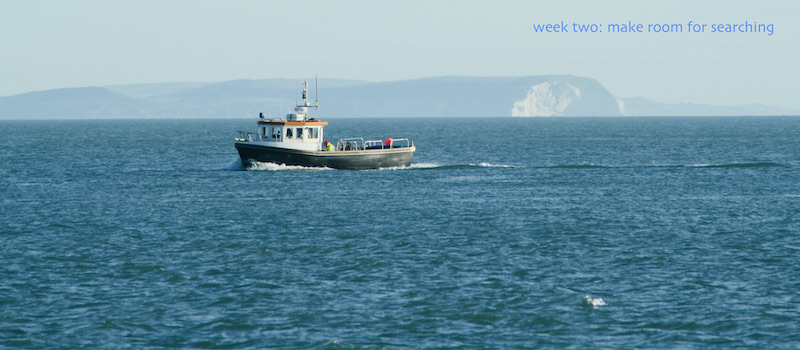


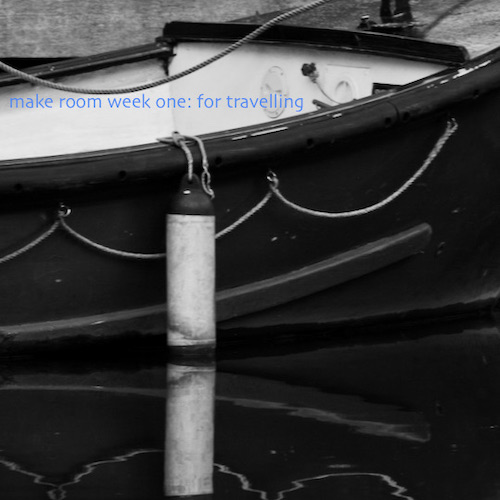
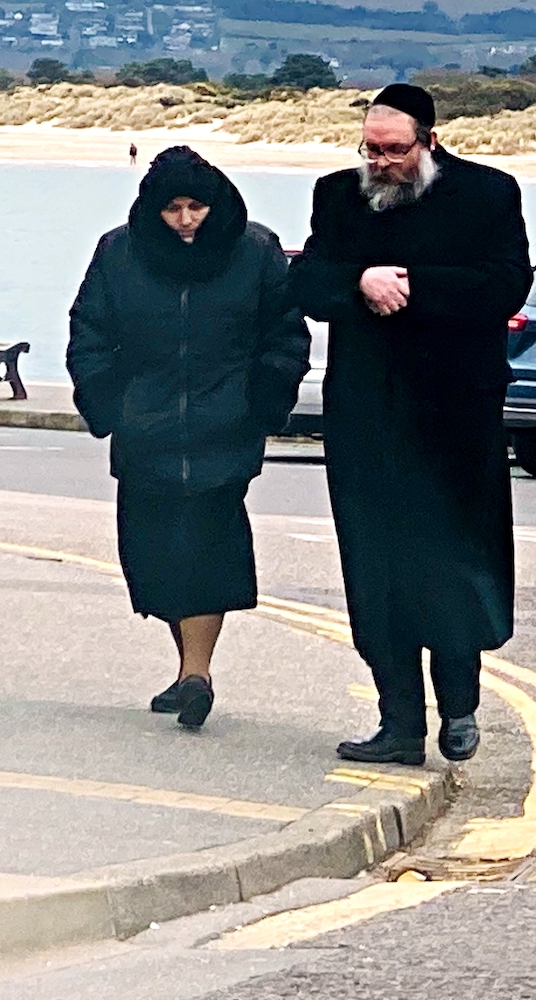
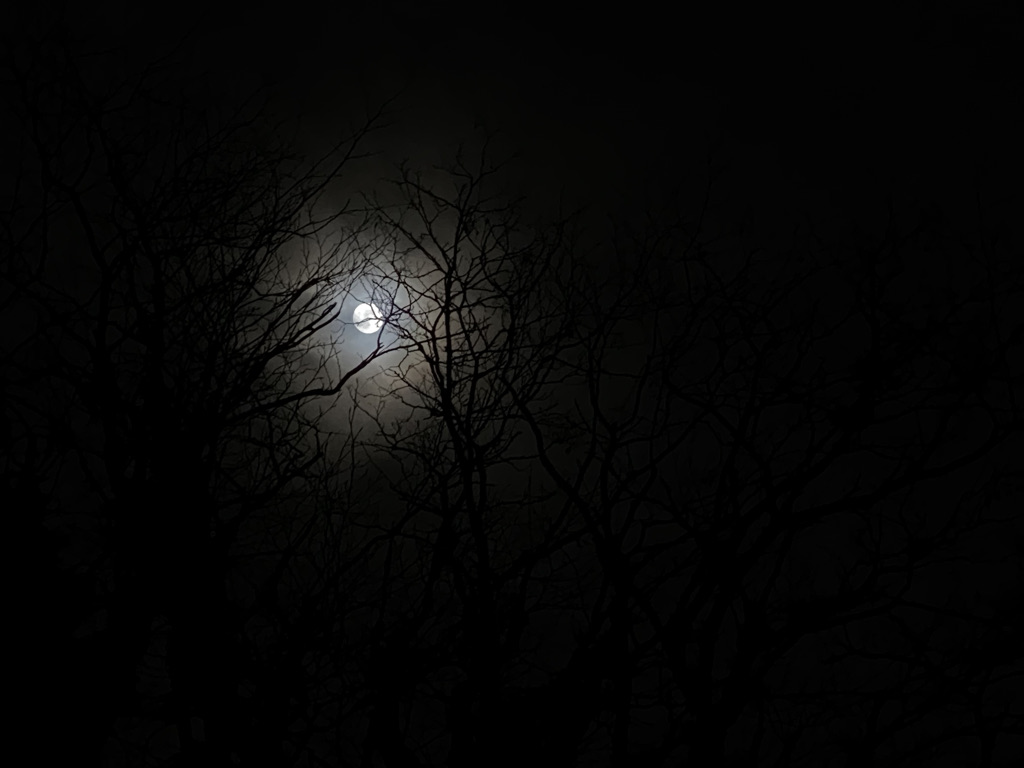
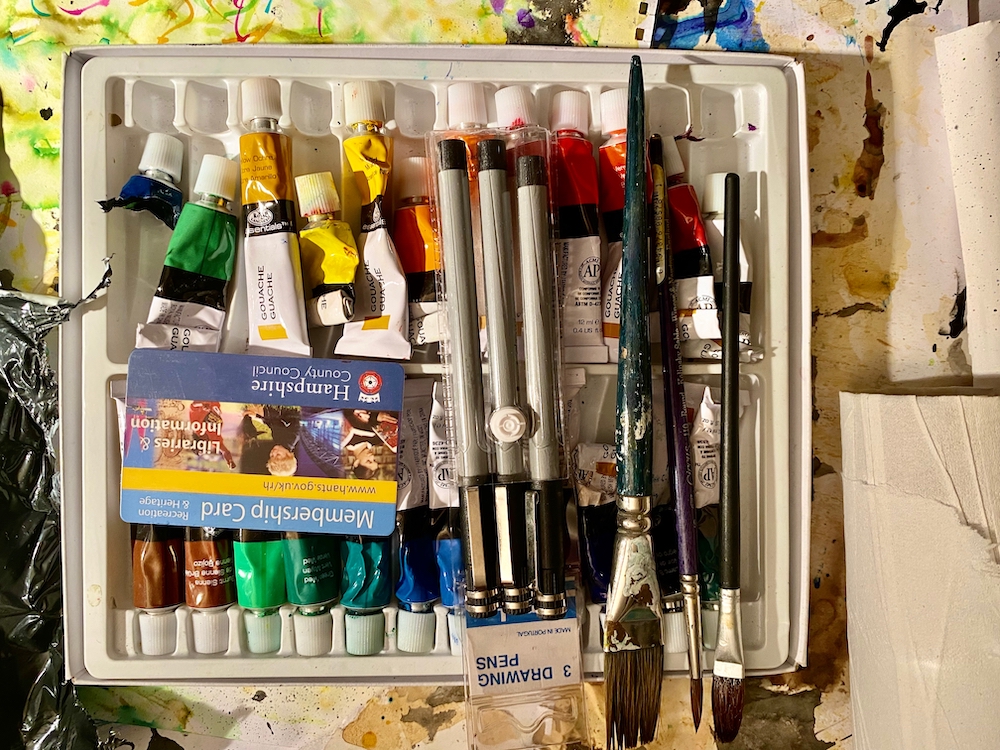
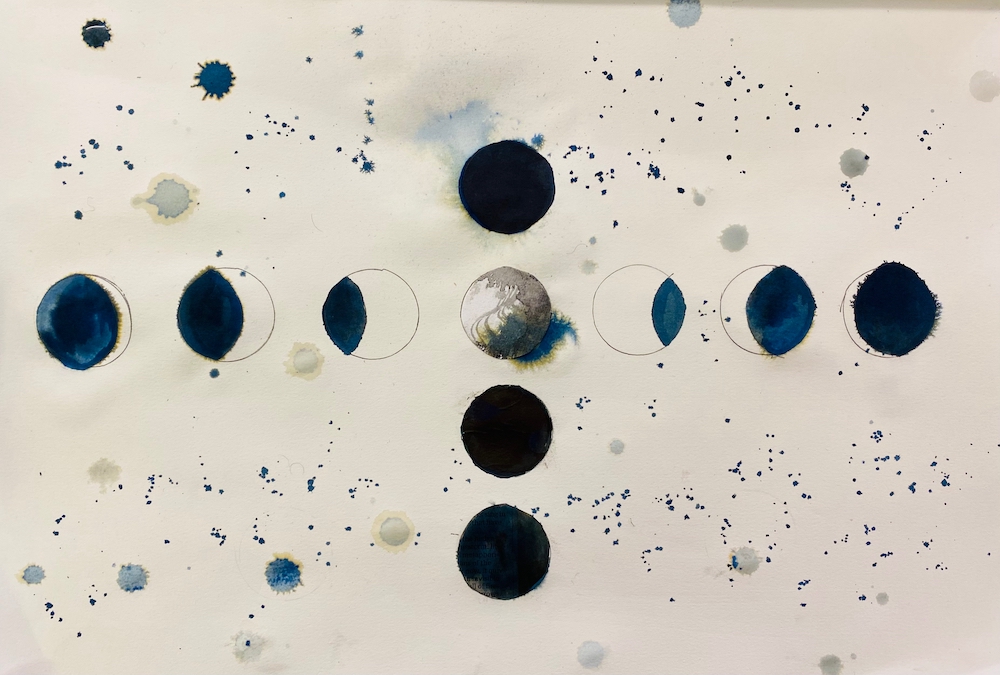


 image into ikon