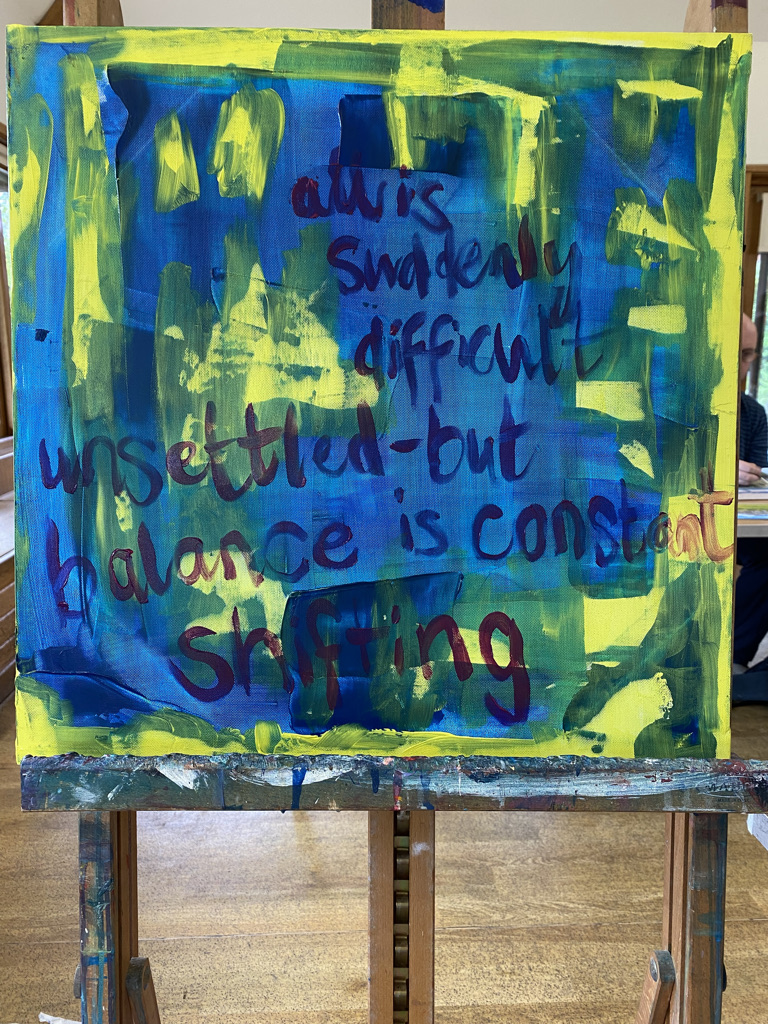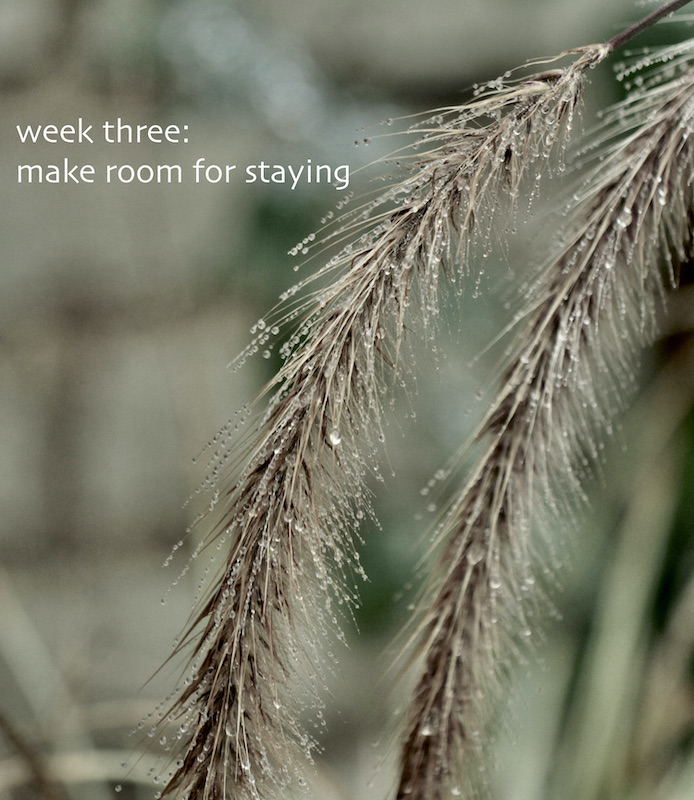
day 19: for sanctuary

I am making a home inside myself. A shelter
of kindness where everything
is forgiven, everything allowed—a quiet patch
of sunlight to stretch out without hurry,
where all that has been banished
and buried is welcomed, spoken, listened to—released.

A fiercely friendly place I can claim as my very own.

I am throwing arms open
to the whole of myself—especially the fearful,
fault-finding, falling apart, unfinished parts, knowing
every seed and weed, every drop
of rain, has made the soil richer.

I will light a candle, pour a hot cup of tea, gather
around the warmth of my own blazing fire. I will howl
if I want to, knowing this flame can burn through
any perceived problem, any prescribed perfectionism,
any lying limitation, every heavy thing.

I am making a home inside myself
where grace blooms in grand and glorious
abundance, a shelter of kindness that grows
all the truest things.

I whisper hallelujah to the friendly
sky. Watch now as I burst into blossom.

‘The Most Important Thing’

Julia Fehrenbacher

Experiments conducted by French psychologist Anne Balif revealed that if you ask a child to draw their house, you are, ‘asking him to reveal the deepest dream shelter he has found for his happiness. If he is happy, he will succeed in drawing a snug, protected house which is well built on deeply-rooted foundations.’ I am a great believer in the power of the expressive arts to reveal not just this kind of happy home, but also to reveal my inner state.  I often find myself writing or painting to work out what it is I’m feeling.  Often I cannot put a name to it, but am aware of a morass of unnamed yearning and longing.

Making room for building ‘a shelter of kindness’ within, as Fehrenbacher’s poem above urges, is to make room for building a personal sanctuary.  One where I can be at home to myself – all of myself.  One where even the parts of myself which are the most uncomfortable, ugly, unkind and lumpen, can find a corner where they can feel welcomed and heard.  

This kind of visualisation of the ‘radical hospitality’ that I need to practice with the awkward and welcome parts of me within, helps me also remember to extend the same compassion outwards.  (Although normally that’s the other way round, as I find self-compassion far, far harder to practice).  

Such compassion arises out of listening, whether to the news or to a dear friend weeping into their coffee.  As Rachel Naomi Remen, Professor of Integrative Medicine, remarks, “Our listening creates a sanctuary for the homeless parts within another person… when we listen generously, they can hear the truth in themselves, often for the first time.”

Shelter becomes sanctuary when I am prepared to stay and listen: to listen to the parts of myself that yearn, to listen to the parts of my neighbour who need support, to listen to the parts of the world that need aid.  Although practically I may be unable to do anything, try experience has taught me that often, all I need to do is to be, to keep faith with people, to just ‘stay in there’ with others, to demonstrate they are not alone, no matter how deep their grief and suffering.  

This ‘withness’ is, to use an old-fashioned word, to practice abiding.  The God-Who-Comes is the God-Who-Stays, and is the God-who-Asks me to come, to stay with, to shelter in, Them.

(Listen to this simple version of the hymn by William Monk, ‘Abide With Me’ sung by the King’s Singers.)

Abide with me: fast falls the eventide;

the darkness deepens; Lord, with me abide.

When other helpers fail and comforts flee,

Help of the helpless, O abide with me.

Swift to its close ebbs out life’s little day;

earth’s joys grow dim, its glories pass away.

Change and decay in all around I see.

O thou who changest not, abide with me.

I need thy presence every passing hour.

What but thy grace can foil the tempter’s power?

Who like thyself my guide and strength can be?

Through cloud and sunshine, O abide with me.

I fear no foe with thee at hand to bless,

ills have no weight, and tears no bitterness.

Where is death’s sting? Where, grave, thy victory?

I triumph still, if thou abide with me.

Hold thou thy cross before my closing eyes.

Shine through the gloom and point me to the skies.

Heaven’s morning breaks and earth’s vain shadows flee;

in life, in death, O Lord, abide with me. 
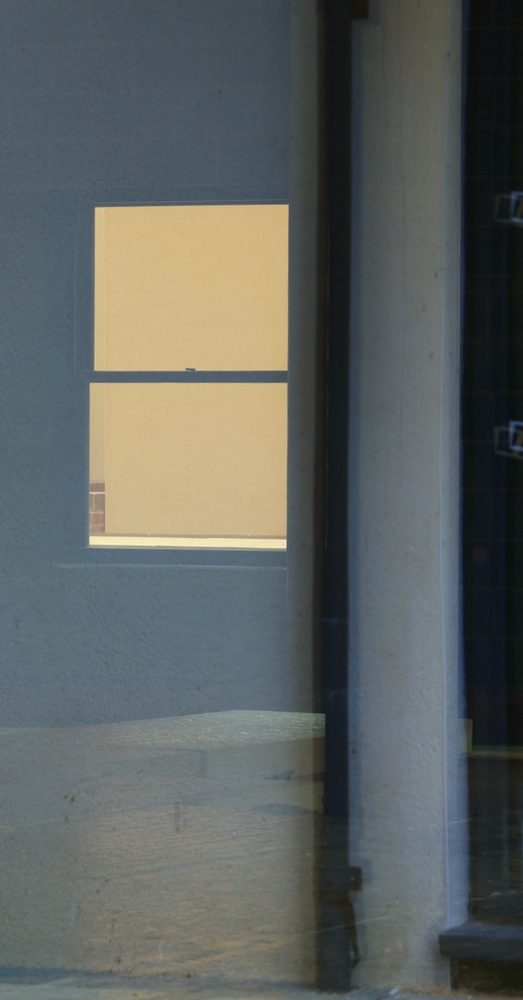
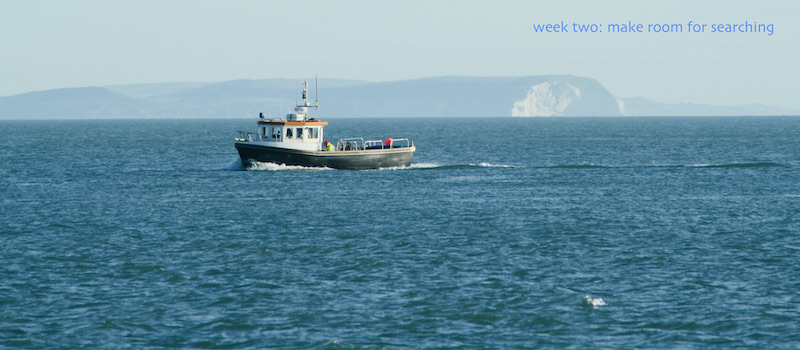
listen with. Canon R10. (f5.6 1/80 ISO 100.)

day 18: for planet

Earth teach me stillness
as the grasses are stilled with light.
Earth teach me suffering
as old stones suffer with memory.
Earth teach me humility
as blossoms are humble with beginning.
Earth Teach me caring
as the mother who secures her young.
Earth teach me courage
as the tree which stands alone.
Earth teach me limitation
as the ant which crawls on the ground.
Earth teach me freedom
as the eagle which soars in the sky.
Earth teach me resignation
as the leaves which die in the fall.
Earth teach me regeneration
as the seed which rises in the spring.
Earth teach me to forget myself
as melted snow forgets its life.
Earth teach me to remember kindness
as dry fields weep in the rain.

‘Earth Teach Me’

Chief Yellow Lark

When I make room for the planet to teach me, I receive such wonder.  Even the small act of looking out of the window can bring the natural world in to me in powerful ways.  When I am staying with my parents, which is often at times when I am particularly unwell, my beloved Mum has a gift for ‘bringing the outside in’.  It might be a Magpie feather, it might be a posy of flowers, it might be acorns or sweet chestnuts picked up on a walk.  In return, I give them what I can: photographs of the sky, made from bed.  That way we all learn about cloud formations and wind directions, about jet engine contrails and air pollution colours, about the wax and wane of the moon.  In this way we add concern in with our wonder, and form a prayer based on our looking which extends beyond our sight, beyond the skies above the Surrey Hills.

So many highly-skilled scientists are involved in making the planet’s populations aware of the dangers of climate change and are offering technological possibilities of restricting its impact.  So many deeply-thoughtful artists are working on long-term projects to demonstrate the impact of the ‘big ideas’ at a local, small-scale, even personal, level.  I recently learnt of David Cass’s ‘Where Once the Waters’ project about sea-level rise, as described by the artist Samantha Clark:

“The project takes two forms. In one, Cass has been asking people from all over the world to participate by offering details of their date of birth and location. He responds by sending them a letter, typed using an old manual typewriter on re-used, often antique papers sourced from flea markets. These outline the calculation of sea level rise that has occurred at or near their birthplace, within their lifetimes, offering this information in plain, undramatic statements. They tell a global story that is vast in its implications yet personal in its impacts. 

In the second, Cass has been continuing his series of small-scale seascape paintings on objects also often found in fleamarkets: old storage tins, cigar or matchboxes, cotton reels, snuff boxes, the battered flotsam and jetsam of lives long since passed. The surface charm of these works belies their serious message – that sea horizon is shifting and we, each one of us, need to pay attention. Cass links the local, the small-scale, the personal, even pocket-sized, first to the coastline nearest our birthplace and then to the world’s oceans. This is a linking of temporal and geographical scales that we need to feel. But our personal connection with global forces is not just a game of perception. It’s deeply political.

Clark is right to press my need to pay urgent attention to these shifts in climate change, which are not about somewhere distant and foreign to me, but are about what I might grow in my garden.  It’s about how I might grow in my garden too.  All my actions have potential geo-political significance: the waste I produce, the energy I consume, the water I use.  How I brush my teeth can be a political act, whether I ignore climate scientists or not.  

Yet, by grace, even how I brush my teeth can become a contemplative, more – a redemptive – act, when I take into account the materials, water and energy it takes and reduce my negative impact on the planet just a little as a consequence.  Small differences add up to huge generative changes.  The earth itself will teach us how – if we choose to listen to how the God-With-Us is made incarnate daily.

Drawing insight from Bonaventure’s metaphors for God, Ilia Delio writes that contemplation naturally leads to compassionate care for the earth:

While this Franciscan path of contemplation is desperately needed in our world today as we face massive suffering and vast ecological crises, we still live, in our western culture, with an emphasis on rationality, order and mind. Because our “I” is separated from the world around us, we struggle to be incarnational people and to see our world imbued with divine goodness. We fail to contemplate God’s love poured out into creation. . . .

The Franciscan path to God calls us to gaze on the crucified Christ and to see there the humble love of God so that we may, like Francis, learn to see and love the presence of God’s overflowing goodness hidden, and yet revealed, in the marvelous diversity of creation. The one who contemplates God knows the world to be charged with the grandeur of God. Contemplation leads to a solidarity with all creation whereby all sorrows are shared in a heart of compassionate love, all tears are gathered in a womb of mercy, all pain is healed by the balm of forgiveness. The contemplative sees the threads of God’s overflowing love that binds together the whole of creation in a web of infinite love. We are called to see deeply that we may love greatly. And in that great love, rejoice in the overflowing goodness of God.

Ilia Delio, Franciscan Prayer (Cincinnati, OH: St. Anthony Messenger Press, 2004), 139–140. Richard Rohr’s Daily Meditation, Thursday 6th October 2022

these tracks I make. Canon 7D. (f11. 1/25. ISO 320.)

for community

It is in the shelter of each other that people live.

(Irish proverb) 

Making room for community is different from spending time with my extended network of friends and family.  In my current definition, it’s a network of people with whom I have a meaningful encounter, exchange or dialogue, whether online or in person.  

For example, I was fortunate enough to stumble across the Abbey of the Arts in 2011 and connect online with the worldwide Holy Disorder of Dancing Monks.  In 2010 I became part of Creative Response Arts, meeting weekly (when I could) with a group of ‘vulnerable adult’ artists.  They, along with the arts workers who facilitate the groups, continue to give me a social lifeline I desperately need.  This last year, I have been privileged to become a DAiSY-Chain artist, working with, and being supported by, those involved with disability arts in Surrey.  

I have recently been trying to ‘give back’ more actively, and regular readers of this blog will know about my bright-+/well project, which examines wellbeing and the built environment. In 2024 this brought about the wonderful community arts project, ‘how bright can you go?’.  This has delivered 239 mixed-media ‘welcome’ cards, made by children, young people and adults in a series of workshops (facilitated by me in conjunction with the New Ashgate Gallery, Farnham), to 239 new residences in a controversial town-centre development in Farnham, Surrey. 

Community is often about making cross-cultural, cross-economical, cross-experiential, connections.  One wonderful example of this kind of outreach comes from the Pitt Rivers Museum in Oxford.  In 2016 Jenny Balfour-Paul offered a collection of material which she described as ‘Textiles from the Arab World’ to the Pitt Rivers Museum, material which shortly became a focal point for a programme called MultakaOxford

Multaka, meaning ‘meeting point’ in Arabic, explores different ways of engaging with heritage, while developing opportunities for intercultural dialogue. This has resulted in an online exhibition, ‘Weaving Connections’, which interprets highlights from this collection from the perspectives of Multaka volunteers, the collector and Pitt Rivers Museum curators. This allows the exhibition commentary to foreground contemporary relevance, cross-cultural connections and personal stories about textiles, ceramics, silverware and photography from Egypt, Mali, Mauritania, Morocco, Oman, Palestine, Senegal, Syria, Tunisia, and Yemen. Thabo, a MultakaOxford volunteer, says,

“I’ve always said to people about Multaka – we can talk irrespective of religion, irrespective of colour, irrespective of language, and say: this is me; this is my Story.”

Community, finally, is about sharing my story and listening to yours – and vice-versa..  It is about me removing my defensive barriers and becoming vulnerable enough to just be alongside others  To be – without trying to fix; until ultimately, we might help one another to flourish, in whatever creative way that may be. 

I pray that, in the words of Maya Angelou (below), I will learn ‘how to look beyond complexion and see community’.

Thunder rumbles in the mountain passes
And lightning rattles the eaves of our houses.
Flood waters await us in our avenues.

Snow falls upon snow, falls upon snow to avalanche
Over unprotected villages.
The sky slips low and grey and threatening.

We question ourselves.
What have we done to so affront nature?
We worry God.
Are you there? Are you there really?
Does the covenant you made with us still hold?

Into this climate of fear and apprehension, Christmas enters,
Streaming lights of joy, ringing bells of hope
And singing carols of forgiveness high up in the bright air.
The world is encouraged to come away from rancor,
Come the way of friendship.

It is the Glad Season.
Thunder ebbs to silence and lightning sleeps quietly in the corner.
Flood waters recede into memory.
Snow becomes a yielding cushion to aid us
As we make our way to higher ground.

Hope is born again in the faces of children
It rides on the shoulders of our aged as they walk into their sunsets.
Hope spreads around the earth. Brightening all things,
Even hate which crouches breeding in dark corridors.

In our joy, we think we hear a whisper.
At first it is too soft. Then only half heard.
We listen carefully as it gathers strength.
We hear a sweetness.
The word is Peace.
It is loud now. It is louder.
Louder than the explosion of bombs.

We tremble at the sound. We are thrilled by its presence.
It is what we have hungered for.
Not just the absence of war. But, true Peace.
A harmony of spirit, a comfort of courtesies.
Security for our beloveds and their beloveds.

We clap hands and welcome the Peace of Christmas.
We beckon this good season to wait a while with us.
We, Baptist and Buddhist, Methodist and Muslim, say come.
Peace.
Come and fill us and our world with your majesty.
We, the Jew and the Jainist, the Catholic and the Confucian,
Implore you, to stay a while with us.
So we may learn by your shimmering light
How to look beyond complexion and see community.

It is Christmas time, a halting of hate time.

On this platform of peace, we can create a language
To translate ourselves to ourselves and to each other.

At this Holy Instant, we celebrate the Birth of Jesus Christ
Into the great religions of the world.
We jubilate the precious advent of trust.
We shout with glorious tongues at the coming of hope.
All the earth’s tribes loosen their voices
To celebrate the promise of Peace.

We, Angels and Mortals, Believers and Non-Believers,
Look heavenward and speak the word aloud.
Peace. We look at our world and speak the word aloud.
Peace. We look at each other, then into ourselves
And we say without shyness or apology or hesitation.

Peace, My Brother.
Peace, My Sister.
Peace, My Soul.

‘Amazing Peace: A Christmas Poem’

― Maya Angelou (2005)

This poem was first read at the 2005 White House tree-lighting ceremony – listen to Maya Angelou recite it here:

Maya Angelou – White House Christmas 2005 – Music by Charlie Barnett

new shelters? (iPhone image)

day 16: for healing

Mutuality means learning to lean into [angels’] wisdom for us and seeing angels as partners in the journey of spiritual transformation. We allow them their full agency as they allow ours. Over time, as we begin to see patterns of support emerge in our days and feel their presence in our prayer moments, trust is fostered. We begin to trust our own experience and intuition that angels are real and available to us. And we trust the reality of them in our lives.

From this space of nurtured time and attention, of mutuality and trust, we learn to offer our vulnerability to the angels. We sense their deep care for us in moments of tenderness and uncertainty. 

Christine Valters Paintner, The Love of Thousands (8)

I am in need of healing.  Daily.  Admitting to my vulnerability, standing naked in front of myself, I take time to thank my body that heals itself.  Cuts scab over.  Bruises disappear.  Swellings go down.  

And yet.  This body is a repository of viruses that blight my best efforts to ‘pace’ myself and manage my condition through diet, sleep and creativity.  I am so fortunate that literally hundreds of different people have prayed for my healing over the past fifty odd years.  I wonder how I would be without those prayers, without the shepherding of angels through my darkest times? I hate to think.

It is important, though, to acknowledge how many wounds have been healed in this body of mine, perhaps most particularly the spiritual, emotional and psychiatric ones.  Without going down the rabbit hole of navel-gazing, it is important for me to share a testimony that is full of brokenness and full of healing and full of mercy and grace.  

Jean Vanier, founder of L’Arche communities, (where the physically and mentally ‘vulnerable’ live in communities with those of ‘able’ bodies and minds), when speaking of his friend Armando, said, “Because he is so broken, in some way we can allow him to reveal to us our brokenness without getting angry … He is so broken that I am allowed to look at my own brokenness without being ashamed.”

Mutuality heals.  I am in need of healing.  Daily.  Are you?

For centuries, healers in Africa recommended a fruit called bitter kola for infections. In the 1990s, Nigerian scientists discovered that compounds of bitter kola may be effective against the Ebola virus, which causes a fatal disease characterized by severe bleeding. Ebola is a symbol of all the horrific diseases ahead of us, viruses that have mutated, epidemics that rise out of the jungle and the places we disturb. We have had no defense against the Ebola virus. Now, we may have the bitter kola.

On my walk with my friend, through a canyon in New Mexico, we stop before a ragged Emory oak, its gray-green leaves pointed, their edges sharp. All parts of all oaks have an antiseptic effect. Oak is the basic astringent, a wash for inflammations, a gargle for sore throats, a dressing for cuts.

All around me are plants that heal and connect to the human body. The yucca spiking above is a steroid. Mullein acts as a mild sedative. Mullein root increases the tone of the bladder. Juniper is used for cystitis, Yarrow clots blood.

My body is interwoven into the chemistry of juniper and yarrow. The tone of my bladder is related to mullein root.

How can we doubt our place in the natural world?

From every habitat, I hear a chorus of cures. In the American West, for menstrual cramps, I might take angelica, cornflower, cow parsnip, evening primrose, licorice, motherwort, pennyroyal, peony, poleo, raspberry, storksbill, or wormwood. For tonsillitis, I could try cachana, cranesbill, mallow, potentilla, red root, or sage. For a sunburn, I might turn to penstemon and prickly poppy. The juice of the prickly poppy was once used to treat a cloudy cornea. The poppy helps, as well, with inflammations of the prostate.

We may need to be cured by flowers.

We may need to strip naked and let the petals fall on our shoulders, down our bellies, against our thighs. We may need to lie naked in fields of wildflowers. We may need to walk naked through beauty. We may need to walk naked through color. We may need to walk naked through scent. We may need to walk naked through sex and death. We may need to feel beauty on our skin. We may need to walk the pollen path, among the flowers that are everywhere.

Sharman Apt Russell, ‘Cured by Flowers’

earthfinds. (iPhone image)

Sunday 3: for presence

… dig your toes into the earth and know that you are evolving here and now, even among the untidy mess of the unknown.  It’s all becoming mulch for the green growing heart of you, coming home to yourself.

Jenneth Graser, Unlocking the Secret Garden (Day 28, 85)

On the death of Queen Elizabeth II in 2022 I watched several short films the BBC had made of her life, (she called them ‘intimate portraits’), where she spoke frequently of faith, family and friendship being her guiding principles.  In ‘The Unseen Queen’, Elizabeth provided a commentary for some of her home movies, and one passage caught my attention in particular:

“We are all visitors to this time, this place. 

We are just passing through. 

Our purpose here is to observe, to learn, to grow, to love. 

And then we return home.”

In one sense, this a simple statement of faith, that there is a ‘home’ for each of us in the hereafter. Yet, it also expresses the powerful acceptance of how Elizabeth felt about the vulnerabilities of the present moment which confront us all, which anyone and everyone feels at some point, regardless of their social status.

Making room for a time of staying, of being present and accepting of the what ‘is’ of my circumstances is another one of those soul-work balancing acts for me.  On the one hand, due to chronic ill health, I can go for weeks without leaving the house.  I have no option but to ‘stay put’.  On the other hand, because I live in my mind so much, I can often find that I am ‘elsewhere’ for huge chunks of the day.  

Making time for ‘skying’ – simply putting down whatever is demanding my attention, and looking at the sky until I notice its’ subtle presence – is my way of rooting myself back in the here and now of how I am – in my body and in this home and in this street and in this village and on this earth … 

Vincent Van Gogh’s ‘prayer’ is another statement of hopeful faith, a longing to see beauty in all its wonder.  It is an acceptance of the dedication needed to stay present so one can look, deeply and intently, so one can create:

It is so beautiful here, if one just has a good & single eye without too many beams in it. 

And if one does have that eye, then it is beautiful everywhere.

We are still a long way from that, however, since there are often beams in our eye that we know not of.

Let us therefore ask that our eye may become single, for then we ourselves shall become wholly single.

Becoming single-sighted about my present allows me to absorb myself in the Presence.  Far from there being ‘no room’ for the outcast, the alien, the refugee, the foreigner, the cripple, the homeless, the God-Who-Is-With-Us shows me that the present moment is an eternally expansive ‘here-ness’.  In that Presence we can all find a place to be the Godself we were born to be.

There is room.

There is room, for you.

There is a space in the world, for you.

There’s a place in God’s story, for you.

Love actually is all around, in the glistening lights, the warmth of the fire on winter nights.

The ‘here-ness’ of you, and you, and you.

Of course there is room.

How could there not be when the music is playing, the people are praying and all of the universe is saying ‘you are loved’.

This is where the story starts.

The story that God is not apart. She’s here, right here.

Whether you’re a wise man or a shepherd, feeling like an angel or holding a story that’s hopeful or shameful.

This is the time when we welcome the stranger, like Mary welcoming men to the manger and discovering that these strangers, are angels. 

With messages of love for you and me, messages to hang on the Christmas trees of our hearts.

This story is yours, because God is here, not there; near, not far, because Christmas is coming and of course, there is room.

There is Room | Christmas Short Film 2022

Spoken word written by Tim Baker from All We Can (https://allwecan.org.uk)

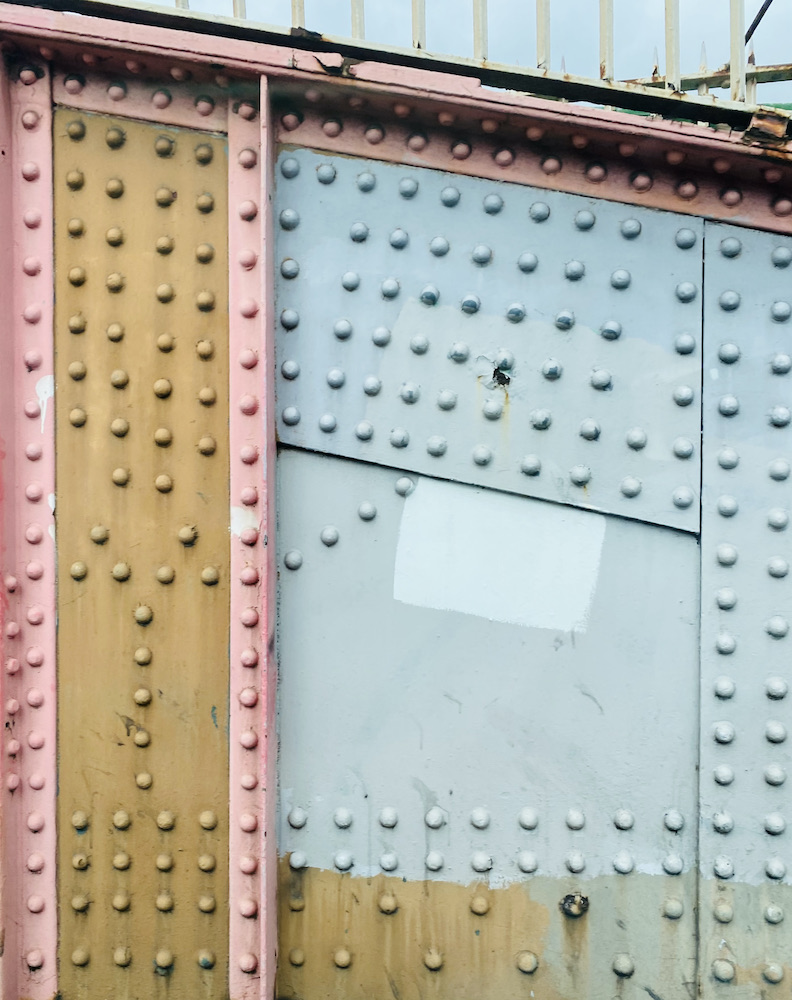
welded in place. (iPhone image)

day 14: for acceptance

I still believe mainly in the opportunities afforded by acceptance. 

Robert Adams

If you have ever been frustrated, trying to photograph the beauty of the moon or a sunrise, then you will know that a snapshot is a mere recreation of what the human eye sees.  It can’t do justice to the beauty we behold.   The same goes for you.  Your beauty is in the eye of your beholder.  If you see a photo of you that doesn’t look like how you feel you look, that’s exactly what is happening.  Your beauty can’t quite be captured by a camera, or a filter.  It’s in the energy, the magic, the light you send out.  And it’s all yours.  And it’s still there, regardless of what the snapshot shows.  The camera lies.  Or maybe it just can’t quite comprehend how much you really are.

‘I wish I knew’

Donna Ashworth

I think the hardest thing about living with chronic illness is the constant need for acceptance.  I don’t mean resignation, though there is often plenty of that too.  But resignation is a negative, disgruntled, ungrateful way of giving up, of conceding someone else is right, of foregoing your heart’s desire.  Acceptance is an active, positive, demanding force.  It requires fierce, clear, sight, courage and endless self-compassion. 

Down the years, when depression has been at its most brutal, I have clung onto the revelatory knowledge that God is in the details – the details outside my back door, beneath my window sill, in that single plant pot. I do not have to arrange things a certain way, for them to be ‘beautiful enough’ for God. Barbara Kingsolver encapsulates this kind of sight brilliantly:

In my own worst seasons I’ve come back from the colourless world of despair by forcing myself to look hard, for a long time, at a single glorious thing: a flame of red geranium outside my bedroom window.

Making room for acceptance in the midst of sadness or pain comes to be about seeing what ‘is’: putting aside the future and past which pull at me, in order to ‘be’ in this moment, which is all that God asks of me.  ‘Isness’ is how Meister Eckhart described God, the eternal present into which I am invited.  The Trappist monk Thomas Keating outlines how my ‘being’ is actually my ‘calling’: 

The greatest accomplishment in life is to be what we are, which is God’s idea of what [God] wanted us to be when [God] brought us into being….Accepting that gift is accepting God’s will for us, and in its acceptance is found the path to growth and ultimate fulfilment.

Making room for who I really am, beloved in God’s sight – rather than the curated self I would rather be, the perfectionist self I strive to be, the well self I expect myself to be or the people-pleasing self I have spent so long being – is a life-long task.  Attempting to put my self aside so I can be in God’s flow is something that, as a human and as a contemplative photographer is the biggest challenge I know.  I have to practice it over and over, to get myself out of the way so God’s will can be done in, and around, me.

In his book Soul Talk, Revd Kirk Byron Jones says that God is ‘always and forever dreaming your joy’, and that the soul is ‘God’s everlasting laughter in you’:

Your soul is God’s Spirit in your spirit, filled to overflowing with lavish love, grace, and outrageous joy. More than anything else, your soul wants you to know how much you are madly adored by God in the mad hope that you will live from acceptance and not for acceptance. (original emphases)

The difference between making room for accepting the what ‘is’ of my circumstances, and behaving in ways that will fit in with how I think or feel I should behave so that others will accept or like or love me, is where God meets me daily: to reassure me I am loved.

This is the divine acceptance that feeds me.  It is also something I find really hard to accept: the belief that I am inherently unloveable is a deep and old error message I am learning to accept is wrong, so God can correct it, can heal it in me.  

This is how I am making room for acceptance from the One who truly matters, who has my true soul-health at heart.  Imagine what my life might become if I learnt how to accept and live from such a place all the time…

Last May, I saw a dragonfly as long as my hand–longer than an average-sized songbird. She circled and circled, flexing her body, trying to decide if my little lake was worthy of her precious eggs. She was almost absurdly colorful, sporting a bright green thorax and blue abdomen. Eventually she lit on the tip of the horsetail plant that sends long slender spikes up out of the water. She was joined on the tips of five adjacent stalks by five other dragonflies, all different: an orange-bodied one with orange wings, a yellow one, a blue-green one, one with a red head and purple tail, and a miniature one in zippy metallic blue. A dragonfly bouquet. Be still, and the world is bound to turn herself inside out to entertain you. Everywhere you look, joyful noise is clanging to drown out quiet desperation. The choice is draw the blinds and shut it all out, or believe.

What to believe in, exactly, may never turn out to be half as important as the daring act of belief. A willingness to participate in sunlight, and the color red. An agreement to enter into a conspiracy with life, on behalf of both frog and snake, the predator and the prey, in order to come away changed.

Barbara Kingsolver, ‘My Desert Pond’ from ‘High Tide in Tucson: Essays from Now or Never’

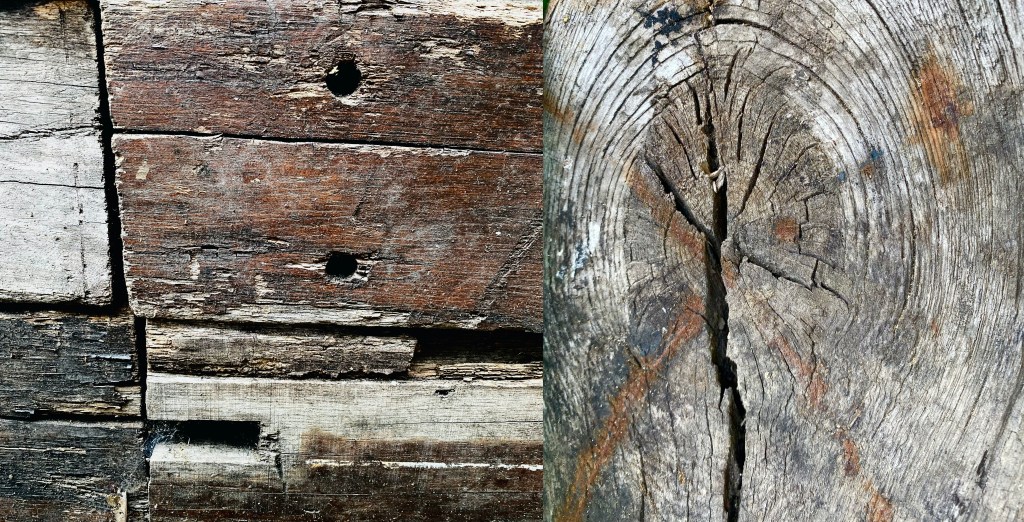
patched & cracked (how I come to today).  (iPhone images)

day 13: for play

I asked God if it was okay to be melodramatic

and she said yes

I asked if it was okay to be short

and she says it sure is

I asked her if I could wear nail polish

or not wear nail polish

and she said honey

she calls me that sometimes

she said you can do just exactly

what you want to

Thanks God I said

And is it even okay if I don’t paragraph

my letters

Sweetcakes God said

who knows where she picked that up

what I’m telling you is

Yes Yes Yes

‘God Says Yes To Me’

Kaylin Haught

I really like Kaylin Haught’s depiction of a playful God.  I forget how mischievous God can be, how infectious a sense of humour God has.  I can spend far too long caught up in the life of my mind, becoming too serious, too preoccupied, too intense.  I rely on my friends and family to dig me out of my potential ‘blue-study’ navel-gazing.  I know I don’t laugh enough.  It’s not that my life is all work and no play, but my best way of having fun is by being ‘in’ the creative flow, and that can’t (or at least doesn’t) happen very often due to my health limitations.  So the most frequent way I remind myself of the need to ‘play’ is to work in a sketchbook, and to keep experimenting.  I do use it for working out ideas for later ‘work’, but most of the time I deliberately try to avoid that, to leave one place in my life at least where there is no pressure, or expectation to perform to a certain standard.  In it there can be no right or wrong, no failure or success.  Such judgements kill play – and my recovering perfectionist self needs frequently reminding of this!

In The Gifts of Imperfection, sociologist Brené Brown cites the research of Stuart Brown (no relation):

Brown argues that play is not an option. In fact he writes, “The opposite of play is not work- the opposite of play is depression.” He explains, “Respecting our biologically programmed need for play can transform work. It can bring back excitement and newness to our job. Play helps us deal with difficulties, provides a sense of expansiveness, promotes mastery of our craft, and is an essential part of the creative process. Most important, true play that comes from our own inner needs and desires is the only path to finding lasting joy and satisfaction in our work. In the long run, work does not work without play. (129)

Play allows exuberance and expansiveness to bubbles over into joy and gratitude, into contentment and acceptance.  One of the best expressions of this kind of exchange and development is e.e. cummings’ poem “i thank You God for most this amazing”: 

i thank You God for most this amazing
day: for the leaping greenly spirits of trees
and a blue true dream of sky; and for everything
which is natural which is infinite which is yes

(i who have died am alive again today,
and this is the sun’s birthday; this is the birth
day of life and of love and wings: and of the gay
great happening illimitably earth)

how should tasting touching hearing seeing
breathing any—lifted from the no
of all nothing—human merely being
doubt unimaginable You?

(now the ears of my ears awake and
now the eyes of my eyes are opened)

It is worth listening to the poet read his own work here.  In 1999 the composer Eric Whitacre used the poem as part of Three Songs of Faith, an a cappella chorale work.  Spend six minutes listening to the Stanford Chamber Chorale and the Choir of Trinity College, Cambridge perform it here.  

I found it fascinating to learn that Cummings was also a painter.  The vivd language that he uses and his utter conviction in the ‘leaping’ link between things of the earth and things of the spirit, makes his prayer for continued openness in the face of encountering the ‘illimitable’, one that I can add my own fervent ‘yes’ to, my Amen.

With what attentive courtesy he bent

Over his instrument;

Not as a lordly conquerer who could

Command both wire and wood,

But as a man with a loved woman might,

Inquiring with delight

What slight essential things she had to say

Before they started, he and she, to play.

‘The Guitarist tunes Up’

Frances Darwin Cornford

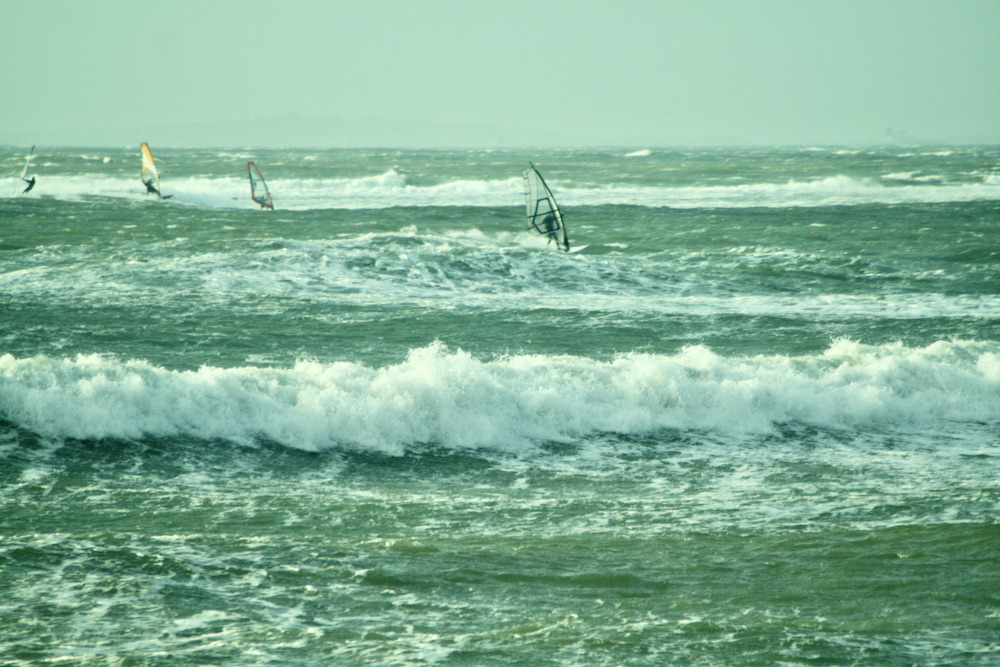
with the wind. (Canon 400D. f5.6. 1/500. ISO 200.)

day 12: for wisdom

In a vast untouched area like ours, you can hear what you need to hear. You can see for your own good. Messages come through your touch. You are soaked, submerged, immersed; full to the brim with beauty. Each visit can be a final answer, but the next visit brings you something else. It never ends. It becomes an endless process: you and nature have become one and you borrow its infinitude. You then have to go back again and again, because each time you outgrow, in some way, the self you were before.

You struggle for the words to make nature finite, to capture her, to take her with you, and you are defeated, which is right.

…The essence of the land, as it has been since the beginning of time -its evolution- still needs to be translated for human understanding. Descriptions, impacts, impressions come from the human side; but what is nature’s view of us humans? What would the message be if a tree spoke to us, or an animal, or an insect? What would come from “out there” ? Would “the other” in nature reach into “the other” in ourselves? If only it would.

So many thoughts, and for whom? The world is drowned by thoughts, most of them watered-down to satisfy too many people. But there is the need to capture the real stuff of this coast, no matter how difficult and personal and elusive a task it is. My notes need no justification; they are a thing in themselves, just as the coast is. Besides, one needs to have a say in one’s old age.

As I walked along the beach later that day, a motor fishing boat paralleled along the shore, with its powerful, encroaching, self-assured engine noises. It was barely outside the breakers.

To shut it out of my consciousness I carefully noted in detail what was around me. So that was it. Even though often redundant, my notes were also my protection.

Jane Hollister Wheelwright, ‘The Alegría Canyon’

What is the fruit of study?’ asks one ancient catechism. ‘To perceive the eternal Word of God reflected in every plant and insect, every bird and animal, and every man and woman.’

Ray Simpson with Brent Lyons-Lee, St Aidan’s Way of Mission (47)

About fifteen years ago I was introduced to Richard Rohr’s work on the centuries-old system of thought called the Enneagram.  More than a personality-profile system, its conflation of centuries-old philosophy and spirituality from all the Abrahamic religions brought me a rich way of understanding some of my recurring behaviours which have brought pain to myself and others. Eventually, it helped me embrace myself as a creative.

Around the same time, my beloved journeywoman Pippa began work on a Masters dissertation, and then a PhD on ‘wisdom’, as it related to the theological formation teaching received by those undergoing training to be priested in the Church of England.  As we discussed what some of the ‘wisdom’ passages from Proverbs or Sirach might mean, we arrived at a shorthand definition: that wisdom was actually ‘doing wisdom’.  Rather than arcane head knowledge or even mysterious heart transformation, wisdom in the Bible is clearly embodied.  Wisdom is a kinetic experience.  Wisdom is only known in the doing of it.

Wisdom, the received understanding of the mystery of God which necessitates a change in the believer’s life, is received in the writings and teachings of those who have followed the Perennial Way down the millennia.  Yet wisdom-by-doing (see Brother David’s words below) cannot be learnt by mere reading and learning.  As the above catechism makes plain, wisdom is also received through what Shakespeare’s ‘tongues in trees, books in the running brooks, /Sermons in stones, and good in everything’ (As You Like It II.i). 

I long to meet Wisdom herself in these ways.  My eyes are open.  My hands are willing.  And so this is how I start a painting: a received wisdom – a word, a poem, a prayer – inscribed beneath everything, unseen but informing everything that follows, indissoluble from the whole.  It feels immense, and yet not enough, a puny statement in the face of the world’s needs, in the face of my own needs.  Yet it is a sign of trust and a commitment to hope, that the God-Who-Comes breaking into the messy matter of being human, might become co-Creator in this one small act of daring, of offering.  All I have to offer is my vulnerable truth in this moment.

The word “blessing” comes from the same linguistic root as “blood.” Blessing is the bloodstream of the universe. It needs to be kept circulating. By living our personal life to the full, we tap into the life of nature as a whole, and so into mystery, the silent source of all blessing. Through paying full attention to our physical life throughout its seasons, we become aware of taking part in the great web of life and its unfolding, the unveiling of mystery as a story, a word. Through participating in the networks that enrich our life, we experience the continuous circulation of natural and cultural energy, which is the very circulation of blessing through the universe, and, deeply understood, the flow of mystery as Word, through understanding-by-doing, into silence. And just as all ecological cycles are sustained by the energy of the sun, so the source of all blessing in our personal life is ultimately our dynamic relationship with mystery as the great You at our innermost center of silence.

Brother David Steindl-Rast, You are Here (39-40)

unsettled. (iPhone image)

day 11: for rediscovery

Some of what we love

we stumble upon – 

a purse of gold thrown on the road,

a poem, a friend, a great song.

And more

discloses itself to us – 

a well among green hazels,

a nut thicket – 

when we are worn out searching

for something quite different.

And more

comes to us, carried

as carefully

as a bright cup of water,

as new bread.

‘Introduction’

Moya Cannons

Do I make room for rediscovery amongst the piles of my belongings?  How often do I sift through those bowls of ‘treasures’ I keep around my house: bits of wood or rusting metal, old coins or dried ‘chinese lanterns’ of cape gooseberry, feathers found on the ground?  How often do I really look and pray – ‘read’ – the icon which the poet and Methodist Minister Joanna Tulloch generously wrote (painted) for me?  How often do I take the stones out of the jar and place them back under running water to see their colours, or tumble them in my hands to feel the weight of this wonderful earth?  How often do I give the pictures on my wall a second glance?  How often do I revisit at the photos stashed away on my hard drive?

And I am compelled to ask, how often do I stop and question who I think the God-Who-Comes really is?  How often do I expose myself to different traditions of prayer and worship which might teach me how to rediscover the I AM?

The African American pastor, Shadrach Meshach Lockridge, once preached an hour-long sermon about the wonder of Jesus, which concluded with a spontaneous eulogy, using some of the ancient language the Bible uses for the coming Messiah: 

My King is the King. 
He’s the key to knowledge.
He’s the wellspring to wisdom.
He’s the doorway of deliverance. 
He’s the pathway of peace.
He’s the roadway of righteousness. 
He’s the highway of holiness.
He’s the gateway of glory.
Do you know Him?

This incantation has been made into a short animation, ’That’s My King’, using Lockridge’s impassioned voice as a soundtrack.  It is impossible to miss the power of that final question.  I can squirm under its spotlight, and I can ponder over the wealth of unexpected, perhaps even archaic, images.  I can utterly reject its use of the male pronoun and its seeming emergence from patriarchal structures. 

But, but, the challenge is simple: is this God who is Knowledge, who is Wisdom, who is Deliverance, who is Peace, who is Righteousness, who is Holiness, who is Glory, the God I know?  And if not, what might I need – today, in this now and this here – to (re)discover  – for the first or the hundredth time – who this God is?

Why not hire a professional? would be the logical question, but then I’d miss the quizzical look I got from the hardware store clerk when I made theatrical gestures with my hands to mimic a mailbox post being installed, and the drive-through lane of the lumberyard where I opened the window to drifts of cedar and pine, and the surprisingly intimate feeling of a drill in my hands at the golden hour of late afternoon, and how the lawn where I worked became a cheering section of dandelions, and the way I started talking to the screws, as if I were their guidance counselor. I’m not done yet, of course. This is the price of chipping away at a language I will never be fluent in. But I’m not in it for the expertise. I want, instead, the improvisation of the unskilled, my fingertips on the craggy edge of discovery, my body turned toward an act of making, however imperfect.

‘The Construction Project’

Maya Stein

stark choices for subtle whisperings. (iPhone image)

day 10: for beauty

If anyone happened to be near the fountain which Scripture says rose from the earth at the beginning of creation … he would approach it marvelling at the endless stream of water gushing forth and bubbling out.  Never could he say that he had seen all the water … In the same way, the person looking at the divine, invisible beauty will always discover it anew since he will see it as something newer and more wondrous in comparison to what he had already comprehended.

Gregory of Nyssa, Commentary on the Song of Songs

I frequently (every other moment) need to be reminded to look for the divine.  The only time I feel I don’t need such a reminder is when I have a paintbrush or pencil or print block or camera in my hands, and I am ‘in the flow’.  At these times, my looking for the Divine is made up of looking at the world about me with a slow, contemplative mind’s-eye view.  Then, I might, just might, make enough room for beauty to come to me, and to receive it from the most surprising of places, people or things.

David Hockney is inspirational in his insistence on the need to search and notice, to be curious about everything the present moment offers; that looking is vitally important.  When he was interviewed in 2023 about his ‘immersive’ exhibition ‘Bigger & Closer (not smaller & further away)’, he said, 

“I do look closely at things … The world is very, very beautiful if you just look at it but most people don’t look … I can look at puddles in the rain and get great pleasure out of them.  Most people think it’s just raining don’t they? … I say I live in the now.  It’s the now that’s eternal isn’t it? … The world is very very beautiful if you look at it, but most people don’t look very much. They scan the ground in front of them so they can walk,  they don’t really look at things incredibly well, with an intensity. I do.”

Making room to search for the Divine in a similarly intense way is a life-long commitment.  

Making room so that I can recognise the beauty of God when I see it is a life-long practice.  

Making room so that I can understand that I am part of the beauty of God, because God sees me as beautiful, is another thing entirely.  

I take great comfort from Curt Thompson’s observation in his book The Soul of Desire that, ‘God sees us not as problems to be solved or broken objects to be repaired but beauty on the way to being formed’. I am ‘God’s Work of Art’, as the writer of Ephesians assures me.  My God is a maker, a former, a creator, a poet, a carpenter, a potter, a performer.  I am learning to see beauty in everything God keeps shaping.  I am learning to let that beauty sink into me and transfigure me ever more into the ever-changing beautiful image of God.

In the courtyard where I watch it fall, the rain comes down at several different speeds. In the middle it is a delicate and threadbare curtain (or a mesh), an implacable but relatively slow descent of quite small drops, a never-ending languid precipitation, an intense fragment of pure meteor. A little away from the walls on left and right heavier drops fall separately, more noisily. Some look the size of a grain of corn, others a pea, others almost a marble. On the parapets and balustrades of the window the rain runs horizontally, while on the underside of these obstacles it hangs down in convex lozenges. It streams in a thin sheet over the entire surface of a little zinc roof directly below me – a pattern of watered silk, in the various currents, from the imperceptible bosses and undulations of the surface. From the adjoining gutter, where it flows with the contention of a deep but only slightly inclined stream, it suddenly plunges in a perfectly vertical, coarsely braided stream to the ground, where it breaks and rebounds in shining needles.

Each of these forms has its own particular speed and gait; each elicits a particular sound. The whole thing is intensely alive in the manner of a complicated mechanism, as precise as it is random, a clockwork whose spring is the weight of a given mass of precipitated vapour.

The ringing of the vertical threads on the pavement, the gurgling of the gutters, the tiny gong beats multiply and resonate all at once in a consort without monotony, and not without delicacy.

And when the spring is unwound, some of the gears continue to function for a while, getting slower and slower, until the whole machinery stops. Then, if the sun comes out again, the whole thing is erased, the brilliant apparatus evaporates: it has rained.

Frances Ponge, Rain

all the water ever seen. (iPhone image)