#adventapertures2025: Sunday 2

It is not by chance that both words consideration and desire (from Latin desiderium)-make reference to the stars (sidera in Latin). Stars played a role in medieval cosmology that might surprise us: seeds were thought to grow into different plants as their response to different stars – a special star for oak trees and a different one for willows, and likewise for all other kinds of plants. This mythic image expresses a lasting truth: there is something like a guiding star also for us humans. That is why people all over the world resonated so strongly with the image of the unreachable star in Joe Darion’s lyrics for Don Quixote’s lead song in the 1965 musical The Man of La Mancha: “To dream the impossible dream … To fight the unbeatable foe … To bear with unbearable sorrow … To run where the brave dare not go … To right the unrightable wrong … To love pure and chaste from afar … To try when your arms are too weary … To reach the unreachable star.”

Whoever you are, I’m sure you have felt the powerful attraction of that unreachable star as your highest ideal in life. It is stronger than even the highest ambitions that our Ego sets before us. We can easily distinguish between the two: our guiding star makes demands on us that are not what we ourselves would ever come up with. 

Brother David Steindl-Rast, You are Here (67)

The Wise-Ones saw a star rise.  Their curiosity drove them to make investigation.  I expect they will have consulted their star-charts, though we have no idea what those might have looked like.  (The oldest extant depiction of a constellation is 32,500 years old, showing Orion carved into an ivory tablet, and was found in a cave in Germany.  The Bronze Age Nebra Sky Disc (c.1600 BCE) depicts sun, moon, the Pleiades and the positions of sun rising snd setting between the solstices was also found in Germany.) But somewhere along the way their investigations brought them to a conclusion: they must follow where the star leads them.

As Brother David observes (above), ‘our guiding star makes demands on us that are not what we ourselves would ever come up with.’  But being attuned enough to discern the difference between an ego-search for the Christ-Star, which would satisfy an intellectual quest and provide acclaim for scientific exploration, and a spirit-search, full of questions and uncertainty, must have been a difficult challenge for the Wise-Ones.  They did not baulk at being required to travel through physical darkness into a spiritual darkness.  But I wonder at what stage they designated the star they saw rising with an association of a new king being born.  I wonder what name they gave it.

Dr Maggie Aderin-Pocock, my current astronomical guide, tells me how I might have named a new star:

Whereas (in the Western tradition) the planets of the Solar System are named after gods of classical mythology, we tend to know stars by the Arabic names given to them by medieval Islamic astronomers. These astronomers knew the brightest star in the Plough as zahr ad-dubb al-akbar, or ‘the back of the bigger bear’, which is usually shortened to Dubhe (the ‘bear’). The second brightest star in the Plough is Merak, meaning the ‘loins of the bear’ – the part of its body just below the ribs. So to name our new star, we might look for another Arabic word to describe a different part of the bear’s body.  However, the new star might not correspond to a particular body part, or it might be located outside but close to the stars that make up the outline of the bear. …In 2021, from data collected by the New Horizons space probe, it was estimated that there are 200.000.000,000 galaxies within range of our telescopes, and each galaxy contains trillions of stars. That’s a lot of stars… (The Art of Stargazing, 22-23)

In our own galaxy, the International Astronomical Union has now designated 88 constellations with a sequence of names and numbers to identify each star, with room to add for new discoveries as technologies advance.  But many of those Arabic names have stuck.  How many of these names would be familiar to the Wise-Ones, I wonder? 

The Wise-Ones must have had some way of notating the changing position of their guiding star, the King-Star, the Christ-Star.  How do I notate what guides me?  How do I stay present to it in the Now, so that I can see the changes, so I can measure where the dark takes me, so I chart what gifts I discover within it?  

And as I travel within the darkness, night-blind, can I find what was revealed to Jacques Lusseyran?: 

the light dwells where life also dwells: within ourselves …There was only one way to see the inner light and that was to love.  When I was overcome with sorrow, when I let anger take hold of me, when I envied those who saw, the lifer immediately decreased.  Then I became blind.  But this blindness was a state of not loving anymore, of sadness; it was not the loss of one’s eyes…

Lusseyran’s experience of being blind led him into a ministry of showing others ‘what their loss brings them, to show them the gifts they receive in place of what they have lost.  Because there are always gifts.  God wills it so.  Order is restored, nothing ever disappears completely.’ (Against the Pollution of the I, 17-19). From within my own history of chronic illness, I too can testify that ‘God doesn’t do waste’.  I have been given the gifts I need to weather the journeys I have needed to make.  I remind myself that this Advent will be no different.

Go slow 

if you can.

Slower.

More slowly still.

Friendly dark 

or fearsome, 

this is no place 

to break your neck 

by rushing, 

by running, 

by crashing into 

what you cannot see.

Then again, 

it is true:

different darks 

have different tasks, 

and if you 

have arrived here unawares, 

if you have come 

in peril 

or in pain,

this might be no place 

you should dawdle.

I do not know

what these shadows 

ask of you, 

what they might hold 

that means you good 

or ill.

It is not for me 

to reckon

whether you should 

linger or you should leave.

But this is what 

I can ask for you:

That in the darkness 

there be a blessing.

That in the shadows 

there be a welcome.

That in the night 

you be encompassed 

by the Love that knows 

your name.

‘A blessing for travelling in the dark’ 

Jan Richardson, Circle of Grace (30-1)
in love with shadows. (Canon R10. F8. 1/6. ISO 400)
#adventapertures2025: day 7

“Advent is a story of Old Testament prophecies.

It is a story of cosmic fulfillment.

The dream of a world repaired

in the holy darkness of Advent.

A whisper is heard, words are formed.”

Rev Lisha Epperson

Packing to go on holiday always induces fear in me as well as excitement.  It is the fear of leaving the familiar, where everything I need is within reach, including, in an emergency, known medics and hospitals.  Going on a journey to deepest darkest Dorset or Derbyshire, at most a few hours drive from home, is not going to take me far out of reach of any amenities I might, in an unlikely event, need to reach.  And with the aid of telecommunications and electricity, however ‘unreliable’ the rural broadband, points of help are never far from my fingertips.  

But such rational knowledge doesn’t extinguish the psychic fear coming from the most ancient part of my brain: the fear of the unknown, the threat of the unfathomable.

Advent is the time in the Christian liturgical calendar where such fears are let loose.  I deliberately turn and face, in the shortening light of the day and the growing darkness of night, the God who defies my comprehension.  This God who is yet the same God who loves me as their intimate child.

Ronald Blythe, who for years was the author of the Church Times column Words from Wormingford, writes about this tension which lies at the heart of Advent:

It is Advent and Isaiah and Amos thunder and sing to us in turn, the Official and the self-confessed unofficial prophets, entrancing speakers both. It was actually Isaiah who followed Amos’s inspired outbursts, the theme of which was the need of their nation to have a higher concept of God than that which prevailed in the Temple services. So they sang his glory, Isaiah in the process reaching those heights of Messianic prediction which echo in our Advent hymns. As with pregnancy, Advent is more disturbing than the actual birth. It is full of fear and dread. Advent – God’s adventure is entering his own creation. Its language is unsparing, its consequence incalculable. It follows me into the bank, into Marks and Spencer’s, into the library, and makes severe argument with the pleasant trash of the season. (Next to Nature, 426)

Theologian Wil Gafney calls this Advent pregnancy a “sacred blackness”, which recalls the first creative act of the world:

In the velvet darkness, darker than a thousand midnights down in a cypress swamp, this luminous darkness, this radiant blackness, the wholly black and holy black womb of God pulsed life into the world against a tapestry of holy life-giving darkly radiant blackness, shaping, molding, knitting, coalescing earthstuff from starstuff from Godstuff. All before uttering the first word.

A God able to do this is a God I should fear.  But this same God for whom I wait, for whom I prepare to meet is also this God: ‘the One for whose Advent we wait chose the flesh of a woman for the glory of the incarnation, that intimate bleeding flesh that the world of men wanted to leave behind, thus forever sanctifying woman-flesh and all human-flesh.’  Gafney goes on:

The time between the Advents is a pregnant time, indeed the earth is already in labor in apostle’s view. Now is a waiting time. Now is a watching time. And now is a working time. Jesus calls our attention to the people the world, and sometimes the church, says will be left behind. For much of human history women have been kept behind if not left behind. …And, for much of our history folk have wanted to leave gay folk and queer folk behind, yet Jesus comes to us through a miracle that transcends and queers gender roles, God-beyond-gender yet disclosed as the feminine spirit conceived a child with a human woman. From as soon as one person had two sticks while another had only one, we have left people behind in poverty and inequity. Yet Jesus came to us poor and under-housed. We are building walls – lying about building physical walls – while building legislative walls and the border-crossing Jesus is an asylum seeker. If we are not careful, we might just leave Jesus behind, not recognizing him because we’ve lost the sight and sound of the divine poetry in every human person.

Gafney’s powerful words challenge me: Am I prepared to meet this breaking-down-walls-God, this beyond-gender-God, this working-God on my Advent journey this year?  Am I prepared – with fear, with hope, with courage, with excitement – to go into the places where I am likely to meet them?  Am I prepared to hunt them down in the unlikeliest of places – places within myself and without my walls?

Aristotle said in the first sentence of his Metaphysics: ‘All men by nature desire to know.’  This is the secret magic and danger of having a mind. Even though your body is always bound to one place, your mind is a relentless voyager. The mind has a magnificent, creative restlessness that always brings it on a new journey. Even in the most sensible and controlled lives there is often an undertow of longing that would deliver them to distant shores. There is something within you that is not content to remain fixed within any one frame. You cannot immunize yourself against your longing. You love to reach beyond, to discover something new. Knowing calls you out of yourself. Discovery delights the heart. This is the natural joy of childhood and the earned joy of the artist. The child and the artist are pilgrims of discovery. When you limit your life to the one frame of thinking, you close out the mystery. When you fence in the desires of your heart within fixed walls of belief, morality and convention, you dishonour the call to discovery. You create grey fields of ‘quiet desperation’. Discovery is the nature of the soul. There is some wildness of divinity in us, calling us to live everything. The Irish poet Patrick Kavanagh said: ‘To be dead is to stop believing in/The masterpieces we will begin tomorrow.’

John O’Donohue, Eternal Echoes (257)

a pilgrim of discovery (iPhone image)

#adventapertures2025: day 6

Seeing is not the work of the eyes alone… Deprived of the privilege of the eyes [the blind person] measures at the same time his loss and his gain. Most of all, he continues to live and to experience with an irresistible force the wonderful mutual exchange that takes place between the inner and the outer worlds.

This continuity in life is always granted us by God.  When we experience a wall, a loss, a misfortune, it is not God who erected this wall, but our spirit. … In reality, there is neither a wall nor a loss. Everything is replaceable and continuous. So it is with the light for the blind. … To cease seeing with one’s eyes does not mean entering a world in which light has ceased to exist.

What dwells in the head of a blind person is the light. … The light is neither within nor without, but encompasses the whole being and wipes out the barriers we have created out of habit. The light is here! That is the only certainty. … Since my childhood I have been impressed with a phenomenon of surprising clarity: The light I saw changed with my inner condition. Partly it depended on my physical condition, for instance fatigue, restfulness, tension, on relaxation. Such changes, however, were relatively rare. The true changes depended on the state of my soul.

When I was sad, when I was afraid, all shades became dark and all forms indistinct. When I was joyous and attentive, all pictures became light. Anger, remorse, plunged everything into darkness. A magnanimous resolution, a courageous decision, radiated a beam of light. By and by I learned to understand that love meant seeing and that hate was night. … In short, there were two possibilities: to reject the world — and that meant darkness, reverses — or to accept it, and that meant light and strength.

Jacques Lusseyran, Against the Pollution of the I (43-49 passim)

When a new star became visible in the cosmos, I wonder where would the Wise-Ones have begun to search for its meaning?  I can imagine them poring over scrolls, consulting those who were the bearers of the ancient stories, those to whom they went for instruction.  I can imagine them casting around for other sources which might provide a commentary on their own faith journey.  I imagine that like them, I have a thirst for knowledge of God and all God’s wonders, and everything I read, the conversations I have, the prayers I hear, contribute toward my being able to synthesise glimpses of God into a road map for the way I live.

Robin Wall Kimmerer, through her seminal book Braiding Sweetgrass, has been one of my guides.  She reminds me that,

Like Creation stories everywhere, cosmologies are a source of identity and orientation to the world. They tell us who we are. We are inevitably shaped by them no matter how distant they may be from our consciousness.

The Skywoman story, shared by the original peoples throughout the Great Lakes, is a constant star in the constellation of teachings we call the Original Instructions. These are not “instructions” like commandments, though, or rules; rather, they are like a compass: they provide an orientation but not a map. The work of living is creating that map for yourself. How to follow the Original Instructions will be different for each of us and different for every era. … But the stories that might guide us, if they are told at all, grow dim in the memory. What meaning would they have today? How can we translate from the stories at the world’s beginning to this hour so much closer to its end? The landscape has changed, but the story remains. (7,8)

The Wise-Ones would know some of the stories, and know enough of another culture’s scriptures to look there for answers.  That speaks of a level of intellectual humility that is rare I think.  But something they read, or some snatch of a story someone told them provided the spark for them to make the quest not just one of understanding, but a quest of the flesh.  They began to plan how they might learn more and they were ready to put their bodies on the line to do it.  The potential folly of such a journey is not lost on me.  

Nor, now I come to think of it, is it an unfamiliar choice.  For one of the ways I come to understand God is through my body.  No matter how battered I feel, every Advent I recommit to undertaking a faith journey that is no mere intellectual or spiritual exercise, but a whole-body acceptance of the need to go where the Spirit leads: to give up everything to draw near to the dark heart of God.  For as Jacques-Lusseyran says above, what affects my external seeing and way of being and navigating the world, depends on my internal ability to understand ‘love means seeing’. 

The map I make myself is made up of how I write the stories of my experiences on and into my body, and I can either write with love and curiosity, or I can write with hostility and rejection.  Each story, poem, jotting on my bones and in my cells will determine the direction I face.  Every map has to begin with where you are.

Being flesh and blood matters. The experiences our bodies go through, large and small-both the trauma and the daily nudges and collisions from the external world-are mapped out on our bodies. All of this makes us. Bodies matter so much that Jesus came back from death in his own body, in that same despised, abused, and tortured body. It’s an incredible picture of solidarity, not an embrace of violence. It is a reminder that the exclusion, diminishment, and dehumanization of bodies are still realities in the world and that Jesus Christ, Emmanuel, that is “God-with-Us” means way more than empathy. That “the Word became flesh and lived among us” (John 1:14) means the incarnation is a shared, lived experience. The embodied, wounded, and scarred Jesus shapes our understanding of how and why our bodies matter. 

Mihee Kim Kort, Outside the Lines

an original instruction (iPhone image)

#adventapertures2025: day 5

I carry with me the awareness that many people find that this season brings not tidings of comfort and joy but of frustration and grief…. I believe… that in this season [we are invited] to carry the light, yes, but also to see in the dark and to find the shape of things in the shadows. With a perception that goes beyond visual sight, we are called to know and to name the gifts of the night and to share the visions that emerge from the darkness. In darkness and in light, we are asked to keep vigil and to companion one another in this and every season. In giving voice to our visions, we find strength in the shadows and a presence that guides the way. 

Jan L Richardson, Night Visions

I wonder how long it took to plan a journey of no fixed length?

But before that, I wonder, who was measuring the time of the ChristStar, the one which the Wise-Ones say later that ‘they observed at its rising’?  How long did the star stay in one place, waiting for them to get themselves ready for an expedition which was  literally ‘to the stars’?  Or did it immediately begin to move from day to day but in such tiny increments that they could still see it, or at least track its’ direction?  

I realise that I have begun writing this series with very little knowledge of what star-time might be, or indeed, how it might be measured.

In Jenny Odell’s book Saving Time, she illustrates the difference between a standardised clock time and solar time by means of a graph, which shows:

which parts of the year the time indicated on a sundial would run ahead of a standard clock and which parts of the year it would run behind. The difference exists because, as John Durham Peters writes, “the sundial directly models natural facts, yielding stretchy days and hours that expand and contract as the earth makes its elliptical way around the sun, but the clock is a solar mood stabilizer, soothing the sun’s annual swings into twenty-four-hour average units and ticking away regardless of sun or cloud.” It is the difference between place-based observation and the abstract, standardized system…

The graph shows both readings of time, yet they are not equal. Sundial time is being described in the terms of clock time, which are the given grounds for comparison. It is as if, as anthropologist Carol J. Greenhouse describes it, “the clock were itself a materialization of some universal time sense.” Clock time is not the only form of time reckoning we experience, but it is certainly primary in how many of us think about the

“stuff” of time. And it was an allegiance to clock time that allowed colonists, anthropologists, and contemporary Western observers in general to view non-Western and indigenous cultures as being without, or out-side, time. (122-5)

The Wise-Ones were clearly experts in astronomy, but I suspect they were also experts in horology.  And if they were from the Islamic world, their concept of time might well also be bound up in different linguistic and cultural notions of past and present, which become forward and backward directions. (So that what can be seen, because it has already been lived, (i.e. one’s past), is spoken of as being in front of one).  Or it may be their sense of time was drawn from a cultural event, for example the year of an invasion, so that they would count x days/years from that point.  Or it could be that some form of lunisolar calendar was in use.  Anthropologists now know that Islamic use of the lunar calendar dates from 622 CE, with early pioneers producing detailed astronomical handbooks,  These held calculations of the sun’s position and shadow lengths so as to determine daily prayer times, the result of experiments made by means of astrolabes and water-clocks.  

Who knows what wonders our Wise-Ones might have invented?

However they calculated time and the passage of the ChristStar, the fact remains that the Wise-Ones would have had to journey at least some of the time by night, continually cross-checking their position and direction.  As the length of sunlight hours reduce for me this winter, and the nights elongate, are there any external preparations I need to make for this Advent pilgrimage which are specific to the here and now circumstances I find myself in this year?  

In addition, are there extra internal precautions I need to take as I undertake the journey within, back to, (and for the first time) toward, the Christchild?  What night visions do I need to name as I set-out?  What gifts might this dark time bring me which I need to take with me?

… And if, as autumn deepens and darkens
I feel the pain of falling leaves, and stems that break in storms 

and trouble and dissolution and distress, 

and then the softness of deep shadows folding, folding 

around my soul and spirit, around my lips,
so sweet, like a swoon, or more like the drowse of a low, sad song 

singing darker than the nightingale, on, on to the solstice 

and the silence of short days, the silence of the year, the shadow, 

then I shall know that my life is moving still
with the dark earth, and drenched 

with the deep oblivion of earth’s lapse and renewal.  

from ‘Shadows’ 

DH Lawrence

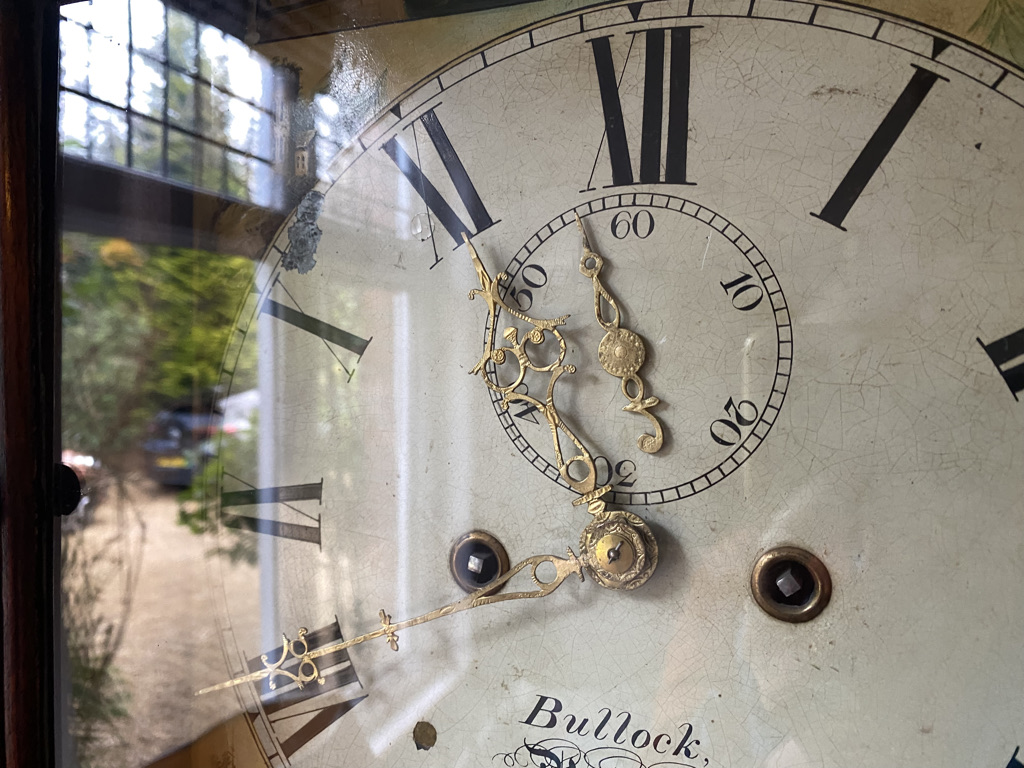
a solar mood stabiliser (iPhone image)

#adventapertures2025: day 4

They tell me he is a refiner, that he cleanses from spots; he has washed me in his precious blood, and to that extent I know him. They tell me that he clothes the naked; he has covered me with a garment of righteousness, and to that extent I know him. They tell me that he is a breaker, and that he breaks chains, he has set my soul at liberty, and therefore I know him. They tell me that he is a king and that he reigns over sin; he has subdued my enemies beneath his feet, and I know him in that way. They tell me he is a shepherd: I know him for I am his sheep. They say he is a door: I have entered in through him, and I know him as a door. They say he is food: my spirit feeds on him as on the bread of heaven, and, therefore, I know him as such.

Adapted from ‘Do You Know Him?’ by Charles Haddon Spurgeon, 31 January 1864,   https://www.spurgeon.org/resource-library/sermons/do-you-know-him/#flipbook/

These days, I shy away from using the violent metaphor of a hunt, since so many of its actual forms seem so manifestly cruel to the beings with whom I share this planet. But animal hunts often figure in the stories of the lives of martyrs and saints, where Christ is often portrayed as a hart or stag being pursued.  The myth of Saint Eustache is one such.

Eustache was a Roman general who converted from paganism to Christianity during a hunt, after the stag he was pursuing turned to him and a cross appeared between its antlers.  As it did so he heard God speak, commanding him to be baptized. Eustace was martyred for his faith by Emperor Trajan in AD 118. His feast day is celebrated on November 2 in the Orthodox Church.

In 2014 the artist Leonora Hamill filmed ‘Furtherance’, a photographic installation (filmed in the church of Saint-Eustache) which was then projected onto the church’s windows inside and outside simultaneously.  As described on her website, the installation, “weaves together traces of everyday activities within the church, and a live stag . . . wandering through the space. Hamill transcribes the collective energy specific to this place of worship by retracing the steps of the church’s various occupants: priests, parishioners, tourists, soup-kitchen volunteers and their ‘guests’. These crossing paths constitute the social essence of the site. Their minimalist and precise choreography merges the human and spiritual sap of St Eustache.” 

Intersecting the choreography of a second-century stag hunt in a seventeenth-century church with footage of those twenty-first-century seekers who now ‘hunt’ for the inexplicable something ‘more’ in their lives, forms a compelling visual parable for why a pilgrim might set out on a journey of one step or a trillion, and why a faith community is such a vital ingredient at any stage in the process.  

Something of such single-focus passion propels the Wise-Ones’ decision to take off under the guidance of a star.  Surely they did so in the face of many who decried their folly, and who doubted their sanity.  Perhaps it was the stardust in them being drawn to the stardust of the newborn Christ?!  As Dr Maggie Aderin-Pocock says in her book The Art of Stargazing:

The death of older stars provides the fuel and heavy elements for the next generation of stars in an ongoing life cycle, and we are the direct beneficiaries of this extraordinary process.  All the elements in our bodies were forged in the heart of a star.  … So not only are we stardust, but [the heavier elements in] that dust may have passed through a number of different stars before becoming us! (13)

I wonder, am I truly drawn to Christ with eyes which expect either the revelation of stag or stardust?  Are my eyes really open to the possibility of seeing the unfamiliar within the familiar, in coming across God in unexpected places (as Charles Spurgeon does in the sermon excerpt above)? What about my focus? Do I allow my passions to guide me further into or away from the heart of God?

In the early morning a heron

stalks through the marsh. The

fog is a dense mystery whispering

an incantation, tattooing itself on my bones.

It was only a glimpse; a scene

between colonial houses

we passed on the way to school.

Like the heron I stalk this moment

when the sublime pierced my heart with beauty; 

a synonym for Divine.


A cranberry bog and a haunted 

forest on the opposite shore lit with a 

rapture of moon and stars shimmering their

way into the space between my cells

.

It was only a glimpse; a scene

we passed on the way to a Christmas fair;

a scene I have tried and failed to paint a hundred times; 

another synonym for Divine.

Beauty makes it easy to believe in a God

with a creative heart that must also be

the origin of love. But when the floodwaters

rise and children are handed guns, forced

to flee a thousand times and pray for death

because there is no food, and mothers

have eyes vacant with the nearness of 

apocalypse, I wonder, Where is the heron?

Where is the rapture of moonlight?


A teenager on the radio speaks of their orchestra of refugees

because art is necessary for the human heart. Community;

a synonym for Divine

.

‘Synonym’

Melinda Thomas

This poem is from Melinda’s Substack

 The Journal of Elements and Seasons 

and she is the author of the recently released collection

 Elements of Being: A Spiritual Memoir in Verse.

part of the community of stardust (iPhone image)

#adventapertures2025: day 3

To journey without being changed is to be a nomad.

To change without journeying is to be a chameleon.

To journey and be transformed by the journey is to be a pilgrim.

Mark Nepo

from Christine Valters Paintner, The Love Of Thousands, (65)

Why begin a journey, especially when one has no idea of where it might lead?  Can one make a journey a pilgrimage, even if there is no end goal or site?  I am entering this Advent knowing, in one sense, that the goal is the celebration of the Christ Child’s entry into the world, the moment where all matter in the history of space and time was transfigured.  I travel toward a re-recognition of the Incarnation: of the radical, earth-shattering knowledge of God-With-Us.  True for the first time, true for the fifty-something time in my own life.

Why set out at all then?  Because I desire God’s holy surprise to erupt in my life.  Making an Advent pilgrimage is a way to remind myself of this intention: that the spiritual life is precisely about a commitment to ongoing transformation, made by voyaging into the unknown heart of God (the Benedictine vow of conversatio morum).  Brother David Steindl-Rast reminds me: 

Desire has garnered undeserved bad press among spiritual writers, as if all desires were impure. According to its Latin origin, the very word means “relating to a star” or “following a star” – your star. You purify your desires not by suppressing them but by finding your highest star and hitching your heart to it. (You are Here, (107))

So this winter I am also intentionally embracing the unknown increasing ‘dark’ (which is always a physical and somatic factor in Winter for me).  I ask myself Gerard Manley-Hopkins’ question: ‘Where lies your landmark, seamark, or soul’s star?’  

I wonder what desire propelled those first-century CE Wise-Ones out of their homes and observatories to follow a new star?  A desire for knowledge certainly; but also a desire for what cannot be fully known at the start of any expedition or adventure, however well planned: a willingness to behold the wonder of a Mystery that is bigger than anything (anyone) I might imagine.  One does not trust one’s body, mind or soul to the immensity of the skies without that sliver of uncertainty, that shiver of expectation at what might await ahead.  As John O’Donohue confirms, ‘the soul is full of wanderlust’:

The soul is full of wanderlust. When we suppress the longing to wander in the inner landscapes, something dies within us. The soul and the spirit are wanderers; their place of origin and destination remain unknown; they are dedicated to the discovery of what is unknown and strange.

Part of the wonder of being a person is the continual discoveries that you find emerging in your own self; nothing cosmically shattering, merely the unfathomable miracle of ordinary being. This is the heart of longing and what always calls us to new forms of belonging. (Eternal Echoes 68, 70-72)

The water is one thing, and one thing for miles.
The water is one thing, making this bridge
Built over the water another. Walk it
Early, walk it back when the day goes dim, everyone
Rising just to find a way toward rest again.
We work, start on one side of the day
Like a planet’s only sun, our eyes straight
Until the flame sinks. The flame sinks. Thank God
I’m different. I’ve figured and counted. I’m not crossing
To cross back. I’m set
On something vast. It reaches
Long as the sea. I’m more than a conqueror, bigger
Than bravery. I don’t march. I’m the one who leaps.

‘The Crossing’

Jericho Brown

the unfathomable miracle of ordinary (iPhone image)

#adventapertures2025: day 2

If it’s true that the universe consists of atoms and void and nothing else, then everything that exists—the sun and the moon, mother and the flag, Beethoven’s string quartets and da Vinci’s decomposing flesh—is made of the elementary particles of nature in fervent and constant motion, colliding and combining with one another in an inexhaustibly abundant variety of form and substance. No afterlife, no divine retribution or reward, nothing other than a vast turmoil of creation and destruction. Plants and animals become the stuff of human beings, the stuff of human beings food for fish. Men die not because they are sick but because they are alive.

Lewis Lapham

(Found in Tim Carpenter, To Photograph is to Learn How To Die, 220-1)

Part of my bedtime ritual includes checking the moon chart on the studio door and, as my stairlift rises, looking out of the landing window to see what stars are visible.  Some of this, I suspect, is an inherited childhood memory.  I remember seeing my father carrying his grandchildren to the windows to say ‘night-night’ to the stars as part of their tour of the house before bed, and I guess he did the same with my brother and I.  Most nights now either cloud or light pollution stops me seeing stars, and when I do, my poor eyesight can’t distinguish clearly enough between satellites, skytrains, airplanes or even nearby galaxies.  But even not knowing what I’m looking for, I still look. I still marvel as I watch matter and time move in ways beyond my puny comprehension.

Even though I repeatedly try to educate myself about stargazing with the aid of the Royal Observatory guides, brain fog means neither the science nor the names stick any more.  So, if a new star was born would I ever notice?  

But over two thousand years ago the Wise-Ones I am following this Advent did.

I can’t get my head around a quick definition of how a star is formed (plasma formed as nebulae debris spins itself together into knots and nuclear fission – Google knows the answers).  And whilst I suppose any expert astronomer would follow the growth of a new star in their field of study, the idea of ‘following’ its path across the heavens in anything other than a theoretical way baffles me.

And I need to stay with the wonder of that bafflement.  For its far too easy to jump to the attribution of the biblical star which the Wise-Ones provide at the end of their journey: they have followed the ChristStar they say.  At the beginning, what could they know of it?  Nothing.  Despite all their knowledge, in that moment of first sight this star is a complete mystery.  All the rest is to come.  And across time now, in this moment, that is all there is: a dark sky and a bunch of people looking at it and discovering that something has changed, and getting curious about the anomaly.

It is the very nature of darkness to create. It cannot stop itself. Darkness has an artistic soul and a divine heart which sings and writes and paints and builds and dances beauty into being. This is the meaning of co-creation; the hand of God shaping and forming things from a void, using, in the creative process, the lives of those who have their own origins in darkness, which is every one of us.

Svalbard Journey

First Visit, 10 January 2013

After church this morning I was taken by the hand by one of the congregation and pulled outside, suddenly and urgently, where a strong strand of light was visible beyond the mountains. The sun was not yet above the horizon -and would not be for many, many days – but still its power to illuminate could not be held at bay . “Look,” I was told with not some small degree of vigour, “The light is always stronger than darkness.” After the day’s events I reflect somewhat differently. Not that the light is stronger than the darkness, but rather that light needs darkness to live – we cannot see light for what it is without the dark! Yet darkness can live alone, without light, as the fundamental state of things from which creation sprang.

Catherine Bird, The Divine Heart of Darkness, 108

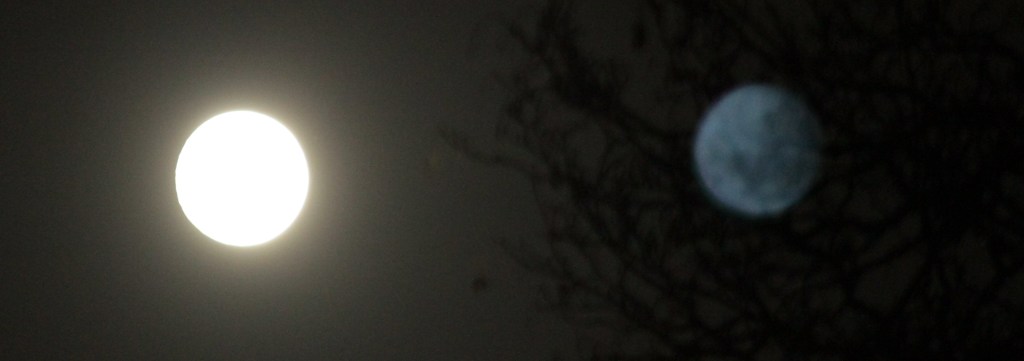
inexhaustibly abundant variety (iPhone image)

#adventapertures 2025: Sunday 1

In the season leaves should love,

since it gives them leave to move

through the wind, towards the ground

they were watching while they hung,

legend says there is a seam

stitching darkness like a name.

Now when dying grasses veil

earth from the sky in one last pale

wave, as autumn dies to bring

winter back, and then the spring,

we who die ourselves can peel

back another kind of veil

that hangs among us like thick smoke.

Tonight at last I feel it shake.

I feel the nights stretching away

thousands long behind the days

till they reach the darkness where

all of me is ancestor.

I move my hand and feel a touch

move with me, and when I brush

my own mind across another,

I am with my mother’s mother.

Sure as footsteps in my waiting

self, I find her, and she brings

arms that carry answers for me,

intimate, a waiting bounty.

“Carry me.” She leaves this trail

through a shudder of the veil,

and leaves, like amber where she stays,

a gift for her perpetual gaze.

‘Samhain’

Annie Finch

I have been planning to write about the phrase ‘we saw his star rise’ (Matthew 2.2) for the last two years (as will be made clear by Epiphany).  This extraordinary claim is made by the magi, those enigmatic ‘wise men’ –  they saw a new star rise and have followed it.  They have associated the star with the prophecy of a new king for the Jews, and have brought offerings as part of their potential worship of this new world leader.  These men ‘from the east’, the WiseOnes, will be my guides for this Advent.  They will lead me on a metaphorical, mystical pilgrimage toward the birth – again and for the first time – of the Christ Child into my world.

So, before I set out, a word about these guides for the coming season.  I am claiming the fullest possible personal definitions for these mysterious foreign seekers: they are wisdom-treasurers; they are astrologers and astronomers; they are rich, well-read dilettante with time on their hands; they are my ancestors; they are theologians; they are magicians; they are prophets; they are science teachers; they are literary experts; they are linguistic-delighters; they are navigators; they are adventurers; they are visionaries.

Where do they come from?  The bible is happy with the generic ‘east’. In other words, anywhere ‘other’ than and outside of Judea.  All sorts of theories abound, and I will touch on some of these over the coming days as I look for maps and charts for the journey ahead.  Another point to note is that this band of king-searchers numbered probably more than three (but no one knows), tradition decided on three because of the three symbolic gifts they delivered.  In addition, the names of Caspar, Melchior and Balthazar were not given to these WiseOnes until much later.  And lastly, (I’m just going to put it out there), we do not even know that they were all men.

Like Catherine Bird says, in her book The Divine Heart of Darkness, ‘I set off in pursuit of the darkness, following like the Magi, those strangely enigmatic, yet oh-so-familiar astrologers–a fragile premise, an idea, a hope; not exactly certain where I am heading or what to expect but in anticipation of discovery and learning, holding fast to the potential and possibility of my wild imagining.’ (7)

So can I set aside all the trappings of nativity plays and victorian carols, and venture on this journey into the dark desert, into the unknown with a bunch of starry-eyed dreamers for my guides?  And if I do, what might they have to show me about the God who pushed them into such a lengthy, mysterious and hazardous trek through countless nights?  What might these foreign mystics from a different faith tradition have to say about the One God whose great cosmic circle dance filled and fills both our worlds?

The quality of the sacred circle dance depends on the attention each dancer pays to all others. Every attuned dance step improves the whole dance. William Butler Yeats knew this: ‘O body swayed to music, O brightening glance,/ How can we know the dancer from the dance?’ (from Among School Children) C. S. Lewis, in whose space novel Perelandra I first encountered the image of the Great Dance, the Great Game he also calls it, writes,

It has begun from before always…. The dance which we dance is at the centre and for the dance all things were made… In the plan of the Great Dance plans without number interlock, and each movement becomes in its season the breaking into flower of the whole design to which all else had been directed.

… All that is made seems plan-less to the darkened mind, because there are more plans than it looked for…. Set your eyes on one movement and it will lead you through all patterns and it will seem to you the master movement. But the seeming will be true.

Let no mouth open to gainsay it. There seems no plan because it is all plan: there seems no centre because it is all centre.

Brother David Steindl-Rast, You Are Here, (xviii)

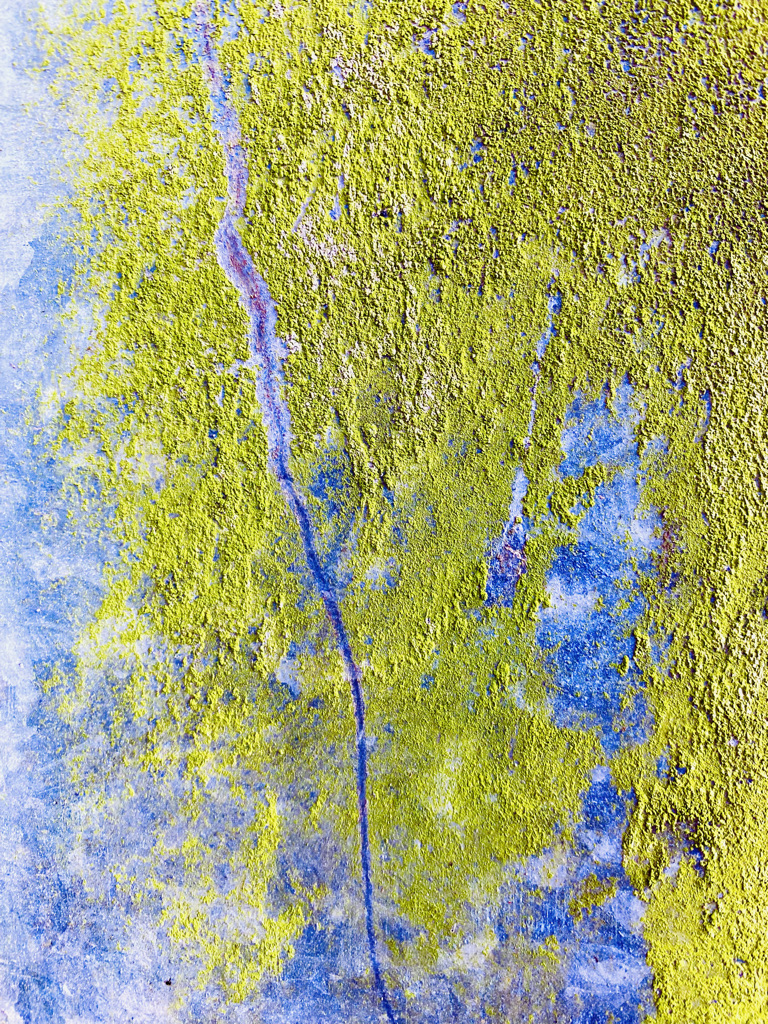
a seam stitching darkness like a name. (iPhone image)

#adventapertures 2025

In order to subscribe to this #adventapertures series, please go to the home page and click the white subscribe button which is normally found at the bottom right of the screen.

If you already receive an automatic feed via email from WordPress on behalf of imageintoikon.com – then you’re already signed up! You need to do nothing further to receive #adventapertures2025.

Alternatively, you can follow @katekenningtonsteer on Instagram and Facebook and you will see the daily posts on your feed.

an elemental year: Sashiko

This piece was originally written as a ‘monk in the world’ piece for Abbey of the Arts here.

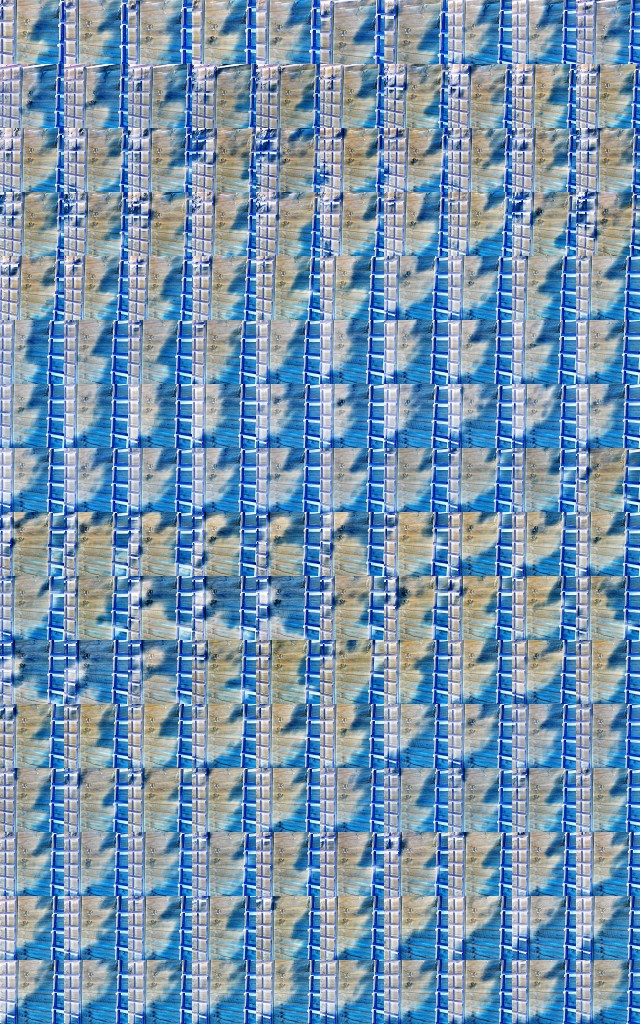
I am currently spending a year exploring the elements in the company of the Kinship Photography Collective.  My practice group (a special mix of people who are able to meet on zoom during the day in the U.S. and Canada so I can join with them here in the U.K.) are exploring each element by paying attention to the land-based calendar of the Celtic Wheel.  Thanks to the cultural background of one of our members, we are also able to compare and contrast this northern-hemisphere/white/western-based spiritual ecology with the Lakota Medicine Wheel, a moon-based seasonal understanding of the elements as teachers of certain human characteristics, or ‘spirits’.  We are then exploring how this might expand our somatic understanding of contemplative photography with the more-than-human world. Artistically, I am stepping way out of my comfort zone, since the group is encouraging me to make grids of my subjects, experimenting with how pattern, rhythm, movement and repetition might inform my understanding of the season of air (Spring Equinox/Beltane/Pentecost).  

Since I am also a poet, I am bringing the photographs I make into an ekphrastic dialogue, hoping that together, the words and images become more than the sum of their parts.  This image brought to mind the practice of slow stitching, and in particular, the fine art of Sashiko: a distinctive zen-based method of embroidery used to repair, strengthen and decorate a new textile from worn materials, traditionally creating complex white stitched designs onto an indigo ground.

air viii (‘sashiko’)

(29.5.25)

in the ground of my beseeching

I stitch a quilt of indigo cloud

bind tight the found-made rags

those torn shreds of holiness

fluttering surrender at the scelra.

it quivers a praying connection 

into being

weaves shredded nerves 

into synapsed patterns

expels my body’s breath 

into miasma.

it blinds

and flits

and settles again:

the ancient rhythm,

that rising, that falling,

it directs the contrapunctuated

marks of my needle

and slowly, gathers each corner

of my vestigial attention 

into folds.

it restores the spaces between

patches anew beyond the shadows

beneath the tucks of bone-deep knowing

and finally, reinforces my quotidian function

as mere receptor of the one great

gift.