epiphany 2026

When the smallness of my vision

Dampens all hope inside, I simply watch

And these clumsy feet keep moving.

When what could have been

Turns bitter and dusty from wear

I feel the tiniest move as a miracle.

When the bit is cold in my mouth and

When daylight reveals only a potholed

Road, just the sound of my feet can comfort.

Rising up from this pain is not grand or special

If it says anything it says star dust knows

It says come with me just one more time.

Miracles always have their own strange rhythm

To know them is to place power into the possible

And God as surprised as anyone when they happen.

‘Miracles’

Dale Byron

The Wise-Ones I have been journeying with during Advent have reached the point where, following their meeting with the ChristChild, it is time to go home.  However, changed by their encounter, they make yet one more astute political and spiritual decision: to obey the dreams which tell them not to report back to Herod in Jerusalem about their discoveries, but to go home via an alternate route.  Once more they are reliant on the Cosmos to guide them.  They cannot even use the knowledge they garnered from their outbound adventure.  The way is full of darkness, unknowing and unknowns – yet again.

I had grand plans for how I was going to celebrate Epiphany 2026.  I had hoped to launch a new Substack called ‘Epiphany of the Ordinary’, a place where I can share my poetry and perhaps my contemplative photography and other visual arts.  I wanted to write an essay explaining exactly what I mean by ‘epiphany of the ordinary’, (a phrase some readers will already be familiar with from this blog and from the hashtag I use for my Facebook iPhone project, ‘acts of daily seeing’).  The essay would be lavish in its footnotes, full of resources I have gathered over the last few years, exactly for this purpose.  Then I wanted to publish a cycle of poems I made during the Winter of 2022-3 entitled ‘making my own constellation.’  I thought that the Wise-Ones’ return journey would provide a neat segue!

As it is, I feel (once more) cast back into the regions of the unknown.  The last couple of weeks, which I had reserved for writing and setting up the launch, have evaporated into the fug of another virus and a lost voice, and I have barely left bed, most days unable even to sit up and write, even if I could think straight.  So, I either postpone the grand launch, so perfectly planned and timed for this exact day; or, I let go my control, and simply launch without a fanfare, without the ‘correct marketing plan, without it all being ‘professional’.  I remind myself that there will be time to build the site around the material at a later date – once I have learnt the platform’s technological quirks and possibilities.

Learning such lessons about adaptability does not come easily to my recovering-perfectionist self.  And yet, creating from the ‘messy middle’ is what I do all the time, repeatedly making compromises or taking ‘alternate routes’ due to lack of energy, or trembling limbs, or brain fog.  Releasing the idea of a grand planned hope is a different way of coming home to myself, true, but one which I feel Spirit nudging me firmly toward, telling me ‘let it be, let it stand’; unideal, but real.  Allow this new venture to begin as a leap of faith into the realms of the possible  – this time, without even the pretence of perfected preparations. 

Or at least, let it be one small step in the right direction of Trust, since ‘star-dust knows’, as Dale Biron observed (above).

Let it be 

that on this day 

we will expect 

no more of ourselves 

than to keep 

breathing

with the bewildered 

cadence

of lungs that will not 

give up the ghost.

Let it be 

we will expect 

little but 

the beating of 

our heart, 

stubborn in 

its repeating rhythm 

that will not 

cease to sound.

Let it be 

we will 

still ourselves 

enough to hear 

what may yet 

come to echo:

as if in the breath, 

another breathing; 

as if in the heartbeat, 

another heart.

Let it be 

we will not 

try to fathom 

what comes 

to meet us 

in the stillness 

but simply open 

to the approach 

of a mystery 

we hardly dared 

to dream.

‘In the Breath, Another Breathing’ 

 Jan Richardson, Circle of Life, (146-7)

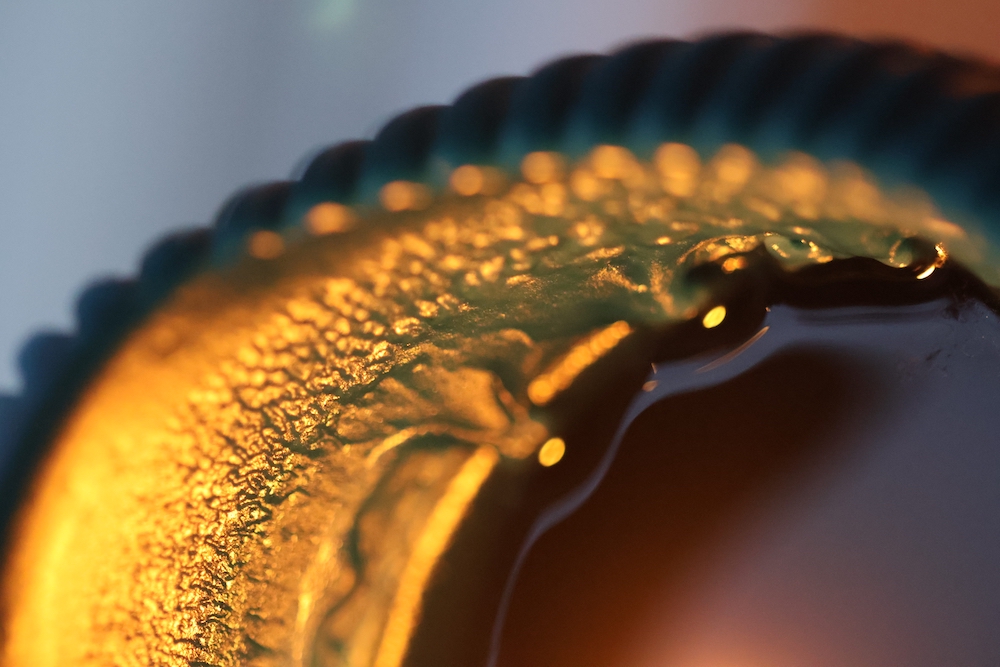
the negative end of the telescope (Canon R10. f8. 1/1600. ISO 100.)

#watchnight2025

What is the taste of

a dream in the darkness?

How might you carry a dream?

In a pocket,

a cage or

a basket?

Tangled in memory,

twined round a heart?

Where would you keep it 

for safety?

Can you lock up a dream,

with a key?

Or, should you trust

to the light

to keep a dream safe,

keep it close, keep it near

what are the colours

of dreaming?

Are they layered, like mist,

are they coloured, like gold

and fragile like fragments,

like leaves in the wind?

Do they long for the dark

and the moon?

Does a dream find each

dreamer?  Does it seek in

the night, searching for

someone who might understand

the why and the wherefore,

the warp and the weft?

Can you hunt for a dream

with a hound at your heels?

Can you hunt for a dream

with a hawk on your glove?

Must you search in silence,

in secret, in shadow?

Wait, watch and listen.

Between a breath and a breath

you might find the taste of a

dream in the dark. Never fear

Jackie Morris from Feather Leaf Bark Stone

It’s struck me that I haven’t yet talked about dreams, and dreams as a form of revelation – and not just for the Wise Ones.  The Christmas gospel narratives are packed with people having dreams, and having had them, they act upon them.  

When is the last time I had a dream, took it as a message from the Divine, and then changed my life’s course as a result?

I’m not good at remembering my dreams on waking.  But perhaps dreams add up in me, in the layers of my subconscious, until they are able to surface in a different way?  As I was thinking about this I came across an intriguing passage in Back to Nature by naturalists and broadcasters Chris Packham and Megan McCubbin, which is worth quoting at length:

Our days are packed full of information, some of which is useful and some of which is not, so when our bodies shut down to sleep our brains go into overdrive replaying the day’s events, filtering out which memories and new skills are worth hanging onto. The dreams we have essentially help with memory consolidation, but dreaming isn’t solely limited to humans and evidence of dreams can be observed in many different species, from cats to cuttlefish.

Of course, it depends on your definition of dreaming, but scientists are able to measure brain activity in animals as they sleep and find that many species, similarly to us, will have rapid eye movement (REM) cycles. This is the point of sleep where vivid dreams generally occur.

For the last 20 years or so, we have known that sleeping birds have neurons firing around their brains in a complex pattern similar to that observed when they are awake and singing. This suggested that birds are able to subconsciously practise and tune their songs while sleeping – a skill that is particularly useful for young birds, who develop their singing abilities by listening to, remembering and mimicking that of a parent or related (conspecific) individual. If’s simply fascinating that they replay these songs in their minds as they dream to improve their skills. But when investigating this further, scientists found that zebra finches also flexed their vocal muscles when asleep as if they were actually singing. The results suggest that birds could be practising variations of their song, which helps to fine-tune their notes to make sure their song is perfectly composed.

The vocal muscle activity was so strong that if enough airflow was present, they’d actually be singing as they sleep. What a beautiful thing that is. (27-28)

I hope my mind is practicing creative output in my sleep, so that the gestures I need in my waking life are already familiar to me and are just waiting to be used at the right time and will emerge fully-fledged in the right season, when I need them.  This is my hope: that divine provision – my daily bread, what I need for this day alone – will be given to me.  It might be the dream outline of an overture to shake the world, or it might be a clear idea how to help a friend in such a way that nobody knows of the act but us two.  The dream arrives to fit the situation when it is needed – but also when it is asked for…

Magnitude or importance are irrelevant when it comes to dreams, but if I don’t practice my dreaming, my imagination will never develop the capacity to deliver the divine message when the day arrives when it needs to be enacted. Dreams are the way my mind stretches its capacity for the divine.  Daring to commit to dreaming more in 2026 feels like a good way to begin fulfilling the prophetic watch night cry to surrender all I am as I commit to a renewed covenant with God:

I am no longer my own but yours. 

Put me to what you will,

rank me with whom you will;

put me to doing,

put me to suffering;

let me be employed for you

or laid aside for you,

exalted for you

or brought low for you;

let me be full,

let me be empty,

let me have all things,

let me have nothing;

I freely and wholeheartedly yield all things to your pleasure and disposal.

And now, glorious and blessed God, Father, Son and Holy Spirit,

you are mine and I am yours.

So be it.

And the covenant now made on earth,

let it be ratified in heaven.

Amen.

It is impossible to be on the earth and avoid awakening. Everything that happens within and around you calls your heart to awaken. As the density of night gives way to the bright song of the dawn, so your soul continually coaxes you to give way to the light and awaken. Longing is the voice of your soul; it constantly calls you to be fully present in your life: to live to the full the one life given to you. Rilke said to the young poet: ‘Live everything,’ You are here on earth now, yet you forget so easily. You travelled a great distance to get here. The dream of your life has been dreamed from eternity. You belong within a great embrace which urges you to have the courage to honour the immensity that sleeps in your heart. When you learn to listen to and trust the wisdom of your soul’s longing, you will awaken to the invitation of graced belonging that inhabits the generous depths of your destiny. You will become aware of the miracle of presence within and around you. In the beginning was the dream, and the dream was Providence.

A Blessing 

Blessed be the longing that brought you here and that quickens your soul with wonder.

May you have the courage to befriend your eternal longing.

May you enjoy the critical and creative companionship of the question: ‘Who am I?’ and may it brighten your longing.

May a secret providence guide your thought and shelter your feelings.

May your mind inhabit your life with the same sureness with which your body belongs in the world.

May the sense of something absent enlarge your life.

May your soul be as free as the ever-new waves of the sea.

May you succumb to the danger of growth.

May you live in the neighbourhood of wonder.

May you belong to love with the wildness of dance.

May you know that you are ever-embraced in the kind circle of God.

From John O’Donohue, Eternal Echoes (68, 70-72)

the taste of a dream in the dark. (Canon R10. f2.8. 1/60. ISO 100)

#adventapertures2025: Christmas Day

Arise, shine, for the rays of God’s glory touch the earth. 

We welcome the light that burns in the rising sun. 

We welcome the light that dawns through the Holy Child of God. 

We welcome the light that gleams through the growing earth. 

We welcome the light that shines through saints and signs.

 We welcome the light you kindle in our souls.

from A Holy Island Prayer Book, Ray Simpson

Arise, shine, the light of the ChristStar is yours this day.  May you know the blessings brought by the Christ child in every moment of this day.  Together, may we give thanks for the journey those Wise-Ones undertook; for the wonder that they brought us as they taught us new understandings of how we worship and who we worship, this day and all days to come. 

Thank you for your presence this Advent, as I have relived their incredible journey.  May Peace and Joy and Hope be yours as you journey onward.

(And I can’t recommend highly enough that you listen to this:

Redemption Song (Arranged Kanneh-Mason))

I welcome Light (iPhone image)

#adventapertures2025: day 25

Remembering that it happened once,
We cannot turn away the thought,
As we go out, cold, to our barns
Toward the long night’s end, that we
Ourselves are living in the world
It happened in when it first happened,
That we ourselves, opening a stall
(A latch thrown open countless times
Before), might find them breathing there,
Foreknown: the Child bedded in straw,
The mother kneeling over Him,
The husband standing in belief
He scarcely can believe, in light
That lights them from no source we see,
An April morning’s light, the air
Around them joyful as a choir.
We stand with one hand on the door,
Looking into another world
That is this world, the pale daylight
Coming just as before, our chores
To do, the cattle all awake,
Our own white frozen breath hanging
In front of us; and we are here
As we have never been before,
Sighted as not before, our place
Holy, although we knew it not.

‘Remembering that it happened once’
Wendell Berry

For me, Christmas Eve is always Mary’s day.  It is a day for me to remember the Magnificat, Mary’s song, an outburst of worship at being told she was to become the womb of God. Theologian Elizabeth Johnson, in her book Truly Our Sister, writes: 

Mary’s mothering has the potential to promote the ‘ripeness of maturity’ that enhances the dignity of all women who nurture and serve the life of others, whether biologically or in other ways. . . we are all meant to be mothers of God, for God is always needing to be born.

God is always needing to be born. Yes. And every year, the need seems to become more desperate.  I am often urging God to demonstrate the GodSelf embodied, to show us how the GodSelf is (not just was) an earth-shaking intrusion into matter, so that nothing can be the same, so that it is a fact that no one could possibly ignore.  So nations will bow the knee to the ChristChild.

I need to reimagine the wonder of this every day. As Wendell Berry writes (above), I need to realise the incarnation in the very midst of my now means ‘we are here/as we have never been before/sighted as not before/our place/Holy, although we knew it not.’  The incarnation means God is Emmanuel – with us, with me, in all the mess and pain and grief; in all the occasions for wonder and joy.  I am seen differently by the God who chooses to be with.  I am made holy, a child of God who is given the vocation to mother God in whatever corners of the world she surprises God, in all the places where God is most needed (and if I don’t go, who will?).

The poet Robert Macfarlane writes about the need for ‘rewonderment’.  The words we need to describe landscapes which are vitally important to us are slipping away through disuse, leaving the land itself open to future abuse and neglect because we no longer speak about it in known terms.  In his book Landmarks Macfarlane comments that specialised, nuanced vocabularies, which celebrate the differences between places beyond the city limits, have been replaced with a ‘blandscape’, with most of us only able to speak about where we live ‘in large generic units (‘field’, ‘hill’, ‘valley’, ‘wood’).’  We have become ‘indifferent to the distinction between things … Language deficit leads to attention deficit. As we further deplete our ability to name, describe and figure particular aspects of our places, our competence for understanding and imagining possible relationships with non-human nature is correspondingly depleted.’  Such depletion is what takes away our capacity for wonder, (wonder as defined: ’in which state we are comfortable with not-knowing’). (25) MacFarlane goes on to say:

Language is fundamental to the possibility of re-wonderment, for language does not just register experience, it produces it. The contours and colours of words are inseparable from the feelings we create in relation to situations, to others and to places. Language carries a formative as well as an informative impulse – the power known to theorists as ‘illocutionary’ or ‘illative’. Certain kinds of language can restore a measure of wonder to our relations with nature. … As Barry Lopez urges: ‘One must wait for the moment when the thing – the hill, the tarn, the lunette, the kiss tank, the caliche flat, the bajada – ceases to be a thing and becomes something that knows we are there.’ (25-6)

The Wise-Ones came to Mary and brought to her a capacity for rewonderment.  They brought her assurance that the ancient prophets are to be believed; that the angels, the ancestors, are to be listened to.  Their learning brought her new information, a different perspective. This Godchild, as signified by the ChristStar that they have followed, is Messiah to the nations, to foreigners as well as to the Jewish peoples.  The Wise-Ones demonstrate to her that her vocabulary needs to be expanded: the language of Kingship, of Messianic enormity, of cosmic shattering, of journey and quest, can be summed up by their embodied experience of the ‘withness’ of God the Most High. 

The star, who ceases to be a thing, has become a flesh and blood body who knows ‘we are [t]here’, and speaks the wonderful language of Grace.

Le coinnle na n-aingeal tá an spéir amuigh breactha,

Tá fiacail an tseaca sa ghaoth ón gcnoc;

Adaigh an tine is téigh chun na leapa:

Luífidh Mac Dé ins an teach seo anocht.

With the angels’ candles the sky is now dappled,

The frost on the wind from the hill has a bite,

Kindle the fire and go to bed,

The Son of God will lie in this house tonight.

Fág an doras ar leathadh ina coinne,

An Mhaighdean a thiocfaidh is a Naí ar a hucht;

Deonaigh do shuaimhneas a ligean, a Mhuire,

Luífidh Mac Dé ins an teach seo anocht.

Leave the door open for her,

The Virgin who’ll come with the Child on her breast,

Grant that you’ll rest here tonight, Holy Mary,

The Son of God will lie in this house tonight.

In the darkness of night ,theres a shimmering light

That beckons to beauty, A wonderful sight .

Awake from your slumber , Prepare ye the way

For the Christ Light will rest in your heart there to stay . . .

The door will be opened

A Welcome in place

To mother and baby , a gentle embrace.

Tenderness smiling through a cold winters night 

Let your heart be the cradle that welcomes His Light …

Let your heart be the cradle that welcomes His Light

‘Coinnle na nAingeal – The Candles of Angels’ 

Maire Mac an tSaoi / Deirdre Ni Chinneide

Hear the Gaelic part of this poem sung by Angela Ó Floinn

once. (iPhone image)

#adventapertures2025: day 24

On the first day of Christmas, they hauled you from me 

with the forceps while a crimson Santa blinked outside 

and made the rain new blood.

The second day, I washed with frankincense, fed you 

thin gold, summoned by the high star of your cry. The third day, 

milk came swaddling-pale, shepherd’s flock white.

The fourth, the fifth, I wept like a child awake 

past bedtime, willing the morning close.

On the sixth day, my body was a spruce tree

and you were tinsel, wound around my ribs, 

my lungs, my grateful neck. Then came days 

with countless nights, nights by the window

watching sleep fly over slanting roofs outside, 

its reindeer legs, its glossy chariot. By the twentieth, 

you slept, prone angel on my chest.

On the twenty-first, your father was the year’s first snow 

to me. Then came the carol of your voice, then

 your hands at the door of my heart

and here we are, the twenty-fourth, your fairy-lit eyes, 

pursed lips, the snowflakes of your fingertips 

and all of you a gift that I will not unwrap

just hold and hold in my forgotten hands 

weighing you silently, 

trying to guess what you are.

‘Advent’, 

Helen Mort, The Illustrated Woman (41)

As part of their homage, the Wise-Ones bring their treasures to the child who caused the ChristStar to rise.  Whether they brought these from home, or gathered them along the trade routes as they journeyed does not matter, the wealth they gave Mary as a result of beholding the new King of the Jews, was extravagant by any measure.  Francincense. Gold. Myrrh.  Not practical gifts but ceremonial gifts.  Gifts of status.  Gifts of worship, common to religions across the world.  The Wise-Ones brought the GodChild their best offerings.

Trebbe Johnson, in her book Radical Joy for Hard Times, has a wonderful section on gifts and the art of giving:

A great gift is not meant to be practical. The literary deconstructionist Jacques Derrida wrote that an element of excessiveness is in fact, an inherent quality of the gift, which ought to be “the extraor-dinary, the unusual, the strange, the extravagant, the absurd, the mad.”  … it is the one action that any person can undertake in any circumstance.  …Remedies and tools are vital, but they are different from strange, magnificent gifts. A gift is an expression of an emotion, like a kiss, a laugh, or the urge to go to the aid of someone who has tripped and fallen on the sidewalk. It is not a first step toward an outcome but an urgent command from now. It is by nature excessive.

Nipun Mehta founded Service Space, a nonprofit organization devoted to the principle that people are inherenty generous and that small acts of generosity can change old addictive patterns of consumerism into new impulses to contribute. The organization’s website invites people around the world to submit stories about the effect of generosity in their lives. Mehta explains:

Giving changes the deep habit of my mind from everything being me-centered. In that brief moment, there is this other-centeredness. That other-centeredness kind of relaxes the patterns of the ego. Over time, all of those small acts, those small moments, lead to a different state of being where, ultimately, presumably, it just becomes effortless. It becomes who you are. (162-3)

Johnson analyses the reciprocal exchange which happens when I give to another:

When I give … I, the giver, recognize myself as someone capable of providing a boon for another and, at the same time, I see my recipient as one worthy of receiving that gift. The value of each rises, in my perception. And, as [Lewis] Hyde notes, it becomes harder to ignore, trash, shun, or otherwise treat carelessly that with which I have formed such a compact. (164)

Yet the Wise-Ones actions take me one step further:  they demonstrate that it is possible that I may give to God.  My worship is not just words, nor is it merely things or money.  My actions are not empty and meaningless.  I do not praise God as King because I have to.  I choose an excessive act because the fact of the Incarnation, the Great Gift itself, is excessive: the GodSelf is given to me.  What I can render in return will never be enough.  But God freed me from that compulsion, I do not even have to attempt it. 

That is the freeing gift of Grace.  

Through Grace any gift I make is transformed into not just ‘enough’, but more.  

So I offer as gift all I am – which is not nothing or even ‘little’ compared with gold, frankincense and myrrh, but is everything in God’s eyes. I am not made ‘poor’ by comparison to the world’s riches or treasures, but am transfigured into the most valuable piece of matter in the universe.

This then brings a slightly different emphasis to the last verse of the familiar text of Christina Rosetti’s poem ‘In the bleak midwinter’:

What can I give him,

poor as I am?

If I were a shepherd,

I would bring a lamb,

if I were a wise man

I would do my part,

yet what I can I give him,

give my heart.

Giving the GodSelf my heart completes the circle: I give the indwelling GodSelf in me back to the whole.  I am brought into communion with the Holy One and with all the saints.  To present God with the gift of my heart is an urgent and reverent necessity: it makes me the richer and makes the world a better place.

We desperately need to retrieve our capacity for reverence. Each day that is given to you is full of the shy graciousness of divine tenderness. It is a valuable practice at night to spend a little while revisiting the invisible sanctuaries of your lived day.

Each day is a secret story woven around the radiant heart of wonder. We let our days fall away like empty shells and miss all the treasure.

John O’Donohue, Eternal Echoes, (110)

giving GodSelf to GodSelf. (iPhone image)

#adventapertures2025: day 23

Watch, dear Lord, with those who wake, or watch, or weep tonight, and let your angels protect those who sleep. Tend the sick. Refresh the weary. Sustain the dying. Calm the suffering. Pity the distressed. We ask this for the sake of your love.

St. Augustine

So the Wise-Ones were directed from Jerusalem to Bethlehem.  Did they find the Christ in a stable?  In a house surrounded by relatives? Or did the biblical narrative of Matthew not only compress the timetable of the Wise-Ones journey (after all if the ChristStar rose at Christ’s birth, Jesus would no longer be a new-born baby by the time they reached Bethlehem), but also misdirect the meeting place for the sake of fulfilling the prophetic scriptures which Herod’s counsellors had consulted?

Biblical scholar Nicola DePue considers that it was likely that the Wise-Ones eventually found the Messiah as a child living with his parents in Nazareth.  They find him in a house – no mention of a stable, or of animals (Matthew 2.11). After all, why wouldn’t Joseph take his family home once the census, which took him to Bethlehem in the first place, was complete (even if they did have an extended stay with relatives there whilst Mary recovered from the birth)? 

But no matter where or when the Wise-Ones finally find the child they have journeyed so far to encounter, in the end they come to face to face.  

I try to imagine Mary’s reaction to a group of foreigners arriving at her door, demanding to see her child, claiming they have journeyed hundreds of miles for that exact purpose.  I imagine her fear and confusion.  I imagine she remembered the angels and shepherds’ incident the night Jesus was born.  I imagine she remembered the strange words her cousin’s Elizabeth’s husband Zechariah prophesied over her child, the coming Messiah, before he was born.  

By the tender mercy of our God,
    the dawn from on high will break upon us,

to give light to those who sit in darkness and in the shadow of death,
    to guide our feet into the way of peace.
(Luke 1.78-79 NRSVA)

I imagine she remembered marvelling as Simeon and Anna prophesied over her forty-day old baby, calling him 

a light for revelation to the Gentiles,
    and the glory of your people Israel. (Luke 2.32 NIV)

But nonetheless Mary allows the Wise-Ones to enter, she gives them welcome, and by so-doing allows a moment of true interfaith communion to take place:

On entering the house, they saw the child with Mary his mother; and they knelt down and paid him homage. (Matthew 2.11 NRSVA)

This is the pivotal moment the Wise-Ones have been waiting for.  But I wonder if I was Mary, would I have allowed it to take place?  I wonder if she had a moment of epiphany, suddenly understanding that these foreigners could also worship her God, could also believe the scriptures which foretold the coming Messiah?  And if they could come and worship her God, weren’t they also loved by her God? 

Thomas Merton describes having this kind of realisation about his fellow human-beings:

In Louisville, at the corner of Fourth and Walnut, in the center of the shopping district, I was suddenly overwhelmed with the realization that I loved all those people, that they were mine and I theirs, that we could not be alien to one another even though we were total strangers. It was like waking from a dream of separateness, of spurious self-isolation in a special world, the world of renunciation and supposed holiness. The whole illusion of a separate holy existence is a dream. . . . This sense of liberation from an illusory difference was such a relief and such a joy to me that I almost laughed out loud. . . . I have the immense joy of being human, a member of a race in which God . . . became incarnate. As if the sorrows and stupidities of the human condition could overwhelm me, now that I realize what we all are. And if only everybody could realize this! But it cannot be explained. There is no way of telling people that they are all walking around shining like the sun. . . . Then it was as if I suddenly saw the secret beauty of their hearts, the depths of their hearts where neither sin nor desire nor self-knowledge can reach, the core of their reality, the person that each one is in God’s eyes. If only they could all see themselves as they really are. If only we could see each other that way all the time. There would be no more war, no more hatred, no more cruelty, no more greed.

I wonder if Mary too, realised the futility of this ‘illusion of separateness’?  I wonder if she too, saw that the Wise-Ones ‘were walking around shining like the sun’?  I wonder if, years later, when she saw her son ministering not just to his own people, his own tribe, but to gentile strangers and foreigners too, I wonder if she remembered the way she welcomed the Wise-Ones, and the nature of their worship, the quality of their ‘homage’?  

For despite the fact that Wise-Ones’ religious beliefs and wisdom-traditions are utterly foreign to Mary’s ears and eyes, their worship confirms her child as a King of the Jews, of her race, her tribe, her religion.  Their worship deepens her faith.

And so, by welcoming the Wise-Ones into her home, by giving them hospitality and shelter, by seeing them as weary and dirty travellers, by respecting their religious beliefs and wisdom-traditions, Mary gives the Wise-Ones far more than they received in the royal courts in Jerusalem.  And in her turn, receives enlightenment. 

O Day-Spring, Brightness of Light everlasting, and Sun of Righteousness: Come and enlighten those who sit in darkness and the shadow of death.

There can be few words of such universal significance as ‘light’. It is both a common metaphor and a potent religious symbol. One of the most beautiful prayers in the Hindu scriptures is ‘Lead me from the unreal to the real, lead me from darkness to light, lead me from death to immortality’, words which have been incorporated into the baptismal liturgy of the Church of South India. The Hindu festival of lights, Diwali, which, incidentally, usually falls quite close to Advent, celebrates the hope of returning light when the days are getting shorter. Muslims affirm ‘God is the light of the heavens and earth’ (Qur’an 24:35). The religion of ancient Persia, Zoroastrianism, calls God ‘Ahura Mazda’, Wise Lord and Lord of Light, and the sacred, ever burning fire symbolizes the eternal divine light. The first specific thing which God created, according to the Genesis account, was light (Genesis 1:3).

The universal idea of light as closely related to God finds its fulfillment in the Jewish and Christian scriptures and preeminently in Christ, the light of the world. The Antiphon O Oriens brings out a special aspect of the light of Christ by its use of the word Oriens, rising sun, day-spring, dawn. It is new light … Jesus is the dawn which we long for above all things. He is the new light that fills us with hope … The new light also guides us when we have been floundering in the darkness of ignorance, uncertainty and indecision by leading us into the way of peace, the wholeness of communion with God.

From O Come Emmanuel: Scripture Verses for Advent Worship, William Marshall

image by Kate Kennington Steer

#adventapertures2025: Blue Christmas

One must have a mind of winter

To regard the frost and the boughs

Of the pine-trees crusted with snow;

And have been cold a long time

To behold the junipers shagged with ice,

The spruces rough in the distant glitter

Of the January sun; and not to think

Of any misery in the sound of the wind,

In the sound of a few leaves,

Which is the sound of the land

Full of the same wind

That is blowing in the same bare place

For the listener, who listens in the snow,

And, nothing himself, beholds

Nothing that is not there and the nothing that is.

‘The Snow Man’

Wallace Steven

Over the last ten years or so, the Winter Solstice has offered me a time for particular reflection as I celebrate ‘Blue Christmas’.  I celebrate the coming of Christ into worlds that are not full of shiny happy people, but into those places where chronic illness, depression and grief might create shadows into which it feels that no ChristLight might ever shine. It is a celebration for people who, like Wallace Steven, can perceive ‘nothing’, those for whom there is no hope, either ‘out there’ in the bleak landscape or ‘in the same bare place’ within.

I wonder if the Wise-Ones, waiting in the dark for an answer to their question, surrounded and increasingly isolated by the fraught political and theological situation their question has provoked, felt the same kind of hopelessness?  I wonder if they feared for their physical safety?  I wonder if they doubted the observations and suppositions that made them set out on this journey of a lifetime.  Did they come to doubt themselves?

Each Winter Solstice provides an opportunity for me to look back at the past year, to see if I can see where Spirit has been, even within the shadows.  What are the treasures of this time?  Where can I find the wisdom I need to bring me into this coming year, the year which begins in the fertility of darkness? 

 A passage from R.S. Thomas’s poem ‘The Minister’ caught my attention during this past year, partly because it seems to sum up some of my own experience; but it also appealed to my imaginings of the Wise-Ones experiences.  The Narrator says:

A year passed, once more Orion 

Unsheathed his sword from its dark scabbard;

And Sirius followed, loud as a bird 

Whistling to eastward his bright notes.

The stars are fixed, but the earth journeys 

By strange migrations towards the cold 

Frosts of autumn from the spring meadows.

And we who see them, where have we been 

Since last their splendour inflamed our mind 

With huge questions not to be borne?

(From ‘The Minister’, R.S.Thomas, Collected Poems, 52)

Sometimes the questions feel like they will overcome me.  ‘How am I to bear this?’

But I do.  I endure another year of pain and fatigue and illness, and with it, I can perceive there were moments of joy within it, words of encouragement, passages of inspiration, times of service and giving, seconds where peace flooded me, snatches of a sense of the indwelling Divine.  There is life here.  And, as part of this ceremony of looking back, Rumi’s

Drum sound rises on the air, its throb, my heart. 

A voice inside the beat says, 

“I know you’re tired, but come. This is the way.”

And this is the encouragement I give to myself on this grief-stricken, sombre, vacantly meaning-full day: begin again, dear one.  Even just for this moment, begin again.  Feel all the heartfelt hurts of your own life and those of the wider world, and feeling them deeply, begin again.  Not despite them, but in the midst of them.  In the messy middle, begin again.

And this too, is the encouragement the Wise-Ones were given.  Their journey was not over.  There was an answer that would lead them further into the adventure of mystery.  They had one final secret political summit with King Herod to attend, and a royal command to receive.  Herod’s advisors had concluded that the Messiah was to be born in Bethlehem, Judea, since the ancient scriptures said that from there ‘shall come a ruler who is to shepherd my people Israel’.  

Clearly such a prophecy had not been a threat until the arrival of the Wise-Ones, but now Herod had to strategise and temporise.  He chose to be authoritarian, to restrict public knowledge, to coerce the Wise-Ones into a way of acting that would ensure his political power was upheld:

He secretly called for the wise men and learned from them the exact time when the star had appeared.Then he sent them to Bethlehem, saying, ‘Go and search diligently for the child; and when you have found him, bring me word so that I may also go and pay him homage.’ (Matthew 2. 6-8 NRSVA)

Matthew does not tell us the reaction of the Wise-Ones to these orders, but rather concentrates on their journey:  

When they had heard the king, they set out; and there, ahead of them, went the star that they had seen at its rising… (Matthew 2.9 NRSVA)

No matter what social, theological and political machinations the Wise-Ones might be embroiled in, they set out – again.  And having taken that step of radical trust –  then the ChristStar rose again to guide them.  

The promise of that ChristStar endures still.  Especially at the Winter Solstice, especially at Blue Christmas.   I am not called to journey into the dark of the longest night alone.

As I watch the winter Orion emerge, as I listen to the Blackbird’s carol at winter dusk, I remember that my journey is not yet done.  All I am called to do in this moment is to begin again with that first step of this next year’s journey, to make that first tremulous step with trust in the One I cannot see and may not be able to hear  – and yet …

Blackbird singing in the dead of night

Take these broken wings and learn to fly

All your life

You were only waiting for this moment to arise

Blackbird singing in the dead of night

Take these sunken eyes and learn to see

All your life

You were only waiting for this moment to be free

Blackbird, fly

Blackbird, fly

Into the light of the dark black night

Blackbird, fly

Blackbird, fly

Into the light of the dark black night

Blackbird singing in the dead of night

Take these broken wings and learn to fly

All your life

You were only waiting for this moment to arise

You were only waiting for this moment to arise

You were only waiting for this moment to arise

‘Blackbird’

Songwriters: Paul McCartney / John Lennon

Blackbird lyrics © Sony/atv Tunes Llc

Listen here:

https://www.youtube.com/watch?v=Man4Xw8Xypo


falling into the light of the dark black night

(Canon R10. f6.3. 1/100. ISO 100)

#adventapertures2025: day 21

Silence has its own notation: dark

Jottings of duration, but not pitch, 

A long black box, or little feathered hitch 

Like a new Greek letter or diacritical mark 

Silence is a function of Time, the lark 

In flight but not in song. A nothing which 

Keeps secrets or confesses. Pregnant, rich, 

Or awkward, cold, the pause that makes us hark, 

The space before or after: it’s the room 

In which melody moves, the medium 

Through which thought travels, it is golden, best, 

Welcome relief to talk-worn tedium.

Before the word itself, it was the womb.

It has a measure. Music calls it rest.

‘Silence’

AE Stallings, Afterlife (170)

I wrote yesterday that answers sometimes come through silence, and in yesterday’s final reading, Anna Blaedel cited Rabbi Abraham Heschel, ‘that prayer begins at the edge of emptiness’. One of the silences affecting the Wise-Ones while they waited for the scriptural experts to answer their question, was the relative emptiness of the night-sky.  The ChristStar had disappeared.  Their single guiding light was extinguished, was absent, had gone dark.

 A darkness enough to swallow a ChristStar sounds like the pre-creation type of chaos of the Genesis stories.

One of my favourite artists is the abstract painter Mark Rothko, and although I love some of the shimmering ‘bright’ coloured works, the ones I am fascinated by are the huge, dark canvases he made for the non-denominational chapel at Houston.  In her book The Divine Heart of Darkness, Catherine Bird spoke to Suna Umari, a long-time servant of the chapel, who says, “They’re sort of a window to beyond . .. the bright colors sort of stop your vision at the canvas, where dark colors go beyond. And definitely you’re looking at the beyond. You’re looking at the infinite.” (98). Bird goes on to write:

Physics tells us that black is not actually a colour at all, rather it is what the eye sees when deprived of any visible light. Something appears black if it absorbs light, rather than reflecting it back so the eye can see. The more a substance absorbs light and the colour it contains, the blacker it appears.  Hence the person wearing black in the sunshine becomes something of a heat magnet! Looking at it from a more artistic perspective, black can be created by merging the three primary colours, which themselves combine in varying degrees to form every other shade the eye can see. Whichever way you look at it – black as the absorber of all colour, or black as the combination of all colour – black takes on a richness and depth which belies its immediate, austere appearance. So it is possible to see within the dark paintings of Rothko not a harsh and uninviting gloominess, but rather work which incorporates and holds everything that ever was, and ever will be. In this way they become images of hope and possibility. Rothko’s exploration and treatment of dark colours offers a delightful opportunity to consider their nature, to look below the surface, and release ourselves from the shackles of preconception. (108)

I wonder if while they were waiting in Jerusalem, wondering if their journey was over or whether it would continue, the Wise-Ones were able to come to this kind of appreciation of the what-looks-like black emptiness?  Their familiarity with the night-sky might have given them hope that the absence of the ChristStar was either a scientific ‘blip’, a temporary anomaly.  Or, perhaps they had already understood, and seen from their observatories before their journey began, that the apparently empty-dark is normally teeming with the kinds of darklight that were familiar to Rothko’s spiritual sensibilities and artistic expressions centuries later.

Can I let my darkness and silence teem with the divine as i approach the shortest day and the longest night?

In a dark mood I wandered at night-time,

Most people were in bed, some lights still shone.

In the far distance; trains made happy sounds,

A going off with jubilation. I 

Tried to think of them, 

In childhood distant trains 

Were a good lullaby.

But now I was grown-up and wandered looking … for what…?

I did not know and yet I felt my spirit

Stirring with some glad power.

Between a dream and a nightmare I had come 

To this strange city not on any map

That I’d been shown at school

And yet I knew I had to take quiet steps

Even as I felt afraid of crossing

Almost every street. What fear was this?

Where did it come from? Why

Had it made me think

I must put on a jacket and go out?

The season was so vague, the moon was half 

But not a star was there for me to look at, 

Not a human-being anywhere

Could join this search whose goal I did not know.

The God whom I had always prayed to still

Existed but he seemed too far away 

To give a blessing or explain why I 

Had to walk upon what was perhaps

A pilgrimage though there was not a sign 

In air, on ground, close to the moon, to say 

I must know dark and carry it about.

Dear God, this was a doubt about a doubt.

‘Walking in the Dark’

Elizabeth Jennings 

(from Praises (10))

incorporating hope. (iPhone image)

#adventapertures2025: day 20

Sometimes, when we’re on a long drive,

and we’ve talked enough and listened

to enough music and stopped twice,

once to eat, once to see the view,

we fall into this rhythm of silence.

It swings back and forth between us

like a rope over a lake.

Maybe it’s what we don’t say

that saves us.

‘Enough Music’ 

Dorianne Laux

When I have asked a question, I have to be prepared to wait for the answer. Moreover, I have to be prepared to listen for the answer – which may, or may not, come in a recognisable, expected form.  There can be too many answers, too many revelations, each of which has to be sifted through carefully.  There can be too many experts – too many chief priests and scribes all eager to answer the Wise-Ones question.

Or a voice can be unspoken.  Answers can sometimes come through silence.

Learning to pay attention to what is heard, in a way that pierces through what might be said, to what is unsaid is, says theologian Anna Blaedel, a spiritual practice:

Spiritual practices deepen our attentiveness to moments of wonder, encounters with truth, invitations into awe. Spiritual practices draw our attention to thin spaces where holiness and ordinariness mingle, inseparable, entangled. In the daily moments and real encounters of our ordinary lives, the Divine draws near and comes to dwell. Right in the midst and mess of it all. Deep calls to deep, and Word becomes flesh and flesh invites Spirit and Spirit spits truth and truth reveals the tender ache of enfleshed life. Incarnation. God incarnate. Love incarnate. Divinity enfleshed.

‘Right in the midst and mess of it all’.  From within the political and cultural complexities of King Herod’s court, at the heart of an occupied land on the edge of an Empire, the Wise-Ones are trying to listen for answers.  They have arrived to worship a king who it seems is absent, who is at best a silent presence, whose entry into the world has made no significant impact.  And yet they believed enough in the certainties of their own predictions and readings of the prophecies to journey hundreds of miles.  They knew they were following the ChristStar.  How can this be for nothing?  How can there be no answer?  

What does divinity born on earth, entering into the heart of life,  look like then, if it cannot be seen or heard or perceived?

I listen. And listen. And listen again.  Learning to breathe through the listening.  Learning to make the decision to listen with every breath.  Again and again and again.

The feminist physicist, theologian and science philosopher Karen Barad talks about paying attention, paying loving attention, as being part of the entangled, complex making of Justice, which ‘is not a state that can be achieved once and for all’: 

There are no solutions; there is only the ongoing practice of being open and alive to each meeting, each intra-action, so that we might use our ability to respond, our responsibility, to help awaken, to breathe life into ever new possibilities of living justly. The world and its possibilities for becoming are remade in each meeting.

The possibility of receiving an answer is made over and again, in the midst of every decision I make to recommit myself to the act of listening.  The listening for ways the divine breaks in.  For the bodies in which the divine is enfleshed in my here and my now.  For the way the Spirit sings through my every breath.  

I respond with respons-ability and respons-ibility for my part in Kingdom becoming.

Rabbi Abraham Heschel wrote that prayer begins at the edge of emptiness. At the edge of emptiness, a felt need, a yearning, a hope, a possibility, a longing. For something more, something different, something deeper, something real, something transformative. The healing salve of salvation. Common nourishment. We are in urgent need of collective conversion, a turning toward more convivial, caring tenderness. Tender love. Fierce love.

So, dear one: Take a breath. A deep breath. And, another. Remember the word for Spirit is breath. Ruach. Pneuma. In the rhythms of our breath, we remember and return and reconnect to Divine rhythms of rest, revival, resistance. Taking in. Holding. Letting go. Sighs too deep for words. With each breath, we invite and participate in Spirit. Love, in the flesh.

“To love,” writes theologian Catherine Keller, “is to bear with the chaos.” If we are paying attention at all, we are no strangers to chaos.

…Paying attention requires courage. Remember, courage comes from coeur, heart. If it is hard work, it is heart work… In the chaos of our current common life, there are no easy answers but there are simple truths that can guide us: seek justice; practice kindness; journey together, open and attentive to each other and the Divine. Togetherness. Tenderness. Justice-love. The Divine, drawing near and coming to dwell, in the chaos.  The Divine, intimately entangled with all aspects of our interconnected life. The pain and the possibility, the beauty and the brokenness, the glory and the grief. In our shared vulnerability, in turning our soft flesh toward one another, in meeting the soft flesh of an/other with tender care, we find God, we encounter Divinity, we build Beloved Community, we enflesh ecclesia.

So breathe deep, beloved. Pay attention. Stay open. Turn in. Reach out. Together, we breathe and bleed and bless and birth the world alive, in enfleshed love. May it be so.

‘Enfleshed’ 

Anna Blaedel

an entangled divine. (iPhone image)

#adventapertures2025: day 19

I praise you because 

you are artist and scientist 

in one. When I am somewhat 

fearful of your power, 

your ability to work miracles 

with a set-square, I hear 

you murmuring to yourself 

in a notation Beethoven 

dreamed of but never achieved.

You run off your scales of 

rain water and sea water, play 

the chords of the moming 

and evening light, sculpture 

with shadow, join together leaf 

by leaf, when spring 

comes, the stanzas of 

an immense poem. You speak 

all languages and none, 

answering our most complex 

prayers with the simplicity 

of a flower, confronting

us, when we would domesticate you 

to our uses, with the rioting 

viruses under our lens.

‘Praise’ 

RS Thomas (collected poems 318)

The Wise-Ones have caused consternation by their arrival in Jerusalem to pose their question:

‘Where is the child who has been born king of the Jews? For we observed his star at its rising, and have come to pay him homage.’ When King Herod heard this, he was frightened, and all Jerusalem with him; and calling together all the chief priests and scribes of the people, he inquired of them where the Messiah was to be born. (Matthew 2.2-4 NRSVA)

A King is threatened by the birth of a new King, one who he knew nothing about.  The people are frightened because their King is frightened, (fear is, after all, infectious), but also because the arrival of the Messiah means change.  A change of faith.  A change in the way faith is practiced.  It means uncertainty.  It means social revolution as well as spiritual upheaval.  Who wants that?

In his fear King Herod gathers every advisor he can find.  He needs to strategise a peaceable political solution, because his Roman overlords will easily overthrow him if he cannot maintain law and order in Palestine.  The question the Wise-Ones have asked is too big to contain.  The situation calls for a period of radical communal discernment.

The way that Matthew tells the story, Herod gathers those who are book-learned and scripture-steeped.  But there are other means of revelation.  As the exiled Duke says in Shakespeare’s As You Like It (II.I),

And this our life, exempt from public haunt,
Finds tongues in trees, books in the running brooks,
Sermons in stones, and good in everything.
I would not change it.

The Haudenosaunee people of the Onondaga Nation find their revelation encoded within their Thanksgiving Address, known as ‘The Words That Come Before All Else’.  It is a communal oral document which Robin Wall Kimmerer describes as ‘a statement of sovereignty, a political structure, a Bill of Responsibilities, an educational model, a family tree, and a scientific inventory of ecosystem services. It is a powerful political document, a social contract, a way of being—all in one piece. But first and foremost, it is the credo for a culture of gratitude’:

Cultures of gratitude must also be cultures of reciprocity. Each person, human or no, is bound to every other in a reciprocal relationship. Just as all beings have a duty to me, I have a duty to them. If an animal gives its life to feed me, I am in turn bound to support its life. If I receive a stream’s gift of pure water, then I am responsible for returning a gift in kind. An integral part of a human’s education is to know those duties and how to perform them.  The Thanksgiving Address reminds us that duties and gifts are two sides of the same coin. Eagles were given the gift of far sight, so it is their duty to watch over us. Rain fulfills its duty as it falls, because it was given the gift of sustaining life. What is the duty of humans?  If gifts and responsibilities are one, then asking “What is our responsibility?” is the same as asking “What is our gift?” It is said that only humans have the capacity for gratitude. This is among our gifts.  (Braiding Sweetgrass, 115)

There is so much I have to learn from such a culture of reciprocity.  I need to learn to read the world around me to see where God is present and speaking. And so, as part of my daily centering prayer practice I pray:

Awaken us to the Oneness of all things, to the beauty and truth of Unity.  May we become aware of the interdependence of all living things, and come to know You in everything, and all things in You.  For as we attune to Your Presence within us, we know not separation, and joy becomes our dwelling-place.  (Excerpt from Psalm 106, Nan Merrill, Psalms for Praying)

The coming of a new King is not a cause for fear.  The coming Messiah brings thanksgiving and joy.  If we can recognise the gifts that come in the Creator’s incarnated wake…

Today we have gathered and when we look upon the faces around us we see that the cycles of life continue. We have been given the duty to live in balance and harmony with each other and all living things. So now let us bring our minds together as one as we give greetings and thanks to each other as People. Now our minds are one.*

We are thankful to our Mother the Earth, for she gives us everything that we need for life. She supports our feet as we walk about upon her. It gives us joy that she still continues to care for us, just as she has from the beginning of time. To our Mother, we send thanksgiving, love, and respect. Now our minds are one.

We give thanks to all of the waters of the world for quenching our thirst, for providing strength and nurturing life for all beings. We know its power in many forms-waterfalls and rain, mists and streams, rivers and oceans, snow and ice. We are grateful that the waters are still here and meeting their responsibility to the rest of Creation. Can we agree that water is important to our lives and bring our minds together as one to send greetings and thanks to the Water? Now our minds are one.

We turn our thoughts to all of the Fish life in the water. They were instructed to cleanse and purify the water. They also give themselves to us as food. We are grateful that they continue to do their duties and we send to the Fish our greetings and our thanks. Now our minds are one.

Now we turn toward the vast fields of Plant life. As far as the eye can see, the Plants grow, working many wonders. They sustain many life forms. With our minds gathered together, we give thanks and look forward to seeing Plant life for many generations to come. Now our minds are one.

When we look about us, we see that the berries are still here, providing us with delicious foods. The leader of the berries is the strawberry, the first to ripen in the spring. Can we agree that we are grateful that the berries are with us in the world and send our thanksgiving, love, and respect to the berries? Now our minds are one.

With one mind, we honor and thank all the Food Plants we harvest from the garden, especially the Three Sisters who feed the people with gratitude for berries. With one mind, we honor and thank all the Food Plants we harvest from the garden, especially the Three Sisters who feed the people with such abundance. Since the beginning of time, the grains, vegetables, beans, and fruit have helped the people survive. Many other living things draw strength from them as well. We gather together in our minds all the plant foods and send them a greeting and thanks. Now our minds are one.

Now we turn to the Medicine Herbs of the world. From the beginning they were instructed to take away sickness. They are always waiting and ready to heal us. We are so happy that there are still among us those special few who remember how to use the plants for healing. With one mind, we send thanksgiving, love, and respect to the Medicines and the keepers of the Medicines. Now our minds are one.

Standing around us we see all the Trees. The Earth has many families of Trees who each have their own instructions and uses. Some provide shelter and shade, others fruit and beauty and many useful gifts. The Maple is the leader of the trees, to recog-nise its gift of sugar when the People need it most. Many peoples of the world recognise a Tree as a symbol of peace and strength. With one mind we greet and thank the Tree life. Now our minds are one.

We gather our minds together to send our greetings and thanks to all the beautiful animal life of the world, who walk about with us. They have many things to teach us as people. We are grateful that they continue to share their lives with us and hope that it will always be so. Let us put our minds together as one and send our thanks to the Animals. Now our minds are one.

We put our minds together as one and thank all the birds who move and fly about over our heads. The Creator gave them the gift of beautiful songs. Each morning they greet the day and with their songs remind us to enjoy and appreciate life. The Eagle was chosen to be their leader and to watch over the world. To all the Birds, from the smallest to the largest, we send our joyful greetings and thanks. Now our minds are one.

We are all thankful for the powers we know as the Four Winds, We hear their voices in the moving air as they refresh us and purify the air we breathe. They help to bring the change of seasons. From the four directions they come, bringing us messages and giving us strength. With one mind we send our greetings and thanks to the Four Winds. Now our minds are one.

Now we turn to the west where our grandfathers the Thunder Beings live. With lightning and thundering voices they bring with them the water that renews life. We bring our minds together as one to send greetings and thanks to our Grandfathers, the Thunderers.

We now send greetings and thanks to our eldest brother the Sun. Each day without fail he travels the sky from east to west, bringing the light of a new day. He is the source of all the fires of life. With one mind, we send greetings and thanks to our Brother, the Sun. Now our minds are one.

We put our minds together and give thanks to our oldest Grandmother, the Moon, who lights the nighttime sky. She is the leader of women all over the world and she governs the movement of the ocean tides. By her changing face we measure time and it is the Moon who watches over the arrival of children here on Earth. Let us gather our thanks for Grandmother Moon together in a pile, layer upon layer of gratitude, and then joyfully fling that pile of thanks high into the night sky that she will know. With one mind, we send greetings and thanks to our Grandmother, the Moon.

We give thanks to the Stars who are spread across the sky like jewelry. We see them at night, helping the Moon to light the darkness and bringing dew to the gardens and growing things. When we travel at night, they guide us home. With our minds gathered as one, we send greetings and thanks to all the Stars. Now our minds are one.

We gather our minds to greet and thank the enlightened Teachers who have come to help throughout the ages. When we forget how to live in harmony, they remind us of the way we were instructed to live as people. With one mind, we send greetings and thanks to these caring Teachers. Now our minds are one.

We now turn our thoughts to the Creator, or Great Spirit, and send greetings and thanks for all the gifts of Creation. Everything we need to live a good life is here on Mother Earth. For all the love that is still around us, we gather our minds together as one and send our choicest words of greetings and thanks to the Creator.

Now our minds are one.

We have now arrived at the place where we end our words. Of all the things we have named, it is not our intention to leave anything out. If something was forgotten, we leave it to each individual to send such greetings and thanks in their own way. And now our minds are one.

(The actual wording of the Thanksgiving Address varies with the speaker. This text is the widely a publicised version of John Stokes and Kanawahientun, 1993.

 (Robin Wall Kimmerer, Braiding Sweetgrass, 107-117 passim))

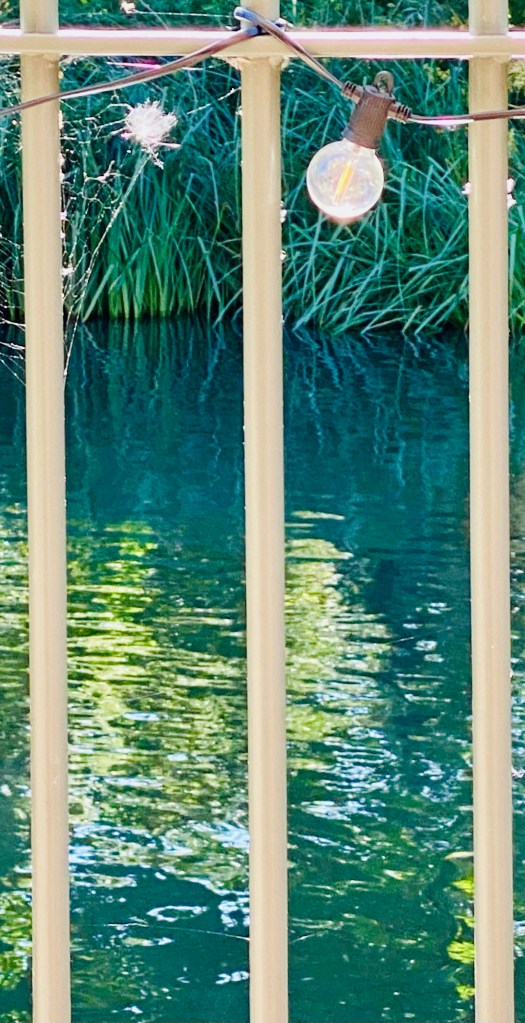
an answer to a complex prayer. (iPhone image)