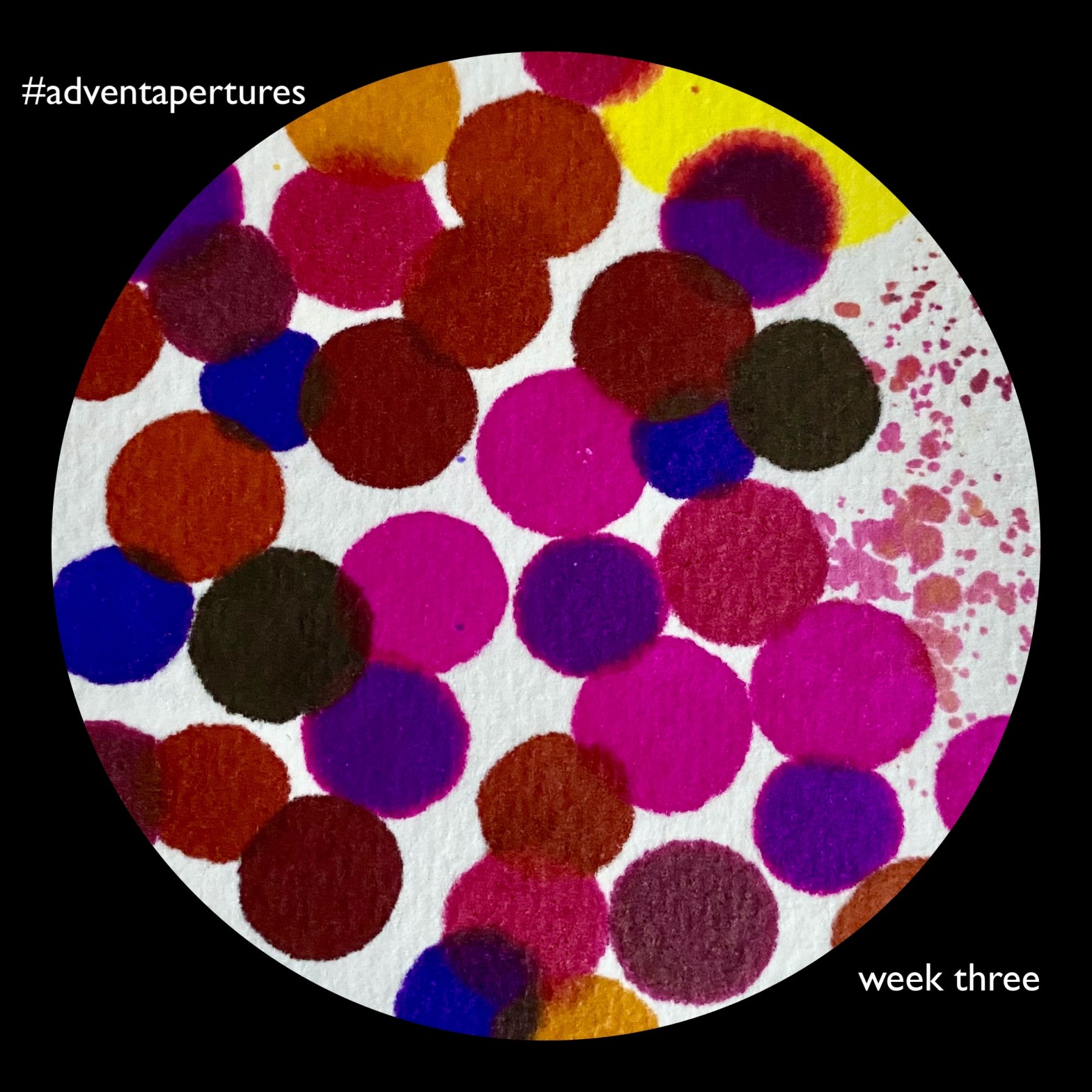
Be patient toward all that is unsolved in your heart and try to love the questions themselves, like locked rooms and like books that are now written in a very foreign tongue. Do not now seek the answers, which cannot be given you because you would not be able to live them. And the point is, to live everything. Live the questions now. Perhaps you will then gradually, without noticing it, live along some distant day into the answer.
Rainer Maria Rilke, Letters to a Young Poet
The above passage by poet Rainer Maria Rilke is often quoted by those interested in contemplative spirituality. ‘Living the questions’ is a difficult art, for it requires me to be open: to be open to how I phrase my question, to be open and alive to the nuances and assumptions it might contain within it, to be open and alive and expectant about answers (yes, more than one!) coming from a range of unlikely sources. Moreover, it requires me to be patient, to watch and wait, to be on God’s time not my own.
As they neared Jerusalem, the Wise-Ones formed their question: Where is the child who has been born King of the Jews? And they proposed to ask this question at the court of a Jewish King, albeit one installed by Imperial Rome as a way of minimising local disruption from the Jews in Judah. Where might answers come from?
On day 8 I quoted astronomer Dr Maggie Aderin-Pocock whose book The Art of Stargazing describes how to name a star, and explains that ‘whereas (in the Western tradition) the planets of the Solar System are named after gods of classical mythology, we tend to know stars by the Arabic names given to them by medieval Islamic astronomers’ (22). However, she also includes a fascinating diagram of the names different cultures have for the star which we now know as Orion or Betelgeuse (2).
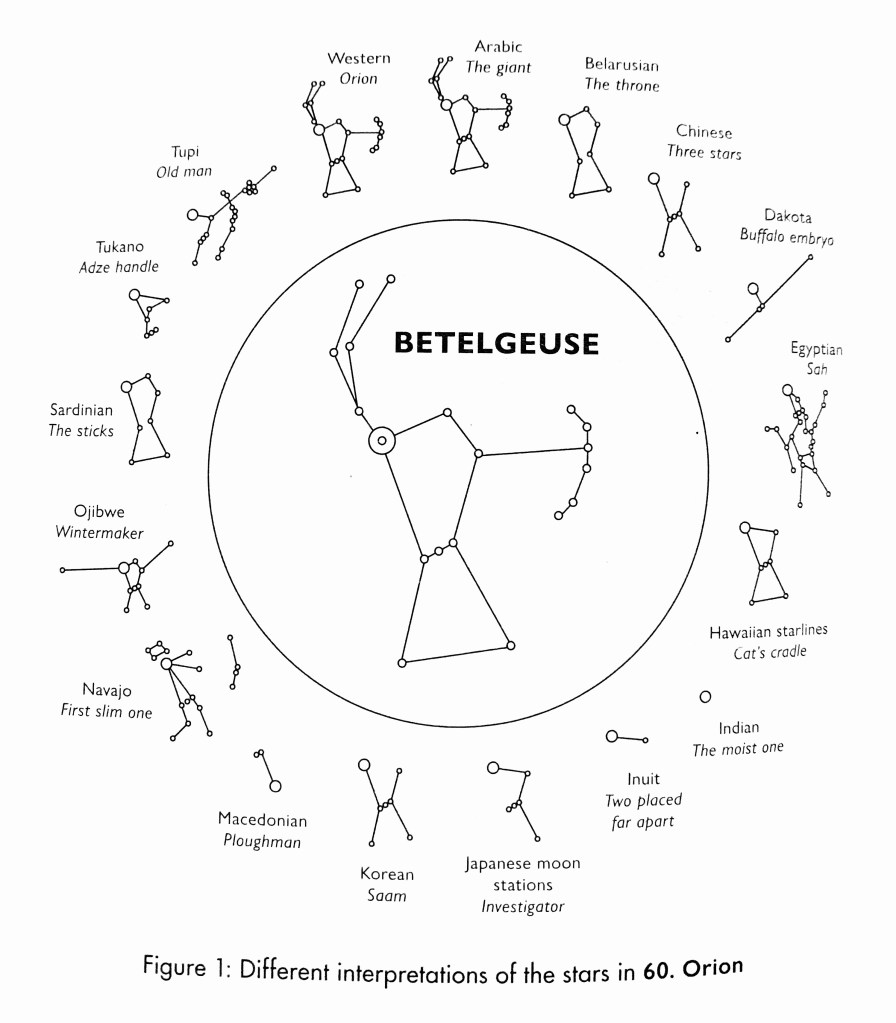
I find it endlessly fascinating to note the contradictions, but also the similarities, in cultural understandings of the stars which spread back centuries. But, in the spirit of ‘living the questions’, asking which language or sign system might provide a gift for me which I need to be willing to receive requires more than intellectual curiosity.
The Wise-Ones, who were most likely ancient Islamic astronomers, began their journey with their own symbolic understanding of the advent of a star. Somewhere, somehow, they connected this star to the ChristStar, the star which heralded the arrival of a foreign Messiah for the people of another race and religion. Within this broad, blunt fact how many questions must have teemed! And how many possible, nuanced answers might be given to them, if they were prepared to open and receive.
I’ve been wondering about angels, recently;
how are they coping, with the influx?
There have been plagues like this in the past,
did they dust off the manual?
Pull out the pages on the Black Death,
and call up the waiting?
Do the angels do night shifts?
Is it ever night, in Heaven?
Do they hold hands with the weary?
Peel off masks, and gowns, and glasses,
and welcome them in?
Do the angels cry for them?
For the joy they’re about to experience,
and the loss they’ve had to endure?
Can angels cry?
And do you think God gives them overtime?
Pays them a bonus of celestial light,
or promises an hours rest from the endless singing?
Do you think they are any angels left, on Earth?
Or have they all returned home,
to join the welcoming committee?
‘Angels in a Time of Crisis’
Jay Hulme, The Backwater Sermons (18)

can angels cry? (Canon R10. f6.3. 1/15. ISO 100.)
 image into ikon