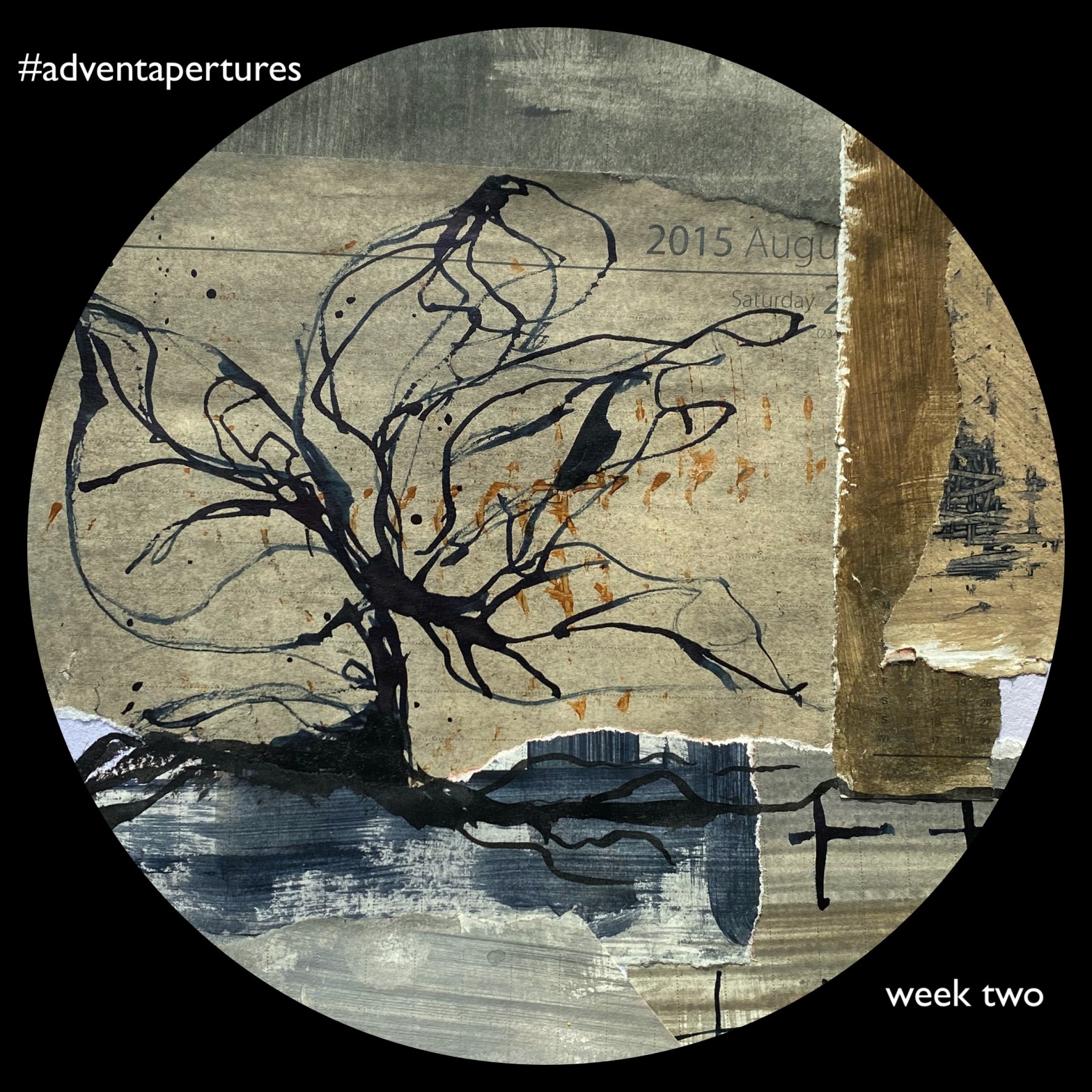
It is not by chance that both words consideration and desire (from Latin desiderium)-make reference to the stars (sidera in Latin). Stars played a role in medieval cosmology that might surprise us: seeds were thought to grow into different plants as their response to different stars – a special star for oak trees and a different one for willows, and likewise for all other kinds of plants. This mythic image expresses a lasting truth: there is something like a guiding star also for us humans. That is why people all over the world resonated so strongly with the image of the unreachable star in Joe Darion’s lyrics for Don Quixote’s lead song in the 1965 musical The Man of La Mancha: “To dream the impossible dream … To fight the unbeatable foe … To bear with unbearable sorrow … To run where the brave dare not go … To right the unrightable wrong … To love pure and chaste from afar … To try when your arms are too weary … To reach the unreachable star.”
Whoever you are, I’m sure you have felt the powerful attraction of that unreachable star as your highest ideal in life. It is stronger than even the highest ambitions that our Ego sets before us. We can easily distinguish between the two: our guiding star makes demands on us that are not what we ourselves would ever come up with.
Brother David Steindl-Rast, You are Here (67)
The Wise-Ones saw a star rise. Their curiosity drove them to make investigation. I expect they will have consulted their star-charts, though we have no idea what those might have looked like. (The oldest extant depiction of a constellation is 32,500 years old, showing Orion carved into an ivory tablet, and was found in a cave in Germany. The Bronze Age Nebra Sky Disc (c.1600 BCE) depicts sun, moon, the Pleiades and the positions of sun rising snd setting between the solstices was also found in Germany.) But somewhere along the way their investigations brought them to a conclusion: they must follow where the star leads them.
As Brother David observes (above), ‘our guiding star makes demands on us that are not what we ourselves would ever come up with.’ But being attuned enough to discern the difference between an ego-search for the Christ-Star, which would satisfy an intellectual quest and provide acclaim for scientific exploration, and a spirit-search, full of questions and uncertainty, must have been a difficult challenge for the Wise-Ones. They did not baulk at being required to travel through physical darkness into a spiritual darkness. But I wonder at what stage they designated the star they saw rising with an association of a new king being born. I wonder what name they gave it.
Dr Maggie Aderin-Pocock, my current astronomical guide, tells me how I might have named a new star:
Whereas (in the Western tradition) the planets of the Solar System are named after gods of classical mythology, we tend to know stars by the Arabic names given to them by medieval Islamic astronomers. These astronomers knew the brightest star in the Plough as zahr ad-dubb al-akbar, or ‘the back of the bigger bear’, which is usually shortened to Dubhe (the ‘bear’). The second brightest star in the Plough is Merak, meaning the ‘loins of the bear’ – the part of its body just below the ribs. So to name our new star, we might look for another Arabic word to describe a different part of the bear’s body. However, the new star might not correspond to a particular body part, or it might be located outside but close to the stars that make up the outline of the bear. …In 2021, from data collected by the New Horizons space probe, it was estimated that there are 200.000.000,000 galaxies within range of our telescopes, and each galaxy contains trillions of stars. That’s a lot of stars… (The Art of Stargazing, 22-23)
In our own galaxy, the International Astronomical Union has now designated 88 constellations with a sequence of names and numbers to identify each star, with room to add for new discoveries as technologies advance. But many of those Arabic names have stuck. How many of these names would be familiar to the Wise-Ones, I wonder?
The Wise-Ones must have had some way of notating the changing position of their guiding star, the King-Star, the Christ-Star. How do I notate what guides me? How do I stay present to it in the Now, so that I can see the changes, so I can measure where the dark takes me, so I chart what gifts I discover within it?
And as I travel within the darkness, night-blind, can I find what was revealed to Jacques Lusseyran?:
the light dwells where life also dwells: within ourselves …There was only one way to see the inner light and that was to love. When I was overcome with sorrow, when I let anger take hold of me, when I envied those who saw, the lifer immediately decreased. Then I became blind. But this blindness was a state of not loving anymore, of sadness; it was not the loss of one’s eyes…
Lusseyran’s experience of being blind led him into a ministry of showing others ‘what their loss brings them, to show them the gifts they receive in place of what they have lost. Because there are always gifts. God wills it so. Order is restored, nothing ever disappears completely.’ (Against the Pollution of the I, 17-19). From within my own history of chronic illness, I too can testify that ‘God doesn’t do waste’. I have been given the gifts I need to weather the journeys I have needed to make. I remind myself that this Advent will be no different.
Go slow
if you can.
Slower.
More slowly still.
Friendly dark
or fearsome,
this is no place
to break your neck
by rushing,
by running,
by crashing into
what you cannot see.
Then again,
it is true:
different darks
have different tasks,
and if you
have arrived here unawares,
if you have come
in peril
or in pain,
this might be no place
you should dawdle.
I do not know
what these shadows
ask of you,
what they might hold
that means you good
or ill.
It is not for me
to reckon
whether you should
linger or you should leave.
But this is what
I can ask for you:
That in the darkness
there be a blessing.
That in the shadows
there be a welcome.
That in the night
you be encompassed
by the Love that knows
your name.
‘A blessing for travelling in the dark’
Jan Richardson, Circle of Grace (30-1)
in love with shadows. (Canon R10. F8. 1/6. ISO 400)
 image into ikon