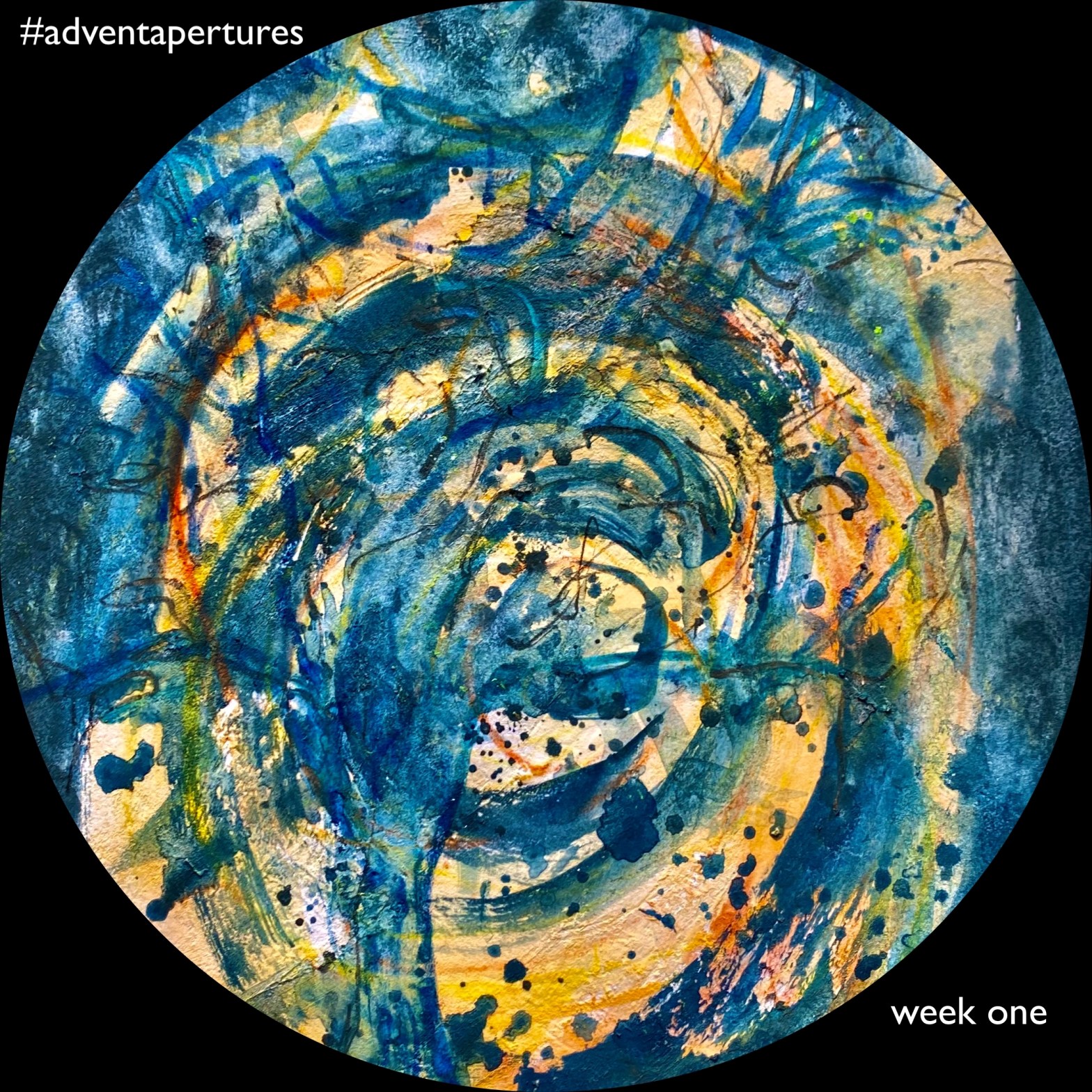
Seeing is not the work of the eyes alone… Deprived of the privilege of the eyes [the blind person] measures at the same time his loss and his gain. Most of all, he continues to live and to experience with an irresistible force the wonderful mutual exchange that takes place between the inner and the outer worlds.
This continuity in life is always granted us by God. When we experience a wall, a loss, a misfortune, it is not God who erected this wall, but our spirit. … In reality, there is neither a wall nor a loss. Everything is replaceable and continuous. So it is with the light for the blind. … To cease seeing with one’s eyes does not mean entering a world in which light has ceased to exist.
What dwells in the head of a blind person is the light. … The light is neither within nor without, but encompasses the whole being and wipes out the barriers we have created out of habit. The light is here! That is the only certainty. … Since my childhood I have been impressed with a phenomenon of surprising clarity: The light I saw changed with my inner condition. Partly it depended on my physical condition, for instance fatigue, restfulness, tension, on relaxation. Such changes, however, were relatively rare. The true changes depended on the state of my soul.
When I was sad, when I was afraid, all shades became dark and all forms indistinct. When I was joyous and attentive, all pictures became light. Anger, remorse, plunged everything into darkness. A magnanimous resolution, a courageous decision, radiated a beam of light. By and by I learned to understand that love meant seeing and that hate was night. … In short, there were two possibilities: to reject the world — and that meant darkness, reverses — or to accept it, and that meant light and strength.
Jacques Lusseyran, Against the Pollution of the I (43-49 passim)
When a new star became visible in the cosmos, I wonder where would the Wise-Ones have begun to search for its meaning? I can imagine them poring over scrolls, consulting those who were the bearers of the ancient stories, those to whom they went for instruction. I can imagine them casting around for other sources which might provide a commentary on their own faith journey. I imagine that like them, I have a thirst for knowledge of God and all God’s wonders, and everything I read, the conversations I have, the prayers I hear, contribute toward my being able to synthesise glimpses of God into a road map for the way I live.
Robin Wall Kimmerer, through her seminal book Braiding Sweetgrass, has been one of my guides. She reminds me that,
Like Creation stories everywhere, cosmologies are a source of identity and orientation to the world. They tell us who we are. We are inevitably shaped by them no matter how distant they may be from our consciousness.
The Skywoman story, shared by the original peoples throughout the Great Lakes, is a constant star in the constellation of teachings we call the Original Instructions. These are not “instructions” like commandments, though, or rules; rather, they are like a compass: they provide an orientation but not a map. The work of living is creating that map for yourself. How to follow the Original Instructions will be different for each of us and different for every era. … But the stories that might guide us, if they are told at all, grow dim in the memory. What meaning would they have today? How can we translate from the stories at the world’s beginning to this hour so much closer to its end? The landscape has changed, but the story remains. (7,8)
The Wise-Ones would know some of the stories, and know enough of another culture’s scriptures to look there for answers. That speaks of a level of intellectual humility that is rare I think. But something they read, or some snatch of a story someone told them provided the spark for them to make the quest not just one of understanding, but a quest of the flesh. They began to plan how they might learn more and they were ready to put their bodies on the line to do it. The potential folly of such a journey is not lost on me.
Nor, now I come to think of it, is it an unfamiliar choice. For one of the ways I come to understand God is through my body. No matter how battered I feel, every Advent I recommit to undertaking a faith journey that is no mere intellectual or spiritual exercise, but a whole-body acceptance of the need to go where the Spirit leads: to give up everything to draw near to the dark heart of God. For as Jacques-Lusseyran says above, what affects my external seeing and way of being and navigating the world, depends on my internal ability to understand ‘love means seeing’.
The map I make myself is made up of how I write the stories of my experiences on and into my body, and I can either write with love and curiosity, or I can write with hostility and rejection. Each story, poem, jotting on my bones and in my cells will determine the direction I face. Every map has to begin with where you are.
Being flesh and blood matters. The experiences our bodies go through, large and small-both the trauma and the daily nudges and collisions from the external world-are mapped out on our bodies. All of this makes us. Bodies matter so much that Jesus came back from death in his own body, in that same despised, abused, and tortured body. It’s an incredible picture of solidarity, not an embrace of violence. It is a reminder that the exclusion, diminishment, and dehumanization of bodies are still realities in the world and that Jesus Christ, Emmanuel, that is “God-with-Us” means way more than empathy. That “the Word became flesh and lived among us” (John 1:14) means the incarnation is a shared, lived experience. The embodied, wounded, and scarred Jesus shapes our understanding of how and why our bodies matter.
Mihee Kim Kort, Outside the Lines
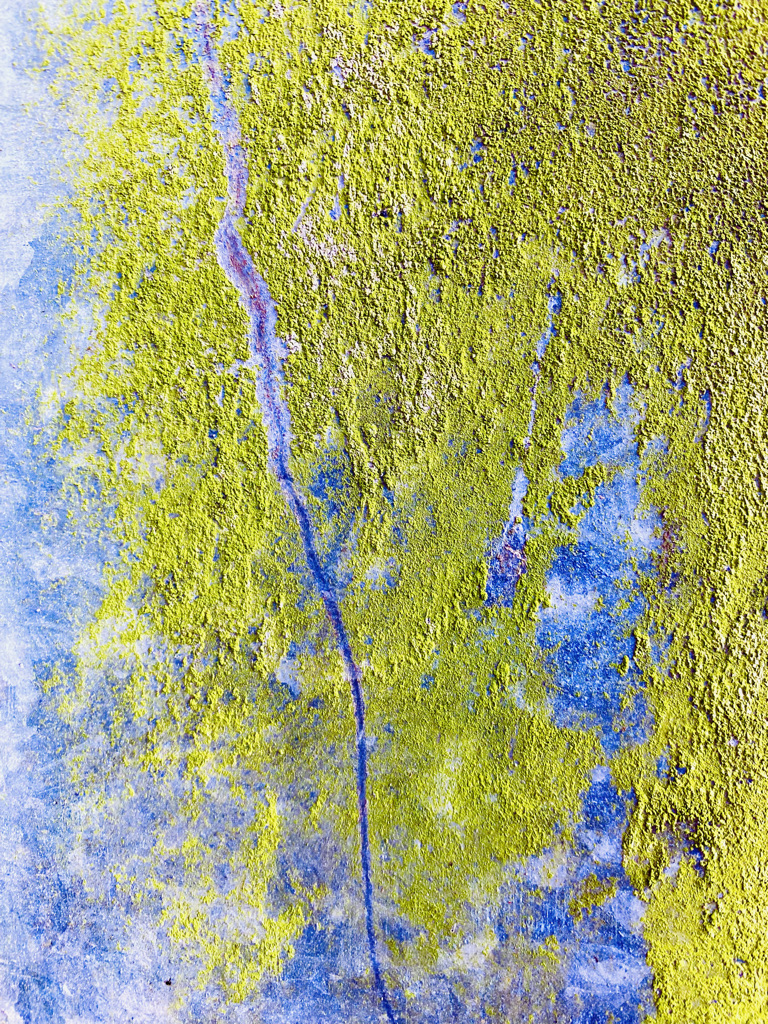
an original instruction (iPhone image)
 image into ikon