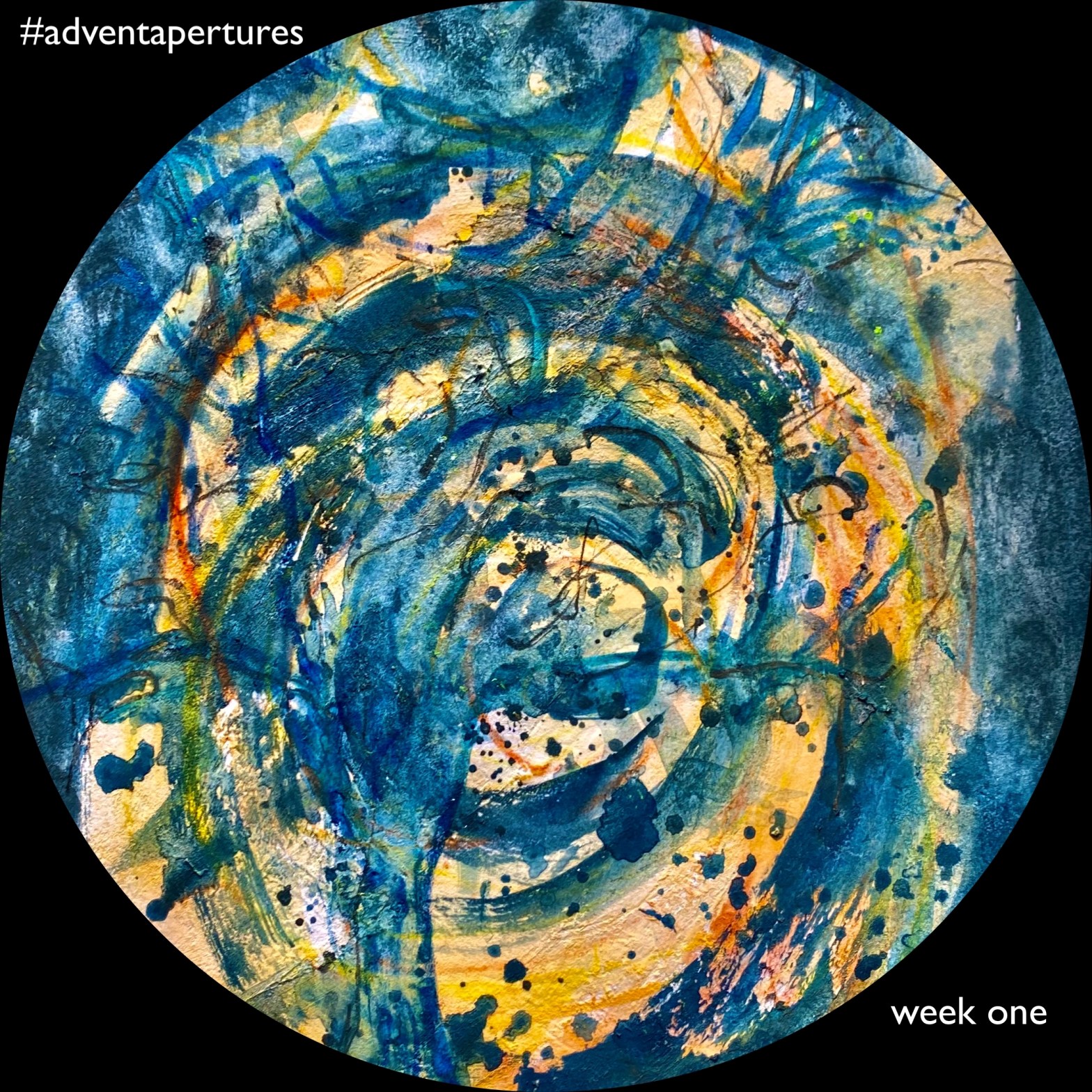
I carry with me the awareness that many people find that this season brings not tidings of comfort and joy but of frustration and grief…. I believe… that in this season [we are invited] to carry the light, yes, but also to see in the dark and to find the shape of things in the shadows. With a perception that goes beyond visual sight, we are called to know and to name the gifts of the night and to share the visions that emerge from the darkness. In darkness and in light, we are asked to keep vigil and to companion one another in this and every season. In giving voice to our visions, we find strength in the shadows and a presence that guides the way.
Jan L Richardson, Night Visions
I wonder how long it took to plan a journey of no fixed length?
But before that, I wonder, who was measuring the time of the ChristStar, the one which the Wise-Ones say later that ‘they observed at its rising’? How long did the star stay in one place, waiting for them to get themselves ready for an expedition which was literally ‘to the stars’? Or did it immediately begin to move from day to day but in such tiny increments that they could still see it, or at least track its’ direction?
I realise that I have begun writing this series with very little knowledge of what star-time might be, or indeed, how it might be measured.
In Jenny Odell’s book Saving Time, she illustrates the difference between a standardised clock time and solar time by means of a graph, which shows:
which parts of the year the time indicated on a sundial would run ahead of a standard clock and which parts of the year it would run behind. The difference exists because, as John Durham Peters writes, “the sundial directly models natural facts, yielding stretchy days and hours that expand and contract as the earth makes its elliptical way around the sun, but the clock is a solar mood stabilizer, soothing the sun’s annual swings into twenty-four-hour average units and ticking away regardless of sun or cloud.” It is the difference between place-based observation and the abstract, standardized system…
The graph shows both readings of time, yet they are not equal. Sundial time is being described in the terms of clock time, which are the given grounds for comparison. It is as if, as anthropologist Carol J. Greenhouse describes it, “the clock were itself a materialization of some universal time sense.” Clock time is not the only form of time reckoning we experience, but it is certainly primary in how many of us think about the
“stuff” of time. And it was an allegiance to clock time that allowed colonists, anthropologists, and contemporary Western observers in general to view non-Western and indigenous cultures as being without, or out-side, time. (122-5)
The Wise-Ones were clearly experts in astronomy, but I suspect they were also experts in horology. And if they were from the Islamic world, their concept of time might well also be bound up in different linguistic and cultural notions of past and present, which become forward and backward directions. (So that what can be seen, because it has already been lived, (i.e. one’s past), is spoken of as being in front of one). Or it may be their sense of time was drawn from a cultural event, for example the year of an invasion, so that they would count x days/years from that point. Or it could be that some form of lunisolar calendar was in use. Anthropologists now know that Islamic use of the lunar calendar dates from 622 CE, with early pioneers producing detailed astronomical handbooks, These held calculations of the sun’s position and shadow lengths so as to determine daily prayer times, the result of experiments made by means of astrolabes and water-clocks.
Who knows what wonders our Wise-Ones might have invented?
However they calculated time and the passage of the ChristStar, the fact remains that the Wise-Ones would have had to journey at least some of the time by night, continually cross-checking their position and direction. As the length of sunlight hours reduce for me this winter, and the nights elongate, are there any external preparations I need to make for this Advent pilgrimage which are specific to the here and now circumstances I find myself in this year?
In addition, are there extra internal precautions I need to take as I undertake the journey within, back to, (and for the first time) toward, the Christchild? What night visions do I need to name as I set-out? What gifts might this dark time bring me which I need to take with me?
… And if, as autumn deepens and darkens
I feel the pain of falling leaves, and stems that break in storms
and trouble and dissolution and distress,
and then the softness of deep shadows folding, folding
around my soul and spirit, around my lips,
so sweet, like a swoon, or more like the drowse of a low, sad song
singing darker than the nightingale, on, on to the solstice
and the silence of short days, the silence of the year, the shadow,
then I shall know that my life is moving still
with the dark earth, and drenched
with the deep oblivion of earth’s lapse and renewal.
from ‘Shadows’
DH Lawrence
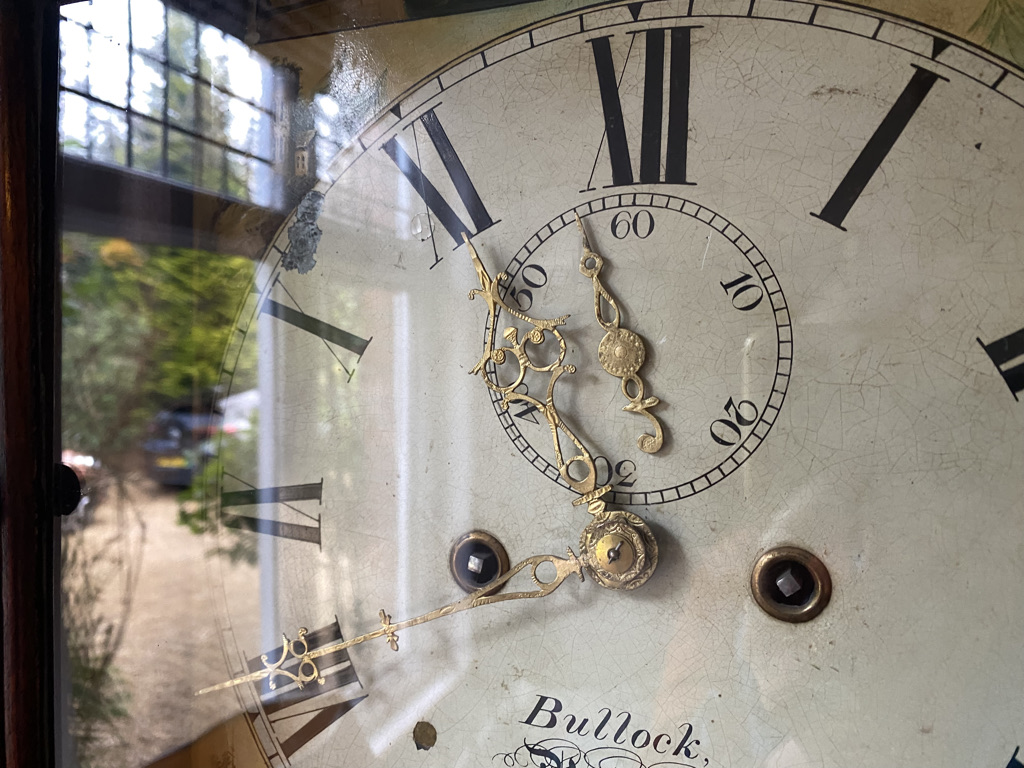
a solar mood stabiliser (iPhone image)
 image into ikon