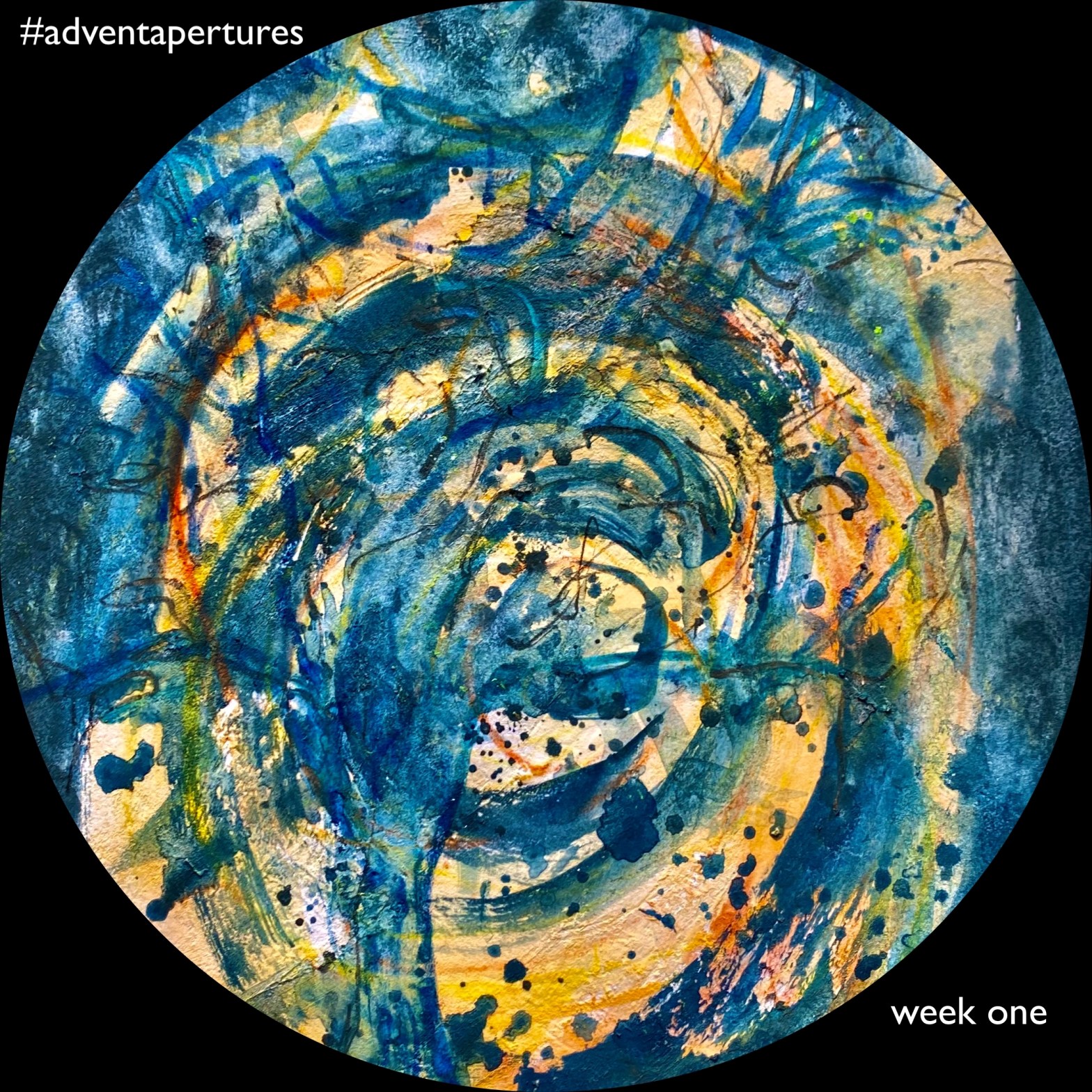
They tell me he is a refiner, that he cleanses from spots; he has washed me in his precious blood, and to that extent I know him. They tell me that he clothes the naked; he has covered me with a garment of righteousness, and to that extent I know him. They tell me that he is a breaker, and that he breaks chains, he has set my soul at liberty, and therefore I know him. They tell me that he is a king and that he reigns over sin; he has subdued my enemies beneath his feet, and I know him in that way. They tell me he is a shepherd: I know him for I am his sheep. They say he is a door: I have entered in through him, and I know him as a door. They say he is food: my spirit feeds on him as on the bread of heaven, and, therefore, I know him as such.
Adapted from ‘Do You Know Him?’ by Charles Haddon Spurgeon, 31 January 1864, https://www.spurgeon.org/resource-library/sermons/do-you-know-him/#flipbook/
These days, I shy away from using the violent metaphor of a hunt, since so many of its actual forms seem so manifestly cruel to the beings with whom I share this planet. But animal hunts often figure in the stories of the lives of martyrs and saints, where Christ is often portrayed as a hart or stag being pursued. The myth of Saint Eustache is one such.
Eustache was a Roman general who converted from paganism to Christianity during a hunt, after the stag he was pursuing turned to him and a cross appeared between its antlers. As it did so he heard God speak, commanding him to be baptized. Eustace was martyred for his faith by Emperor Trajan in AD 118. His feast day is celebrated on November 2 in the Orthodox Church.
In 2014 the artist Leonora Hamill filmed ‘Furtherance’, a photographic installation (filmed in the church of Saint-Eustache) which was then projected onto the church’s windows inside and outside simultaneously. As described on her website, the installation, “weaves together traces of everyday activities within the church, and a live stag . . . wandering through the space. Hamill transcribes the collective energy specific to this place of worship by retracing the steps of the church’s various occupants: priests, parishioners, tourists, soup-kitchen volunteers and their ‘guests’. These crossing paths constitute the social essence of the site. Their minimalist and precise choreography merges the human and spiritual sap of St Eustache.”
Intersecting the choreography of a second-century stag hunt in a seventeenth-century church with footage of those twenty-first-century seekers who now ‘hunt’ for the inexplicable something ‘more’ in their lives, forms a compelling visual parable for why a pilgrim might set out on a journey of one step or a trillion, and why a faith community is such a vital ingredient at any stage in the process.
Something of such single-focus passion propels the Wise-Ones’ decision to take off under the guidance of a star. Surely they did so in the face of many who decried their folly, and who doubted their sanity. Perhaps it was the stardust in them being drawn to the stardust of the newborn Christ?! As Dr Maggie Aderin-Pocock says in her book The Art of Stargazing:
The death of older stars provides the fuel and heavy elements for the next generation of stars in an ongoing life cycle, and we are the direct beneficiaries of this extraordinary process. All the elements in our bodies were forged in the heart of a star. … So not only are we stardust, but [the heavier elements in] that dust may have passed through a number of different stars before becoming us! (13)
I wonder, am I truly drawn to Christ with eyes which expect either the revelation of stag or stardust? Are my eyes really open to the possibility of seeing the unfamiliar within the familiar, in coming across God in unexpected places (as Charles Spurgeon does in the sermon excerpt above)? What about my focus? Do I allow my passions to guide me further into or away from the heart of God?
In the early morning a heron
stalks through the marsh. The
fog is a dense mystery whispering
an incantation, tattooing itself on my bones.
It was only a glimpse; a scene
between colonial houses
we passed on the way to school.
Like the heron I stalk this moment
when the sublime pierced my heart with beauty;
a synonym for Divine.
A cranberry bog and a haunted
forest on the opposite shore lit with a
rapture of moon and stars shimmering their
way into the space between my cells
.
It was only a glimpse; a scene
we passed on the way to a Christmas fair;
a scene I have tried and failed to paint a hundred times;
another synonym for Divine.
Beauty makes it easy to believe in a God
with a creative heart that must also be
the origin of love. But when the floodwaters
rise and children are handed guns, forced
to flee a thousand times and pray for death
because there is no food, and mothers
have eyes vacant with the nearness of
apocalypse, I wonder, Where is the heron?
Where is the rapture of moonlight?
A teenager on the radio speaks of their orchestra of refugees
because art is necessary for the human heart. Community;
a synonym for Divine
.
‘Synonym’
Melinda Thomas
This poem is from Melinda’s Substack
The Journal of Elements and Seasons
and she is the author of the recently released collection
Elements of Being: A Spiritual Memoir in Verse.
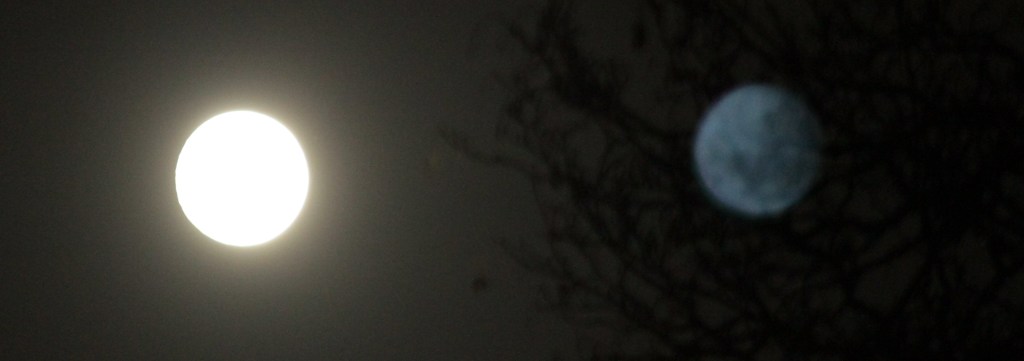
part of the community of stardust (iPhone image)
 image into ikon