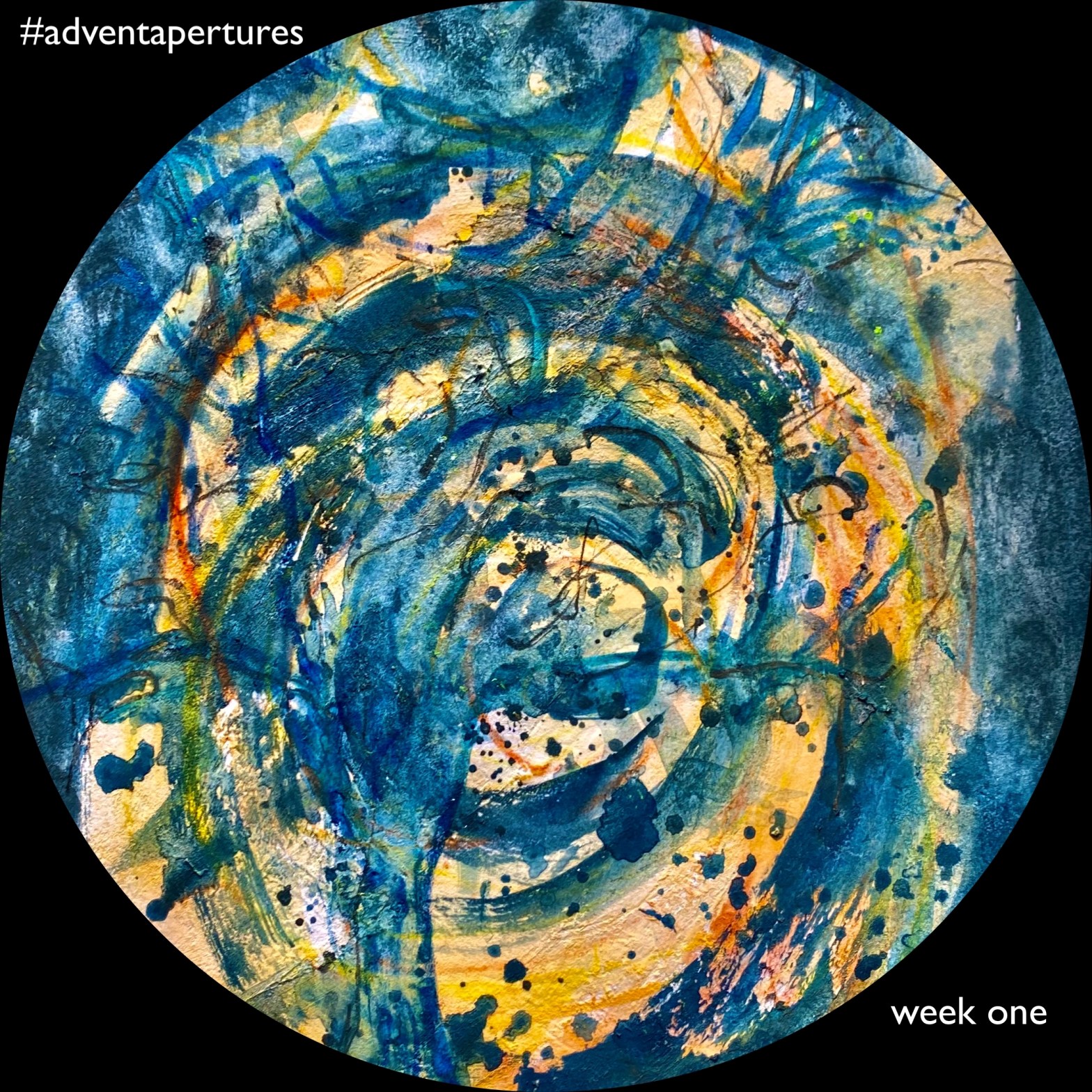
In the season leaves should love,
since it gives them leave to move
through the wind, towards the ground
they were watching while they hung,
legend says there is a seam
stitching darkness like a name.
Now when dying grasses veil
earth from the sky in one last pale
wave, as autumn dies to bring
winter back, and then the spring,
we who die ourselves can peel
back another kind of veil
that hangs among us like thick smoke.
Tonight at last I feel it shake.
I feel the nights stretching away
thousands long behind the days
till they reach the darkness where
all of me is ancestor.
I move my hand and feel a touch
move with me, and when I brush
my own mind across another,
I am with my mother’s mother.
Sure as footsteps in my waiting
self, I find her, and she brings
arms that carry answers for me,
intimate, a waiting bounty.
“Carry me.” She leaves this trail
through a shudder of the veil,
and leaves, like amber where she stays,
a gift for her perpetual gaze.
‘Samhain’
Annie Finch
I have been planning to write about the phrase ‘we saw his star rise’ (Matthew 2.2) for the last two years (as will be made clear by Epiphany). This extraordinary claim is made by the magi, those enigmatic ‘wise men’ – they saw a new star rise and have followed it. They have associated the star with the prophecy of a new king for the Jews, and have brought offerings as part of their potential worship of this new world leader. These men ‘from the east’, the WiseOnes, will be my guides for this Advent. They will lead me on a metaphorical, mystical pilgrimage toward the birth – again and for the first time – of the Christ Child into my world.
So, before I set out, a word about these guides for the coming season. I am claiming the fullest possible personal definitions for these mysterious foreign seekers: they are wisdom-treasurers; they are astrologers and astronomers; they are rich, well-read dilettante with time on their hands; they are my ancestors; they are theologians; they are magicians; they are prophets; they are science teachers; they are literary experts; they are linguistic-delighters; they are navigators; they are adventurers; they are visionaries.
Where do they come from? The bible is happy with the generic ‘east’. In other words, anywhere ‘other’ than and outside of Judea. All sorts of theories abound, and I will touch on some of these over the coming days as I look for maps and charts for the journey ahead. Another point to note is that this band of king-searchers numbered probably more than three (but no one knows), tradition decided on three because of the three symbolic gifts they delivered. In addition, the names of Caspar, Melchior and Balthazar were not given to these WiseOnes until much later. And lastly, (I’m just going to put it out there), we do not even know that they were all men.
Like Catherine Bird says, in her book The Divine Heart of Darkness, ‘I set off in pursuit of the darkness, following like the Magi, those strangely enigmatic, yet oh-so-familiar astrologers–a fragile premise, an idea, a hope; not exactly certain where I am heading or what to expect but in anticipation of discovery and learning, holding fast to the potential and possibility of my wild imagining.’ (7)
So can I set aside all the trappings of nativity plays and victorian carols, and venture on this journey into the dark desert, into the unknown with a bunch of starry-eyed dreamers for my guides? And if I do, what might they have to show me about the God who pushed them into such a lengthy, mysterious and hazardous trek through countless nights? What might these foreign mystics from a different faith tradition have to say about the One God whose great cosmic circle dance filled and fills both our worlds?
The quality of the sacred circle dance depends on the attention each dancer pays to all others. Every attuned dance step improves the whole dance. William Butler Yeats knew this: ‘O body swayed to music, O brightening glance,/ How can we know the dancer from the dance?’ (from Among School Children) C. S. Lewis, in whose space novel Perelandra I first encountered the image of the Great Dance, the Great Game he also calls it, writes,
It has begun from before always…. The dance which we dance is at the centre and for the dance all things were made… In the plan of the Great Dance plans without number interlock, and each movement becomes in its season the breaking into flower of the whole design to which all else had been directed.
… All that is made seems plan-less to the darkened mind, because there are more plans than it looked for…. Set your eyes on one movement and it will lead you through all patterns and it will seem to you the master movement. But the seeming will be true.
Let no mouth open to gainsay it. There seems no plan because it is all plan: there seems no centre because it is all centre.
Brother David Steindl-Rast, You Are Here, (xviii)
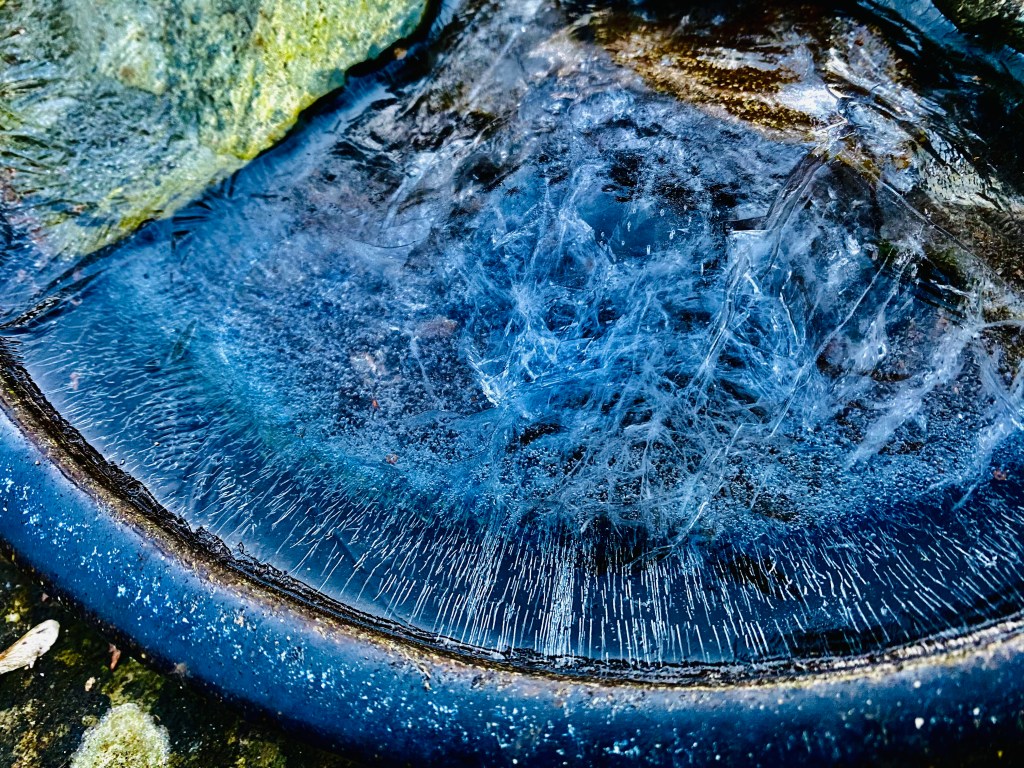
a seam stitching darkness like a name. (iPhone image)
 image into ikon