I asked God if it was okay to be melodramatic
and she said yes
I asked if it was okay to be short
and she says it sure is
I asked her if I could wear nail polish
or not wear nail polish
and she said honey
she calls me that sometimes
she said you can do just exactly
what you want to
Thanks God I said
And is it even okay if I don’t paragraph
my letters
Sweetcakes God said
who knows where she picked that up
what I’m telling you is
Yes Yes Yes
‘God Says Yes To Me’
Kaylin Haught
I really like Kaylin Haught’s depiction of a playful God. I forget how mischievous God can be, how infectious a sense of humour God has. I can spend far too long caught up in the life of my mind, becoming too serious, too preoccupied, too intense. I rely on my friends and family to dig me out of my potential ‘blue-study’ navel-gazing. I know I don’t laugh enough. It’s not that my life is all work and no play, but my best way of having fun is by being ‘in’ the creative flow, and that can’t (or at least doesn’t) happen very often due to my health limitations. So the most frequent way I remind myself of the need to ‘play’ is to work in a sketchbook, and to keep experimenting. I do use it for working out ideas for later ‘work’, but most of the time I deliberately try to avoid that, to leave one place in my life at least where there is no pressure, or expectation to perform to a certain standard. In it there can be no right or wrong, no failure or success. Such judgements kill play – and my recovering perfectionist self needs frequently reminding of this!
In The Gifts of Imperfection, sociologist Brené Brown cites the research of Stuart Brown (no relation):
Brown argues that play is not an option. In fact he writes, “The opposite of play is not work- the opposite of play is depression.” He explains, “Respecting our biologically programmed need for play can transform work. It can bring back excitement and newness to our job. Play helps us deal with difficulties, provides a sense of expansiveness, promotes mastery of our craft, and is an essential part of the creative process. Most important, true play that comes from our own inner needs and desires is the only path to finding lasting joy and satisfaction in our work. In the long run, work does not work without play. (129)
Play allows exuberance and expansiveness to bubbles over into joy and gratitude, into contentment and acceptance. One of the best expressions of this kind of exchange and development is e.e. cummings’ poem “i thank You God for most this amazing”:
i thank You God for most this amazing
day: for the leaping greenly spirits of trees
and a blue true dream of sky; and for everything
which is natural which is infinite which is yes
(i who have died am alive again today,
and this is the sun’s birthday; this is the birth
day of life and of love and wings: and of the gay
great happening illimitably earth)
how should tasting touching hearing seeing
breathing any—lifted from the no
of all nothing—human merely being
doubt unimaginable You?
(now the ears of my ears awake and
now the eyes of my eyes are opened)
It is worth listening to the poet read his own work here. In 1999 the composer Eric Whitacre used the poem as part of Three Songs of Faith, an a cappella chorale work. Spend six minutes listening to the Stanford Chamber Chorale and the Choir of Trinity College, Cambridge perform it here.
I found it fascinating to learn that Cummings was also a painter. The vivd language that he uses and his utter conviction in the ‘leaping’ link between things of the earth and things of the spirit, makes his prayer for continued openness in the face of encountering the ‘illimitable’, one that I can add my own fervent ‘yes’ to, my Amen.
With what attentive courtesy he bent
Over his instrument;
Not as a lordly conquerer who could
Command both wire and wood,
But as a man with a loved woman might,
Inquiring with delight
What slight essential things she had to say
Before they started, he and she, to play.
‘The Guitarist tunes Up’
Frances Darwin Cornford
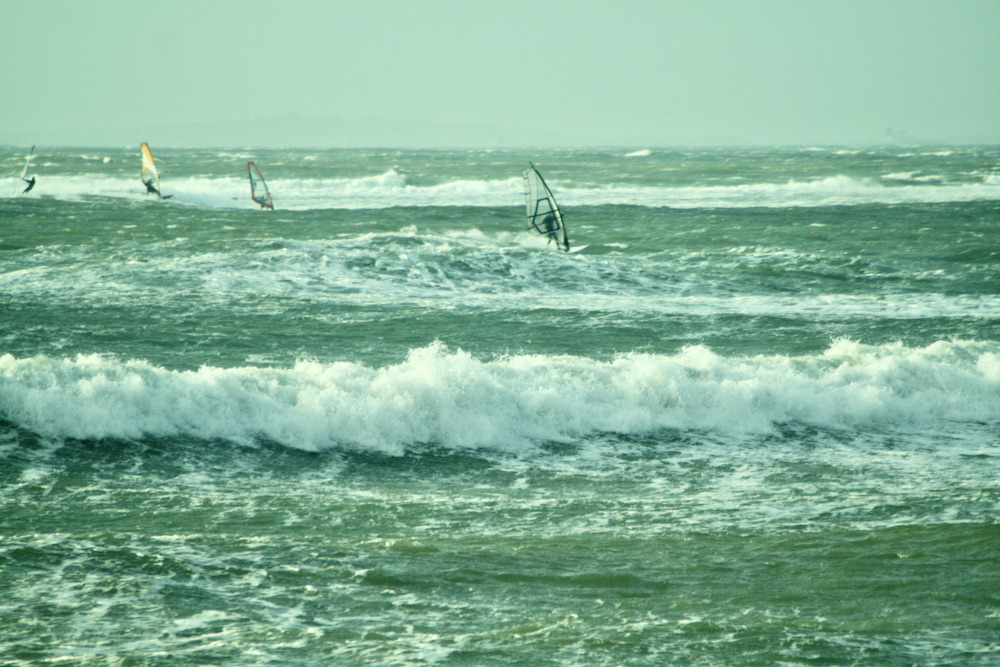
with the wind. (Canon 400D. f5.6. 1/500. ISO 200.)
 image into ikon