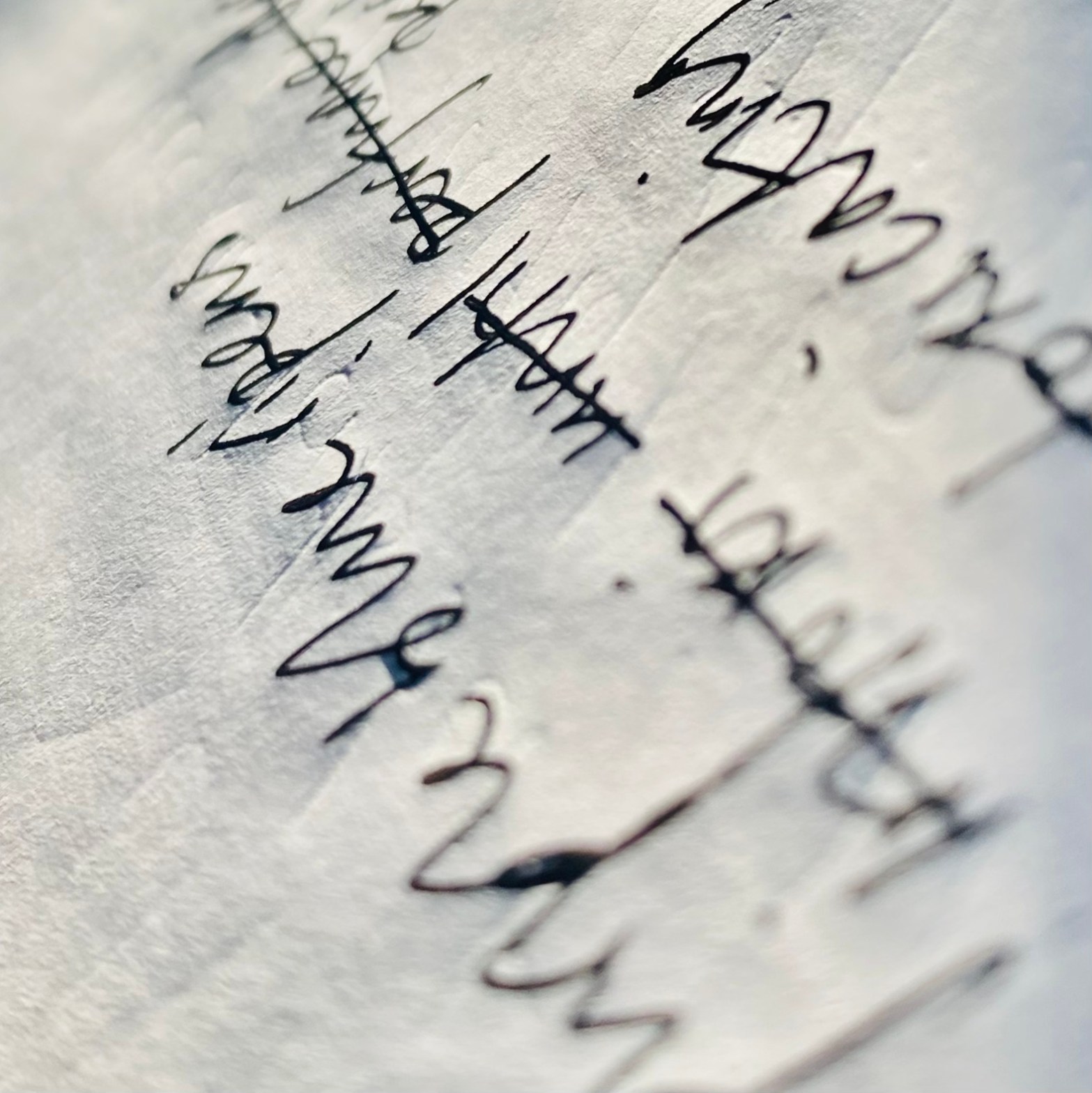

I meant to write this in September 2023, but it is now February 2024. I am recovering from a reanimation of the chest infection I caught before Christmas, but it has wiped out this month. I am attempting not to fight the bouts of vertigo and dizziness which sideswipe me, even as I sit perfectly still and peaceful in bed, since I know that these are symptoms of another of the residual viruses that live in the gunk at the bottom of my energy tank; since I know that these symptoms are big red warning signs from a body already depleted and under stress.
Today, I am grieving because I feel I have written very little for months – and certainly not with the vigour and certainty that produced ‘The Bright Well’ as a long poem last summer. When the first infection hit at the end of September, I had just made a film to present to DAiSy (Disability Arts in Surrey, who gave me a bursary to enable me to focus on my artistic development whilst I was in the open studio at the New Ashgate Gallery, Farnham, August-September 2023). I was also just beginning to draft the opening poems of another sequence called ‘here’ (working title), which may or may not end up being a second part of the ‘The Bright Well’, although perhaps they are the beginning of another long poem or a loose collection on similar themes (of wellbeing and the built environment). They begin:
and so she sat on.
exhausted beyond strength
of speech; body given into the draining away
of all that is vibrant; her stare left as a lazy vacancy;
heavy head aching with the sound of blood leaping
to attune itself to electric vibrations out there
in the ether between these four walls,
until the repetitious
rhythm of leaping and repulsion bores a steady hole
through drum into skull to set up its demi-semi-quavers
there, so bone resonates with the cross-currents
bounced from bone, ripples clashing in the reverberating,
a restless echo seeking itself – endlessly.
(from ‘here iii (27.9.23)’ Kate Kennington Steer)
However, back to back infections all through the autumn soon took there toll on my ability to ‘sit with’ myself in poetic terms. They also meant I missed several sessions of my zoom community writing group, Scribblers Aloud. This group normally allows me to feel that I am at least regularly stretching out my writing limbs once a week; today those feel well and truly atrophied.

Of course, that feeling does not entirely reflect reality. Although I have missed zoom sessions, I am (more than theoretically) taking part in a collaborative Haiku sound installation between the Scribblers and students from the University of the Creative Arts for the Farnham Literary Festival in March. I can follow the syllabic rules of this ancient Japanese form (17 in total laid out across three lines 5-7-5), but I struggle to deliver the Kareji (the ‘cutting word’ placed at the end of the second line), as well as the kigo (a word that refers to a season of the natural world in either the first or third line), and remain in the present tense, with a concrete image in each line. Alongside all these rules of form, the overarching theme is ‘origin’, a word I played a great part in choosing, but now, on my own with a befogged and dizzy head I struggle to come up with anything that makes any sense or has an honest impact:
| “Benedictine” | “Invitation” |
| both reassurance and a powerful command: now begin again. | will you sit with me? I need to tell my story. stay present with me. |
| “First Sight” | “Calling” |
| looking in your eyes stripped before my gaze, naked, the divine winks back. | in death as in life, rest beside resurrection: do not be afraid. |
Together, these words might make a half decent poem I suppose, but really they reflect the book I’ve been reading as part of my morning ‘study’ time over the last month, Liuan Huska’s Hurting yet Whole; reconciling body and spirit in chronic pain and illness. I was impressed by some of the Disability theology and theory that Huska presented, which is a field I didn’t know had evolved from Liberation theology’s roots, and I look forward to reading around this area.

Huska’s book only confirmed in me the strong desire to spend longer pondering how the Incarnation, the idea of a vulnerable God, and the needs of my body, might provide ways I can live out a calling from where I am, in this present, rather than saying ‘when I am well I will..’ or even, ‘when I’m a bit better I can…’. Wanting to live a fully embodied life, present to all the gifts and opportunities that, by grace, are all around me all the time, is a long-term goal. I know it has been too easy for me, for most of my life, to live entirely in my head, dissociated from pain and sickness and heartache – mine and everybody else’s. The bright-+/well project is about joining those dots (see footnote):
wells both gush and dry. fill
and empty. in any case, they normally
need to be dug.
in the subaqueous lightwell
murkwell – cast by green umbrellas
already spread through the morning’s
cypress shadow, I sit, considering
a way out, a passage through,
which can only ever mean downward
work, if I am to excavate another fragment
of clogged bedrock; if I am to accept
the discomfort of exposed disturbances
peculiarly necessary to the act of the welling up;
(from The Bright Well i, Kate Kennington Steer)
I want to ‘frolic with sky’, even when my eyes seem cloaked and distanced by brain fog, even on grey, heavy, drizzling days where the light does not seem to be able to lift either itself or my spirit. And I am more than ever aware that this is not a solitary pursuit – wellbeing cannot be achieved by force of an individual will. Nor are there shortcuts. My bedrock may be ‘clogged’, but it is also porous, entangled and weathered, all terms which mean I am not separate from you, I am not separate from your pain. I need to grieve my losses, but equally, I need to join with you in lament about your losses.
Lament is the action of ‘crying out’ anger, sorrow, frustration, injustice loudly and publicly and communally. Not speaking about my loss, not sharing my pain story only further isolates me. For all those who may deride me, there also will be those who need to say, ‘Yes, I recognise that. I am not/you are not alone.’
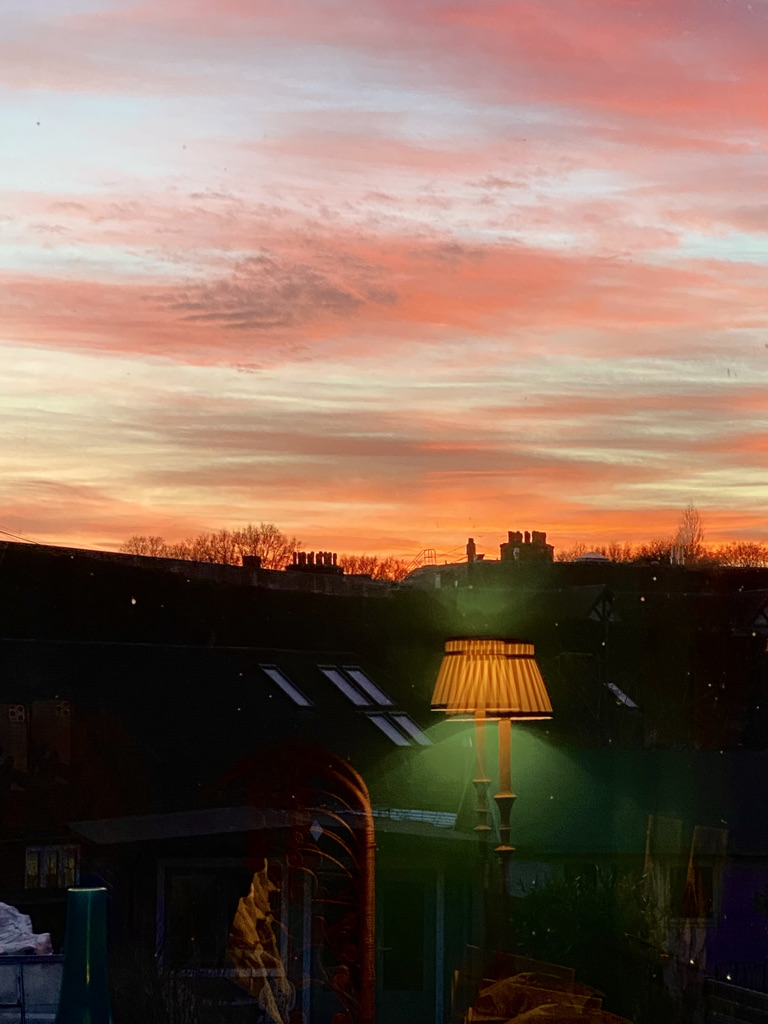
Part of the work of ‘digging’ for wellness, then, is about bringing forth the dark, ugly underbelly of the real. Then, in the discomfort of exposing my shame and guilt, to realise I can be helped by another who has been there before me and has hard-won wisdom to offer, providing I will open myself to the accept the invitation: that opportunity to listen to one who knows how it is to be where I am. And so in my turn, as Huska notes, I am called to the ministry of deepening pain as well as relieving it. She quotes Henri Nouwen (who famously wrote at length about being a wounded healer himself) :
’… ministry is a very confrontational service. It does not allow people to live with illusions of immortality and wholeness. It keeps reminding others that they are mortal and broken, but also that with the recognition of this condition, liberation starts.’ (Hurting Yet Whole, 190)
I am not whole, far from it; and yet neither are you. I feel weak and I have no energy to dig today. Except, I have just written this without planning to, so perhaps this feeble scrape at today’s mud, might just be enough to allow me to reach out my hand and find yours as you flounder in your own murk and muck?
Perhaps then this is the action of Grace. Perhaps then this is the hope that threads me together today: that you will take over, make your own scrape and deepen the well a little for us both this day.

… when is a well a mere utilitarian hole
in the earth, soil flung heavenward,
liquid commingling with communal need?
when a direct exploratory bore, scientifically
shot down the eons to the centre of the spinward
sphere? and when do steep sides become encircled,
encased, faced in cobble and brick, edged,
shored and shelved to pave the narrow Way
to elsewhere?
from which shall I drink
to discover the precious elixir of life that will permit
my being to be whole, if I cannot be well
when the blanks in my brain gape but let
not light in but give mud space to seep,
leach and infiltrate, and so taint the blinding
tears already swallowed so deep that at those
junctures where underbelly watercourses meet,
earthjuice can only bulge and swell, and misshapen,
rise, ever rise until my being is gross, sodden
and saturated, flooded but with no hope of a surface
breach to provide relief from built pressure,
to gift me release into an everlasting freedom
where fresh finally transfigures the dank murk –
which? …
(from The Bright Well iv, Kate Kennington Steer)
footnote:
the bright -+/well project:
I am experimenting with ways to combine, layer and merge photography, painting, printing and poetry around four main themes:
- how a single space/place changes through time;
- how the people of each era leave their vestigial marks on the landscape;
- how the act of building an urban environment affects the well-being of those whose labour crafts our homes, shops, offices;
- as well as how the finished built environment affects the wellbeing of those who live in, work at, or visit to, that place.
I am exploring these themes with reference to a single place: a new town-centre, mixed commercial and residential development by Crest Nicholson PLC, named BrightWells Yard in Farnham, which has a Grade II listed Georgian house called BrightWell at its heart, in which I used to work in 1998, when it formed a part of the Redgrave Theatre.
 image into ikon